

The Perfect Companion Plant To Hide Peonies' Bare Legs And Make Their Flowers Pop
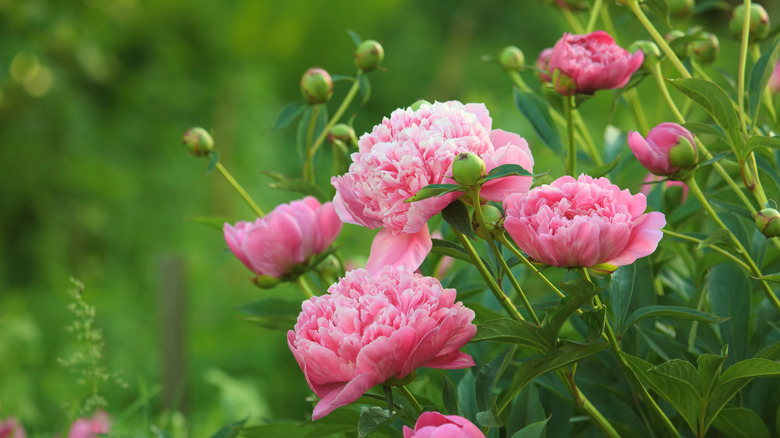
Are you planting a special cultivar as a focal point in your garden? If you are, imagine you're directing a play, and whether the star of your show is a rose bush or a Japanese maple, it's not going in the ground alone. The supporting cast can be just as important for the story you're telling as the star, and when it comes to peonies (Paeonia spp.), many people like to pair them with flowering perennials for year-round color. But this star shines even brighter when you pair it with lady's mantle (Alchemilla mollis) to hide its bare legs and let its flowers take center stage.
Some plant combinations offer multiple benefits, like planting alliums with hydrangeas to deter pests and add some whimsy to your landscape. For peonies, the perfect companion plant needs to do a few things. First, it needs to cover the bare legs after the blooms are spent. Ideally, this companion plant will stay unobtrusive and not try to compete or steal the show, and there are bonus points if it adds visual interest after the peonies take their final bow after a seven- to 10-day blooming act. Finally, the best companion plants for peonies will also match their growing conditions and climatic preference, so that both plants can thrive together. As the supporting ensemble in our peony show, lady's mantle delivers on all of these promises.
How lady's mantle makes the perfect companion for peonies
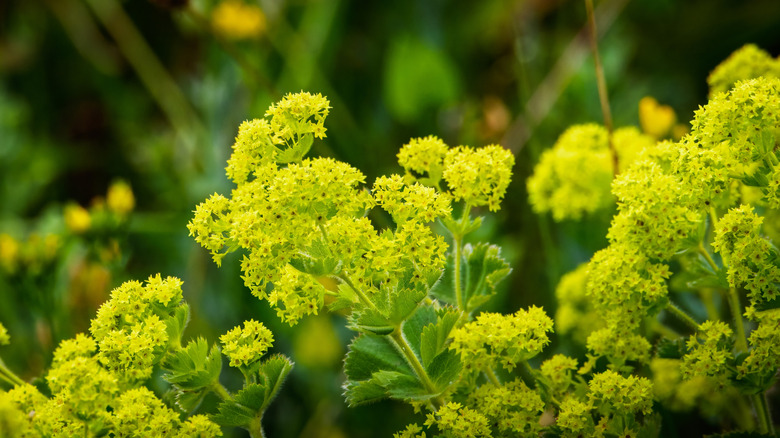
From the front yard to the back, peonies are often the center of attention in cottage garden design and are an old-fashioned favorite. But even our favorite plants aren't perfect, and peonies are no exception. They benefit from a plant like lady's mantle, which grows in a mounded clump and can act like a skirt to hide the long stems. The airy, chartreuse flowers and scalloped leaves of lady's mantle act as a foil by quietly contrasting with the peony blooms. The foliage adds visual interest from spring through fall, and this plant is well known for softening the hard edges in a bed of peonies.
Another magical feature that makes lady's mantle the right companion plant for the job is the interesting way that the leaves hold water droplets. After rain, when you're admiring your peony blossoms up close, you'll notice that the lady's mantle leaves are covered in fine hairs, making them hydrophobic. It's a mechanism that causes the water to roll up into tiny spheres, and this visually striking effect can last for hours.
But even for plants, good looks will only get you so far. If you're part of the ensemble, you have to work well with the rest of the cast. And that's where the peonies-and-lady's-mantle combination makes the most sense.
Tips for pairing lady's mantle and peonies
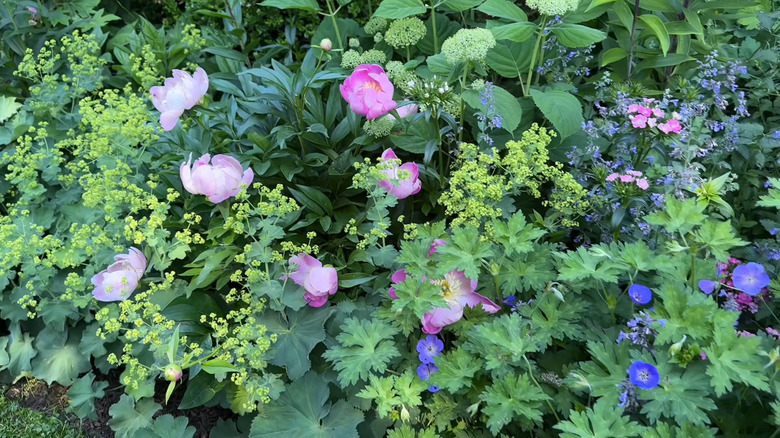
Like peonies, lady's mantle is a cottage garden favorite, so it's an obvious choice if that's the look you're going for. But the payoff that really matters with this combination is that the plants have similar growing requirements, so they'll both be able to get what they need. Lady's mantle is hardy in zones 3 to 8, which is the same hardiness range as peonies. Peonies thrive when watered regularly, especially early in the growing season and during the year's warmest, driest months; lady's mantle likewise needs steady moisture. As long as it gets watered consistently, lady's mantle will thrive in the fertile, well-drained soil that peonies prefer.
There are plenty of peony cultivars to choose from, and if you select a compact peony with sturdy stems that doesn't need to be staked, you can pair it with dwarf lady's mantle (Alchemilla erythropoda). A close relative of larger lady's mantle cultivars, this plant only gets about 5 to 6 inches tall and spreads up to 2 feet, making a nice ground cover.
Since both peonies and lady's mantle are deer and rabbit resistant, you can plant this combination at the edge of your property with less worry about them being destroyed. However, it's good to note that lady's mantle self-seeds aggressively and is listed as invasive in Oregon; growing it there could harm local ecosystems. To keep it in check elsewhere, avoid planting it in the wild parts of your yard and keep deadheading it so it doesn't go to seed.