

What Happens If You Flush Food Scraps Down The Toilet
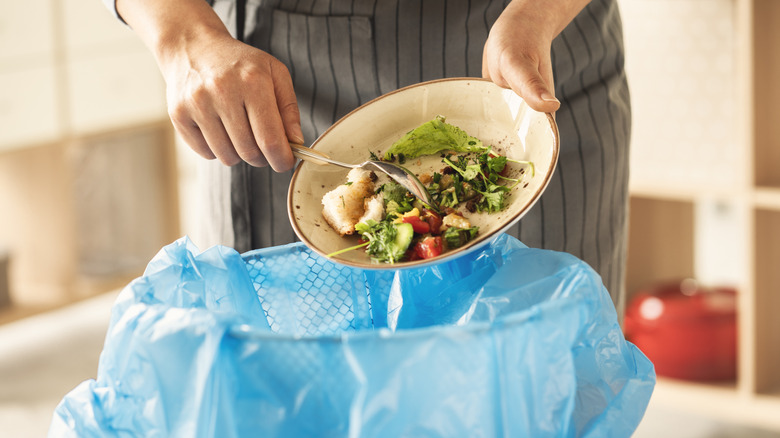
Here's the dirty truth about your plumbing: You've got to be very careful about what you put in your toilet. Since food scraps can make a big stink after a few days in the trash, it can be tempting to simply flush them away so you don't have to deal with them. But doing so can create a huge mess. In fact, sending the wrong things down the drain is one of the top things that can harm the plumbing in your house.
Your pipes are designed to handle human waste, toilet paper, and little else. While you can likely get away with a stray crumb or two at times, the pipes in your toilet aren't large enough to accommodate a full plate of leftovers. Scraps can get caught in the pipes, causing your toilet to keep clogging and leading to expensive repairs down the line. And while it's not recommended to flush any sort of food, some items in particular can really stop things up. This includes hard pieces like bones and apple cores, grains, and anything with fats or oils.
What happens when you flush food down the toilet
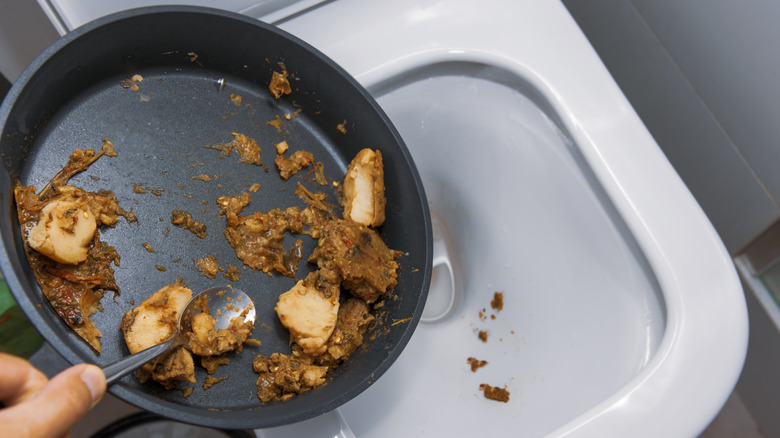
In short, sending food down the toilet can lead to a truly, uh, crappy situation. While human waste more or less goes down easy, foods can contain oil, fat, starch, and fiber — all substances that don't break down well in water. Anything with oil and fat can congeal and solidify inside sewer lines, and grains like rice and oats will expand as they absorb water, making them even more likely to block your pipes. And contrary to common belief, many types of food waste such as bones, banana peels, and leafy greens can take years to decompose outside of a proper composting environment — so you can't assume they'll simply break down in your pipes.
Stopping up your personal plumbing lines is enough of a pain, as repairs can be costly. But if you pour cooking grease down the toilet, it can join up with other debris as it hardens. Worst case scenario: Eventually, it could become part of something called a fatberg, capable of taking down an entire sewage system and leading to public health and environmental hazards. Plus, since waste facilities aren't meant to break down food, this habit can eventually harm the machinery, affecting the whole city's system.
What to do with food waste instead
If you're lucky enough to have a kitchen sink outfitted with a garbage disposal, that can handle most food waste, though you'll still want to avoid pouring grease or oil down the drain or stuffing it with those harder pieces such as bones and coffee grounds. Taking out the trash more frequently is also an option, as is storing your smelliest bits in a plastic bag in your freezer until garbage day.
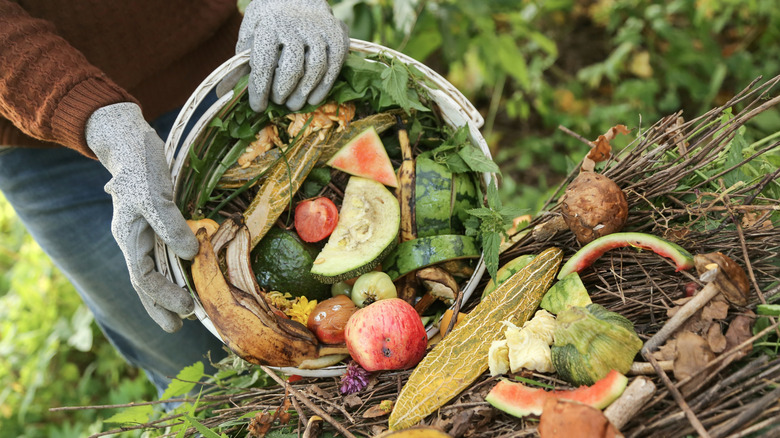
Getting into composting is another savvy strategy for handling food waste. To discover if your local area has a compost system, check out your town's official website. But you can also maintain your own compost at home, even if you have limited outdoor space. A sustainable way of disposing of food — though there are several things you should never add to your compost heap — it enriches soil, reduces methane emissions, and can even help fight climate change.