

Not Coffee, Not Tea: The Beverage You Could Be Adding To Compost
We may receive a commission on purchases made from links.
Given that organic crops are grown without chemical fertilizers, it's only natural for organic farmers to look for ways to boost the microbial health of their compost piles; sometimes, means turning to unexpected solutions. Like mixing in a little beer to keep thirsty microbes satisfied.
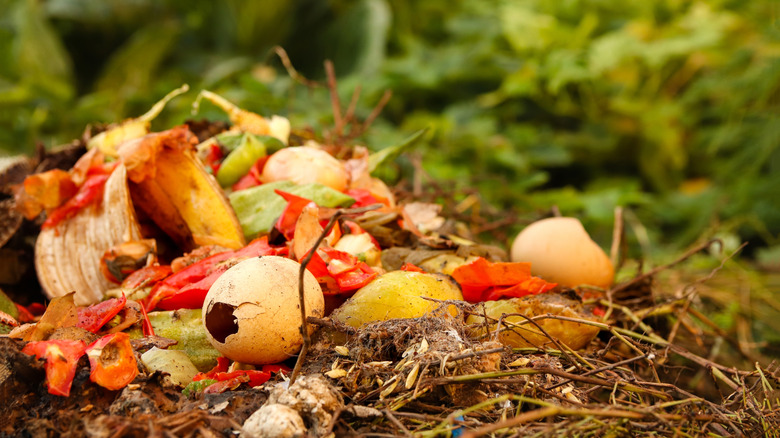
Microbes are tiny organisms that consume nitrogen-rich green materials, such as banana peels and watermelon rinds, as well as carbon-rich brown materials, like straw and leaves. As these invisible organisms feast on your food scraps, they produce heat. The healthiest compost piles tend to fall between 131 degrees and 160 degrees Fahrenheit. If the temperature of your pile drops too low, you can trigger microbial activity by adding coffee grounds or tea bags, which are among the household green materials that give your compost pile a serious nitrogen boost. Beer is another sure-fire way to keep your compost healthy.
The concept of pouring beer in a compost pile might sound like a joke, but it's actually a great way to speed up the process of aerobic digestion — decomposition with the presence of oxygen. Of course, just like humans, microbes should only consume the hoppy beverage in moderation. So next time you're cleaning up from a cookout, you'll have something to do with those not-quite-empty cans you may find lying around your patio and kitchen.
How to compost beer

Whether it is appropriate to dispose of beer in your compost pile depends on the pile's moisture levels and the balance between nitrogen and carbon. If the pile isn't visibly dry, your first step should be to measure the temperature of your compost. You can use a product like the Greenco Compost Soil Thermometer, available for $23. If the temperature falls on the low side (around or below 130 degrees Fahrenheit), then it's a great time to treat your microbes to an alcoholic beverage. Ideally, you'll use stale beer — something already open that's been sitting out a while — so as not to waste a fresh can. Keep in mind that alcohol is also antimicrobial, so using flat, diluted beverages is actually to your benefit.
Pour the equivalent of a single serving into your pile, or maybe even two, depending on the size of your food scrap heap. Turning your compost pile is a must, so it's a great time to take care of that chore and help speed up the decomposition process. Give it a flip every few days for fast results, or wait a few weeks between turns if you've got time to spare. And if you're wondering about other alcoholic beverages, the answer is yes —
Ultimately, if the pile becomes slimy and emits a foul smell after a couple of days, you should add more brown material to dry it out. The best brown/green material ratio for your compost pile truly depends, so it may take some time to figure out what works best for yours.
Signs that your compost could use a beer, and potential hazards of adding too much
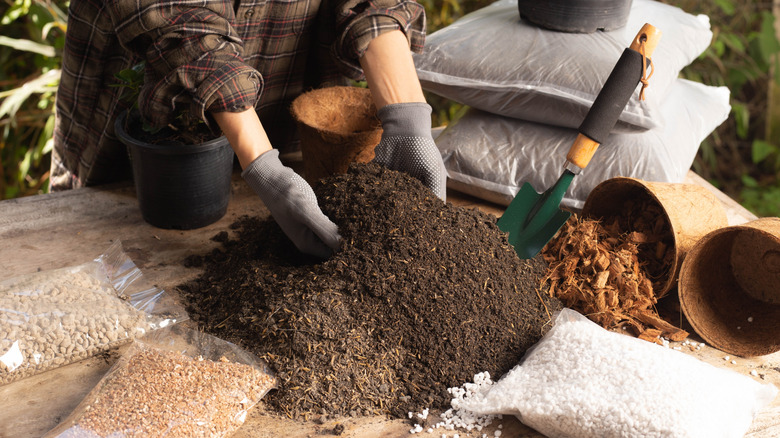
There are a few things you should look for before you pour leftover cans into your compost pile — otherwise, you might disrupt the sensitive balance of that small environment. As your pile dries out, the microbes can die or enter into hibernation. A lack of nitrogen (found in fresh greenery or yeast), usually coupled with a drop in temperature in the pile, is a recipe for disaster. If you notice scraps of newspaper and dry grass clippings simply aren't decomposing, then nitrogen-rich yeast in the beer might just do the trick to fire up those microbes.
The opposite issue can also slow down decomposition. If your pile already has a lot of moisture, you definitely don't want to add any additional liquid. A good test is to grab a handful of compost and squeeze it. If only a small amount of water drips out, you can add a little beer. Too much moisture makes it impossible for air to circulate through your pile, which causes the material to digest anaerobically, producing greenhouse gases like methane.
Too much beer can also attract pests like snails and cutworms to your garden. If your plants are already infested with those pests, you should avoid using beer on your pile altogether.