

Use A Plastic Bottle To Keep Pesky Garden Insects Away With A Clever DIY
There's nothing quite like spending some time outdoors. Romantic picnics, fast-paced games, and casual kickbacks are all better with the backdrop of a sunny day — until the bugs come out to join in on the fun, that is. Shooing away flying insects is to some extent expected when you take your favorite activities outside, and in many cases, it's best to simply leave them be as you go about your day. There are plenty of beneficial bees you'll want in your garden, and most of the time, they won't sting unless you mess with them first. Wasps, however, have a reputation for being a bit more hot-headed, and while they typically sting only when threatened, sudden movements can sometimes provoke a defensive response. If you want extra peace of mind while spending time outdoors, setting up a trap may help reduce wasp activity in the area.
Luckily, making your own DIY pest trap is very simple. All you'll need is a plastic bottle, some sugar, water, apple cider vinegar, a piece of wire for hanging, if desired, and a tool for cutting. The general idea is to lure the pests in with the sweet liquid solution, trapping them in the modified bottle. This trap will eventually kill the bugs it captures, good or bad, so if you've been trying to bring more pollinators to your yard and garden, make sure you keep it away from any hotspots for their activity.
How to create your own pest trap
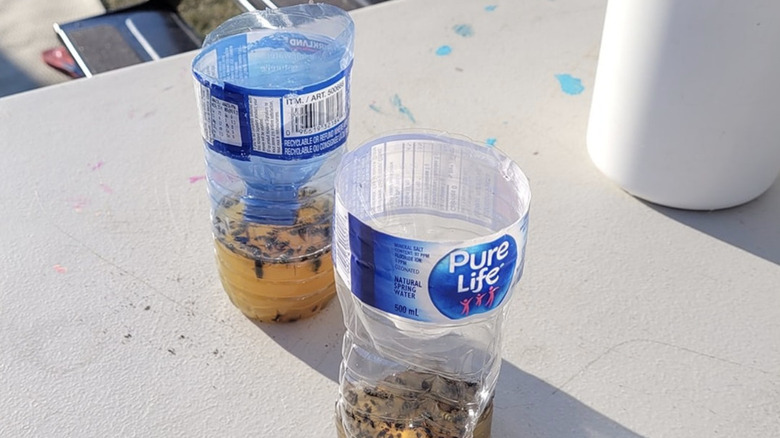
To make your DIY pest trap, simply cut off the top of the water bottle, invert it, and place it into the bottom portion of the bottle. A pair of scissors or a knife will work for this task, but pretty much anything you have on hand that's sharp will do the trick — unless you're keeping your trap on display, a clean cut doesn't matter all that much here. From there, fill the trap with a 1-1-1 ratio of sugar, water, and apple cider vinegar to make your bait. White vinegar can also be substituted, and anything sweet, like honey or overripe fruit, can be swapped for the sugar. If you want to hang the trap on a tree or a garden hook, attach a U-shaped piece of wire or rope through the sides of the top of the trap.
@gardening.with.ish Wasps can be an utter nuisance around your garden when food and drink are out at a BBQ or meal, so if all fails to keep them away (like citronella candles and lemongrass or fake nests) you can make your own wasp trap! It should be noted that wasps are also accidental pollinators and beneficial for your garden by eating aphids too. So if you do find yourself resorting to this after trying citrus or other natural ideas then I strong advise to do so only when you've got food and drink nearby as a LAST RESORT. And don't leave them out to catch them when you're not outside :) This simple gardening tip for beginner gardeners will show you how you can DIY your very own Wasp trap using a plastic bottle and some household items like water, sugar and apple vinegar. #gardeningtips #gardeningforbeginners #wasp #wasps #flytrap #gardeninghacks
This trap has a simple design, but it can be highly effective at capturing insects. The wasps are lured in by the sweet smell of the sugary solution in the bottle, but thanks to the funnel-shaped lid section, they have an incredibly hard time getting out. Eventually, they drown in the bottle, eliminating the threat at hand.
While this design is often used for wasps, it also serves as an effective DIY fly trap. As your creation sits outdoors, plenty of different kinds of insects could come to investigate, and depending on the kinds of pests in your area, you might end up capturing more flies than wasps. Regardless of the intended target, this trap is sure to keep annoying buzzing and stings to a minimum.