

Why The Grass Along Your Driveway Edging Is Turning Brown (& How To Revive It)
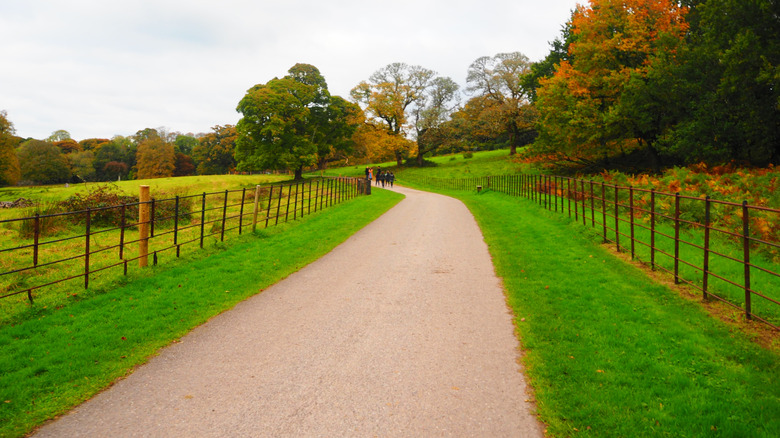
It can look beautiful to seamlessly integrate your driveway with your lawn, with this style working equally well for pathways around your garden. But you might have noticed that the grass on your lawn in these areas is starting to turn brown. Why is this and what can be done to prevent it?
The reason behind this is down to something known as the 'heat island effect.' This is one of the reasons for unwanted brown spots in your lawn and is caused by the pavement becoming hotter than the ambient outdoor temperature. Michael Goatley Jr., Professor at Virginia Tech, explained the effect to Southern Living, "The hard scape serves as a heat island, and the high temperatures can quickly become problematic for cool-season grasses on hot summer days. If air temperatures are in the 80s, you can expect to see surface temperatures of sidewalks and driveways at least 30 degrees Fahrenheit warmer (the extremes in the temperatures will obviously vary depending on the color and the surface area of the hard surface)."
You might think that with the grass having turned this brown color that there's no hope of reviving it. But in fact, the grass might not actually be dead and may instead have entered dormancy, which is a survival method grass utilizes when it's exposed to extreme environmental conditions. With this in mind, let's look at ways to try and revive this brown grass.
How to revive brown grass
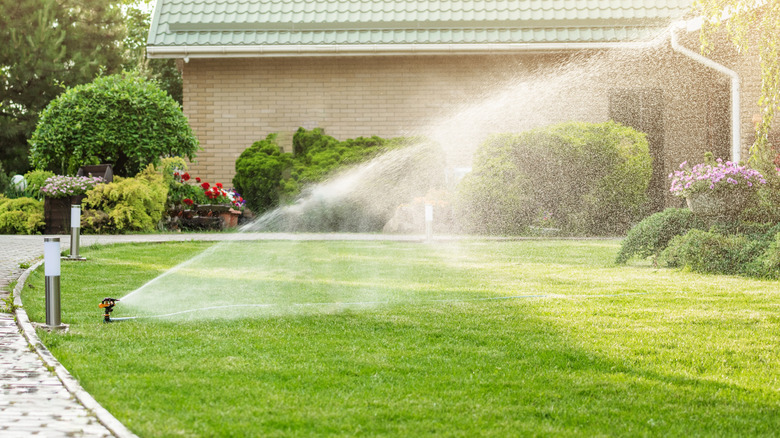
There are plenty of easy ways to help keep your grass looking greener but when it comes to dealing with brown edges, you'll need to do a little homework first to ascertain whether the grass is dormant or dead. The easiest way to do this is simply by watering and seeing if this revives the grass.
If this does start to revive your lawn at the edges, then it's time to take a few more steps to help prevent brown edges from reoccurring. Due to the proximity of the grass to hard surfacing, you may need to up your watering when it's hotter outside. But one of the key things here is to ensure that the water penetrates into the soil far enough — you want the water to go at least six to eight inches into the soil. This will mean that you may need to do longer watering sessions at least twice a week but, on the flip side, do take care not to overwater as this can encourage fungi and disease.
Long term, you may want to consider replacing the soil at the pavement edges, along with aerating and re-seeding the area to ensure a fresh and lush new grass growth. But before you resort to this, follow the above steps to see if the existing grass can be revived and brought back to its luscious best.