

Skip The Retaining Walls: There's Another Solution For Sloped Yards
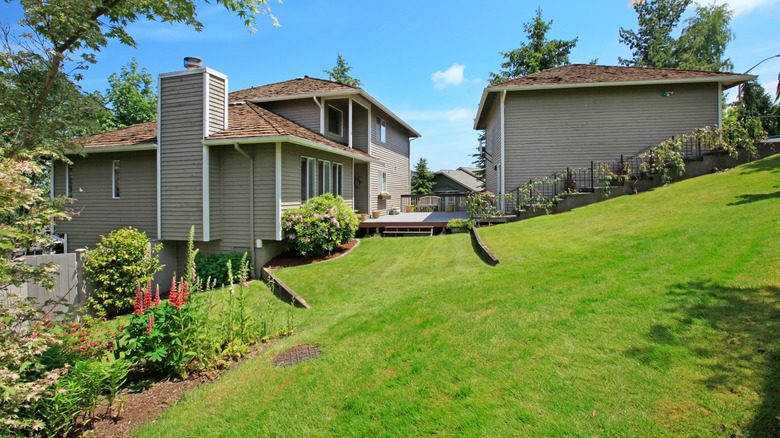
The main purpose of a retaining wall is to prevent erosion, but what's the biggest cause of erosion? Water. You can't stop the rain from falling, but you can catch it before it washes away your yard. If your sloped yard turns into a swamp every spring, a retaining wall won't stop that water from gushing down the hill or pooling near your home, potentially damaging the foundation. Instead, consider installing a dry well. A dry well is a sunken gravel-lined pit in the ground that usually conceals a large plastic or concrete barrel. When heavy rains flow through your yard, they'll trickle down into the barrel until it's full. The barrel will then will slowly release that collected moisture over the coming days and weeks.
Installing a retaining wall can cost anywhere from $3,200 to over $9,000 on average, depending on the size and materials used. The average cost of a dry well installation is usually just over $3,000, but rarely over $5,000, so opting for a dry well could save you money in addition to better serving your sloped property needs. A dry well combats flooding issues in your yard and distributes rainwater in a more efficient and environmentally friendly manner than a retaining wall, which only slows and redirects the flow. Because the ground needs to slope toward the well in order to fill it, sloped yards are actually a prime candidate for this solution. In some climates, a dry well can also serve as a safeguard against droughts and support some other intriguing opportunities for landscaping and gardening on a slope.
Choose a dry well to preserve your sloped yard
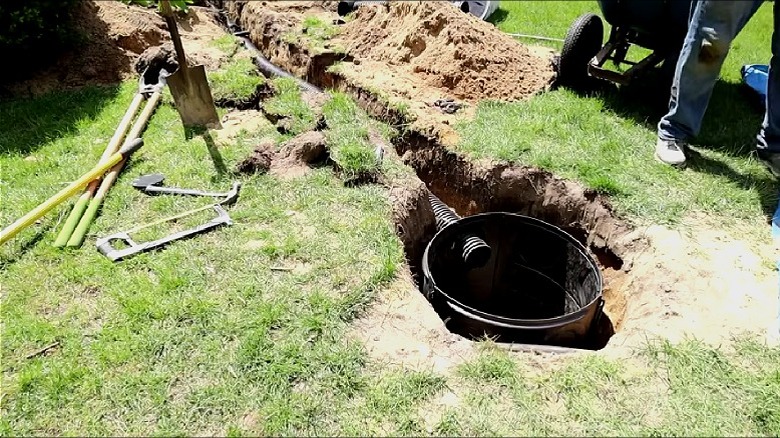
Although it could be cheaper than a retaining wall, a dry well is still no small change, so it's important to weigh all your options to make sure you're not spending more than necessary. A simple gravel dry well, better known as a seepage pit, is generally the cheapest option, but they may not last long-term. For a plastic dry well tank, you could expect to pay at least $300, while a concrete tank could cost a few thousand. Size also matters, since dry wells can hold anywhere between 50 and 500 gallons or more of water. Choose the best stormwater drainage solution based on how much rainfall your lot receives in an average year.
In theory, a dry well can be installed yourself, but it requires some careful planning, heavy manual labor, and possible excavating equipment, especially if your ground is tough or rocky. Unless you're adept at landscaping and drainage projects, it's probably wise to involve the professionals. Contractor prices may vary, but you should budget in about $50 to $100 per hour, knowing that they'll need to clear the land, excavate several feet into the ground, install your dry well, and run drainage lines from the gutters or other areas on the property.
Before getting started, you might also need to secure a local permit for your dry well, since some cities and states strictly monitor rainwater and groundwater management. Plan to install the dry well at the lowest point in your yard and at least 10 feet away from your home's foundation. A slope with ¼ inch drop or more per foot will be necessary to keep the water moving.
Maintaining and beautifying your dry well
Whether you decide to hire a contractor or pick up the shovel yourself, one good tip is to wrap the dry well barrel and any channel pipes with landscape fabric to keep them from clogging with soil, leaves, and other debris. It's also important to maintain your dry well, regularly clean out channels, and unclog drainage holes that flow into the system. If a dry well becomes too clogged up with sediment, water could start pooling in your yard or washing out the soil again. Proper maintenance a few times a year will ensure your dry well lasts decades.
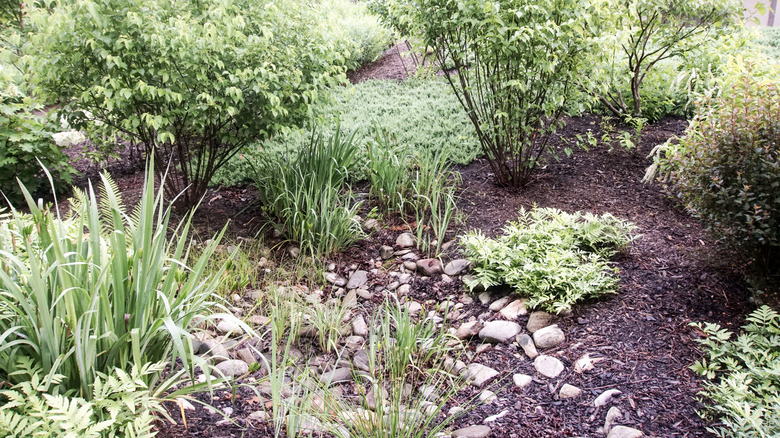
With a little care, keeping a dry well won't be a constant chore — and it doesn't have to be a blemish on your yard either. Over time, dry wells can be combined with additional dry wells, French drains, dry creek beds, and other interesting and helpful landscape features. They offer even more benefits for drought-prone areas because they can funnel more water into your soil and underground aquifers, keeping your lawn and garden plants hydrated through hot summers. To make your dry well an even more enticing feature, consider planting a rain garden around it. You'll need plants that can tolerate a good soak, both so they survive and so they can contribute to a less-eroded yard. Marsh marigold, blazing star, and fiber optic grass are some of the best plants for a rain garden that can solve your flooding problem.