

Replacing Soil Does More Than Refresh The Potting Mix
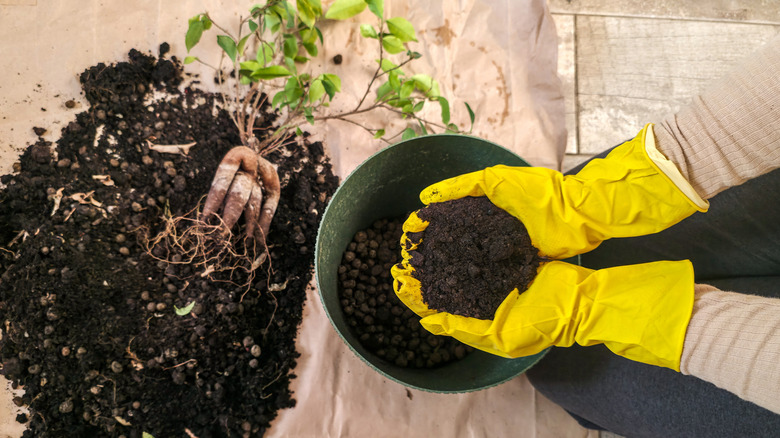
Replacing potting soil is a common practice in container gardening. Doing so revitalizes that potting mix, relieves compaction problems, removes built-up salts, and improves drainage. However, it has some not-so-obvious benefits, too. For instance, it gives you an opportunity to identify and mitigate any root, disease, and pest problems that might be hiding beneath the soil and slowly killing your plants. This matters, as sometimes plants can appear weak or show general decline above the soil due to something that is going wrong beneath.
Replacing the soil can give you useful clues about what is wrong. Take, for instance, root rot, a destructive plant condition in which the root system decays and dies. Its signs and symptoms can match other plant conditions, so replacing the potting mix soil gives a good opportunity to see if your plants have root rot. Affected roots look mushy, black, and weak. If you find that only a few roots are rotted, you can just snip them off and repot the plant in fresh potting mix. You can also use hydrogen peroxide as a last resort to combat root rot.
It is also important to note here that the pathogens causing root rot can deposit their spores in the potting mix. So, even if you fix the drainage and waterlogging problems, your plants still won't be completely safe from root rot unless you replace the soil. Plus, when you replace the soil, it also gives you an opportunity to see if your plants are root-bound, a harmful condition for plants in which their roots have taken up all available space in the soil, restricting any further growth.
Sometimes, replacing soil also reveals pests in the potting mix
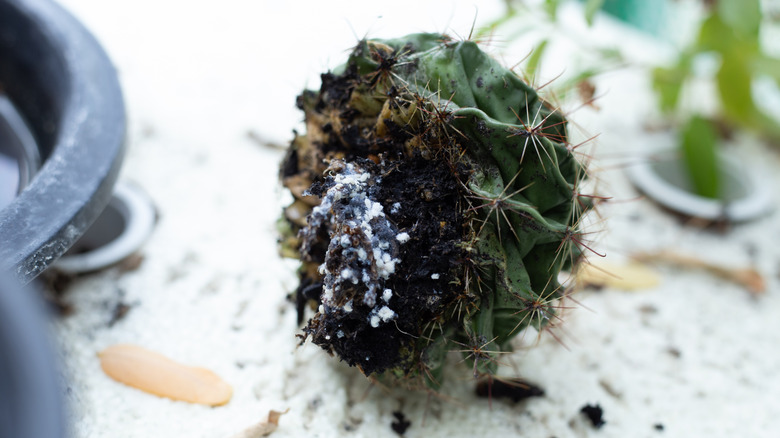
Many types of plant pests also spend part of their lifecycle in the soil. So, when you replace soil in potted planters, you also get a chance to check if the potting mix you are using has any pests, their larvae, or eggs. Take, for example, the fungus gnats larvae. They often live in the top few inches of moist, organic-rich potting mix, feeding on organic matter and plant roots, slowly weakening the plant from below. So, when you replace the potting soil, you can check if the potting mix is harboring fungus gnat larvae. They look like legless worms with shiny black heads.
Similarly, certain mealybug species also live under the soil. They suck sap from basal stems and root hairs, often leaving plants with yellowing leaves, a wilting appearance, and an overall noticeably weak, stunted growth. The tricky part is that these symptoms can also look a lot like water stress. So, unless you check the potting soil for pests, you may not tell them apart, and that is where replacing the soil offers a good opportunity.
As for what root mealybugs look like, they appear as tiny, white, waxy specks clinging to the roots. Plus, their females lay eggs in cotton-like masses on the roots. It is also important to note here that sometimes pests, their larvae nd eggs can also stick to container walls. So, if you see a pest issue when replacing the soil, wash and clean the pot or container thoroughly as well. Also, remember that there are many ways to reuse old potting soil, so don't just throw it out.