

The Perfect Companion Flower For Strawberries That Glows In The Garden
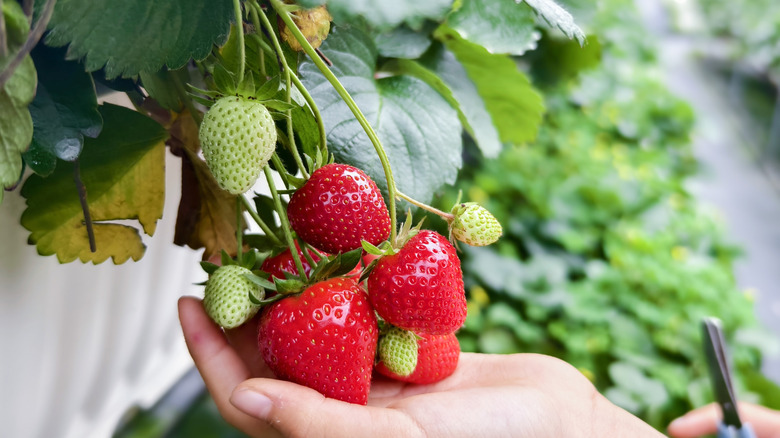
Strawberries are one of the easiest fruits to grow in your garden — and who doesn't love the idea of picking a few of those luscious berries to add to a delicious homemade fruit salad? As long as you provide them with plenty of sunlight and water, they'll reward you with a plentiful crop every time. Strawberries also thrive with the help of pollinators like bees, and they'll help your plants provide more fruit of better quality. For this reason, you may want to use marigolds (Tagetes spp.) as a companion to lure more bees to your strawberry crop. Primarily, you'll want to grow French marigolds (Tagetes patula) as pollinator magnets.
But the many benefits of planting marigolds alongside your strawberries don't stop there. These flowers are also said to attract beneficial insects such as ladybirds, parasitic wasps, and hoverflies. These will happily feast on pests such as aphids, thrips, and whiteflies, which might be drawn to your strawberry plants. Some research has also suggested that marigolds may control damaging nematodes in the soil by releasing certain chemical compounds. This is particularly good news if you're growing strawberries in the Florida region, as the sandy soils there are known to harbor sting nematodes.
How to grow marigolds (and more benefits of doing so)
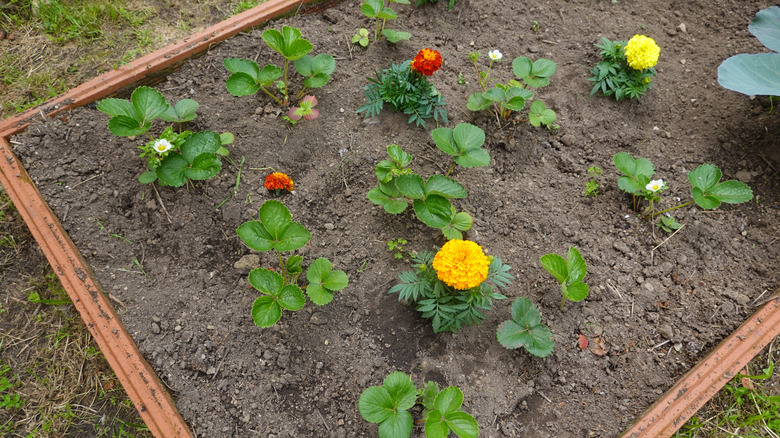
Marigolds have plenty of other uses, too. Thanks to their lush growth of somewhat feathery-looking leaves, they can help cover the ground and suppress weeds. Just one French marigold plant can spread to cover an area up to 18 inches, so interspersing these with your strawberry plants should provide enough soil cover to keep almost all those pesky weeds at bay. Another benefit is that the plants emit quite a strong scent from both their flowers and their foliage. This is particularly good news if you're battling with garden visitors such as rabbits and deer. The strong aroma is unpleasant to these animals, so if you plant your marigolds as a border around your strawberry beds, you may just be able to keep most of the fruit yourself.
You can either grow flourishing marigold flowers from seeds or purchase plants at your local garden center. These annual flowers are quite beautiful when they're in full bloom, and they can add the glow of a glorious sunset to your garden with their yellow, red, and orange shades. Just like strawberries, they appreciate good drainage, moist soils, and loads of sunshine. Deadheading the spent blooms will keep their floral delights coming right into fall. Once the frost gets to them, make sure to work the remains into the soil, as this may just deter any nematodes, which could cause damage to next year's crop.