

Not Basil, Not Cilantro: The Feathery Herb With Flowers That'll Attract Butterflies
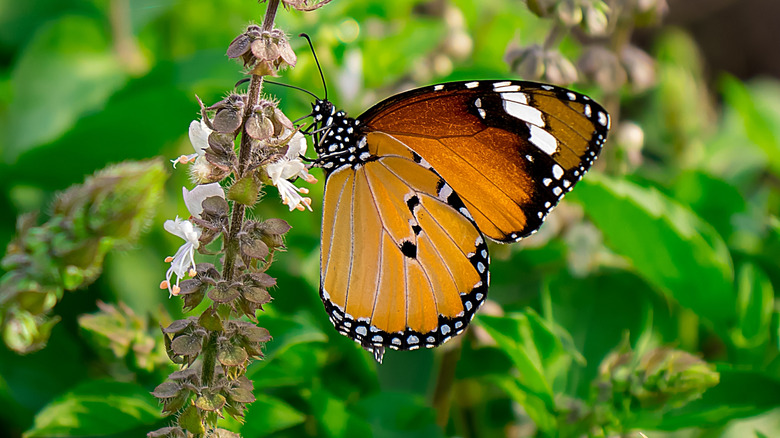
If you're trying to make your garden more wildlife friendly, you're most likely on the lookout for plants that will attract butterflies and other flying visitors. Allowing the herbs in your garden to produce flowers is one way of luring in these pollinators. While plenty of fast-growing herbs – such as basil and cilantro — are able to do this, one feathery herb is even more beneficial than those two: bronze fennel (Foeniculum vulgare). You'll find that butterflies absolutely adore this plant's umbels of tiny yellow blooms.
On top of that, the plant itself is a larval host for the black swallowtail butterfly, which means it's particularly useful for these varieties. Although it's commonly grown as an annual, bronze fennel is actually a perennial, and you may find that it continues to come up in your garden year after year. It does best in USDA hardiness zones 4 through 9. Both the leaves and the flowers are edible and have the most deliciously mild licorice flavor and aroma. As an added bonus, fennel is also one of those plants that naturally attracts ladybugs into your garden. However, before you plant this in your yard, be aware that it is listed as invasive in some states of the Southwest and Pacific Northwest, including California, Oregon, Washington, West Virginia, and Hawaii. Always check with your local extension office if you're unsure whether an introduced species is safe to grow in your area.
How to grow bronze fennel
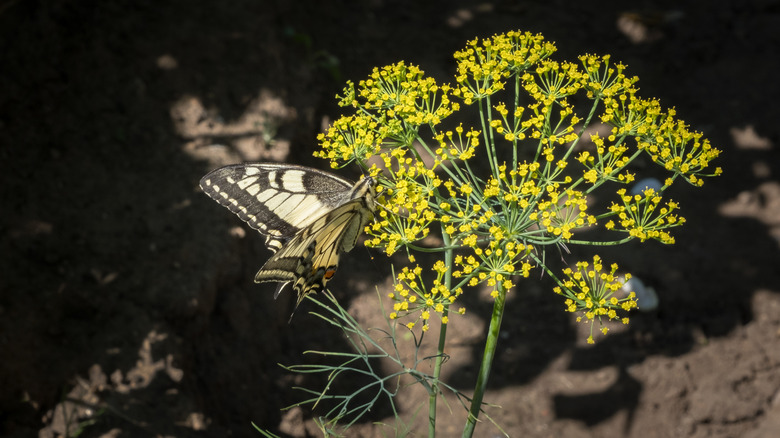
If you have a butterfly garden — or are trying to get one established — you should definitely consider growing bronze fennel. You might even like to pair it with parsley and dill, which are members of the same family and will also keep those black swallowtail caterpillars happy. Like many other types of herbs, fennel is easy enough to grow from seed in a sunny spot in your garden. It prefers moist but well-drained soils that have been enriched with organic matter. Make sure you give it enough room, as it can reach heights of up to 6 feet and a spread of just over 3 feet.
Don't be too concerned if some swallowtail butterfly caterpillars have found your fennel plant and stripped it bare, because it will soon bounce back with new foliage. Just be happy in the knowledge that you're helping the butterflies complete their entire lifecycle right in your garden. Although this herb is drought tolerant once established, you do want to provide it with ample moisture while it's still young. Finally, if you want to prevent fennel from self-seeding, make sure you remove the spent flowers before they fully produce their seeds. Also, don't forget that butterflies need water — so you'll want to keep them happy with a clever DIY drink station.