

What Does An EF1 Tornado Do To A House?
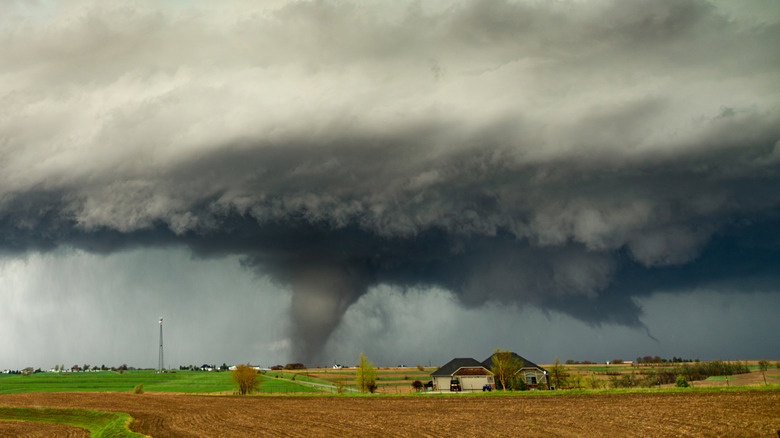
Hopefully, the only tornado you've ever experienced was the one Dorothy and her little dog Toto couldn't escape. But unlike the tornado in "The Wizard of Oz," which was made from muslin, real-life tornadoes, even relatively weak ones, can cause major damage in a matter of minutes. The Enhanced Fujita (EF) Scale is used to measure tornadoes and rank them by the damage they cause, not their wind speed. The scale ranges from EF0 (light damage) to EF5 tornadoes (catastrophic). An EF1 tornado might not make headlines, but the winds can still leave a lasting mark on homes along its path. With winds reaching 86 to 110 mph, an EF1 tornado can damage your roof even if it's made with a roofing material that has a hundred-year lifespan, rip off siding, shatter windows, and toss outdoor patio furniture across your neighborhood. But it can do more than cosmetic damage on the outside.
During an EF1 tornado, roofs are usually the first to suffer. High winds can tear off shingles and gutters. Once the roof is damaged, rain can seep into your home, creating a whole new set of problems, including water damage to ceilings, insulation, and walls, as well as to furniture and personal belongings. If the EF1 tornado winds are on the stronger side, it can cause garage doors to buckle. Although these are extreme outcomes, there are steps you can take to give your house the best chance of coming off unscathed during an EF1 tornado.
Ways to protect your home from an EF1 tornado
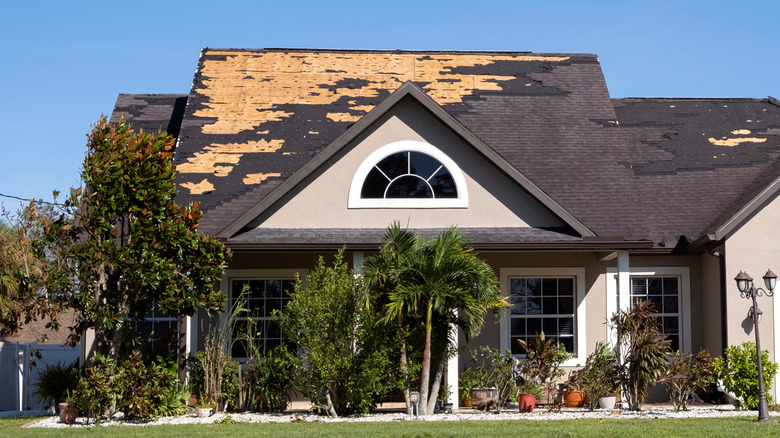
The damage from an EF1 tornado is generally moderate, so most houses can withstand one if one comes through, especially when the home is well-constructed and well-maintained. However, if an EF1's wind speed is even in the midrange of its top speeds, flying debris can still be a threat as it can break windows and doors, uproot small trees, and knock down power poles. While there's not much you can control when it comes to Mother Nature, you do have control over other things.
Although different types of insurance homeowners may need will cover a variety of situations after they happen, you can take steps to reduce the risk of damage to your home from an EF1 tornado. You won't know a tornado's rating ahead of time, so it's not a bad idea to prepare for the worst case. For example, you can keep your trees regularly trimmed, make sure your gutter fasteners are secure, reinforce your garage doors, and keep a watchful eye on loose roof shingles. Plus, tie down outdoor patio furniture when they're not in regular use. There are also multiple ways to invest in more substantial protection for your home, including impact-resistant glass, hurricane shutters, and working with a professional to secure your roof structure and framing. But most importantly, make sure you know the safest places in your home to go during any natural disaster.