

Not Milkweed: The Cheerful Annual Flower That Dragonflies Love
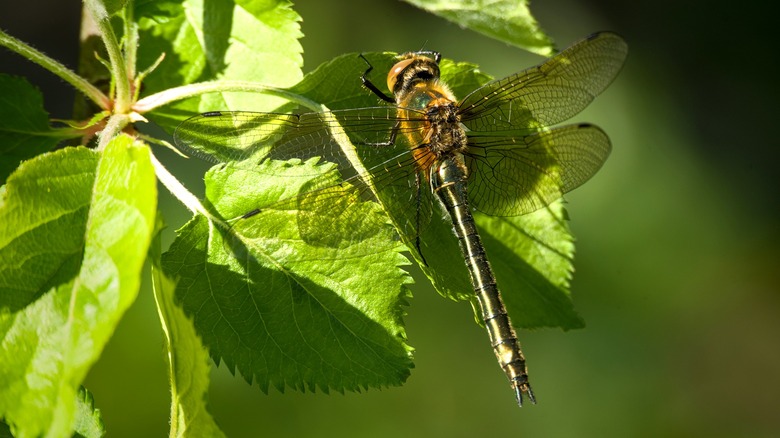
What if the annual growing in your vegetable garden was actually a dragonfly magnet? While these insects don't collect pollen or drink nectar like bees or butterflies do, they do see certain plants as a beacon to their food source: other insects. You've likely heard of black-eyed Susans and milkweed as plants that attract dragonflies, but marigolds (Tagetes spp.) deserve a mention as well. Though known to deter pests, marigolds still attract a host of bugs and pollinators for carnivorous dragonflies to feast upon.
As morbid as it may sound, plants like marigolds are essentially the dragonfly equivalent to a bright, beckoning restaurant sign. You know when you're on a roadtrip and you see a sign for a fast-food chain you love? Yep. That's how dragonflies see marigolds. Dragonflies consume a wide range of flying bugs, both beneficial, like ladybugs, and less welcomed, like mosquitoes.
While mosquitoes may hate the pungent aroma of marigolds, they may still find their way to the plant, and dragonflies are known eaters of the tiny, elongated flies. By planting marigolds in an area of your garden, you can deter the little blood-suckers while dragonflies help pick off any that are left. So next time you plant a row of these pest-repelling flowers, consider them for another purpose: a dragonfly's lunch.
Why are dragonflies drawn to marigolds?
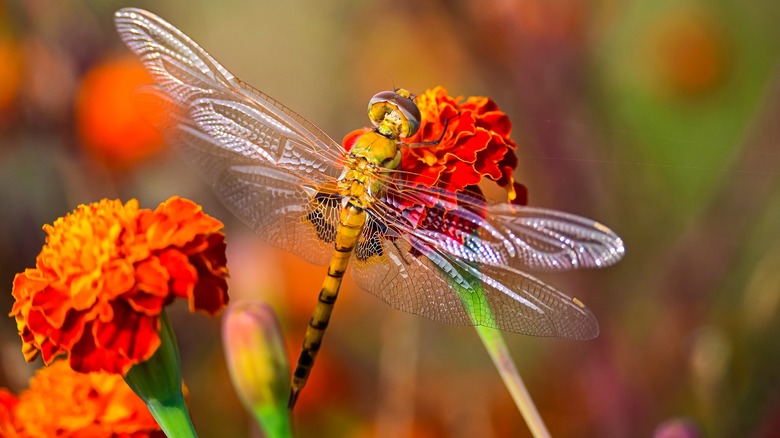
Gardeners plant marigolds as companion plants to repel unwanted visitors in vegetable beds, but these flowers also attract pollinators and beneficial insects, which is where dragonflies come in. First off, dragonflies have next-level eyesight. What they don't have in smelling capabilities they make up for with their visual senses. They can see almost 360 degrees and have a heightened ability to perceive color, including ultraviolet light. These capabilities enable them to spot flying prey, along with bold hues of flowers where prey might be hiding.
Marigolds in particular play host to ladybugs, beetles, leafhoppers, wasps, butterflies and moths, bees, and different types of flies — all of which are in the dragonfly's diet. The captivating orange, yellow, and red blooms of marigolds are just a bonus to help catch the attention of dragonflies from far away. Note that white marigold varieties are also easy for dragonflies to see, if you prefer a more neutral color scheme.
What to know about planting marigolds to attract dragonflies
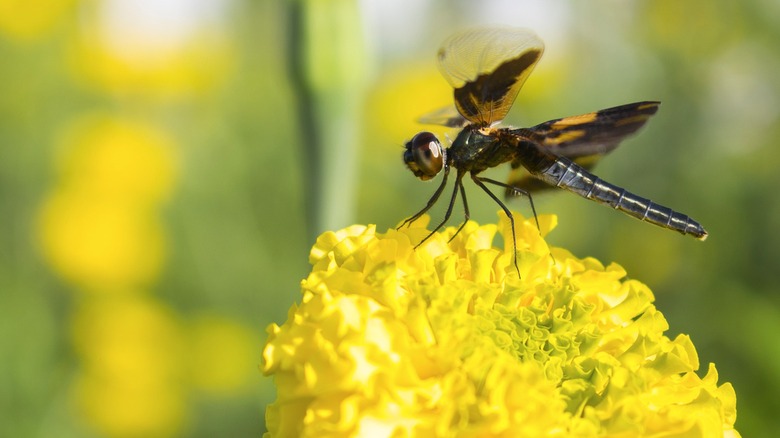
There are several varieties of marigolds and plethora of colors to choose from to attract dragonflies, deter pests, and add a bit of vibrance to your garden. Since there isn't evidence that dragonflies are attracted to a specific kind of marigold color, choose ones that work best with your space. In addition to marigolds, consider pairing them with other plants known to attract dazzling dragonflies, such as yarrow, the black-eyed Susan, purple coneflower, and ironweed. Like marigolds, each of these vibrant plants thrive in full sun.
These plants also double as perches, which is perfect for giving dragonflies places to watch for prey. Additionally, having a water feature could help dragonflies find your yard (as they're aquatic insects) and consequently, your marigold patch. These insects are programmed to find/see water, since it's where they lay their eggs. By having a pond (no matter how big or small, even a DIY backyard bucket pond) in close proximity to the flowers, you're providing the dragonflies with a breeding ground and place to hunt.