

Not Thyme: There's Another Summer-Blooming Herb Pollinators Love
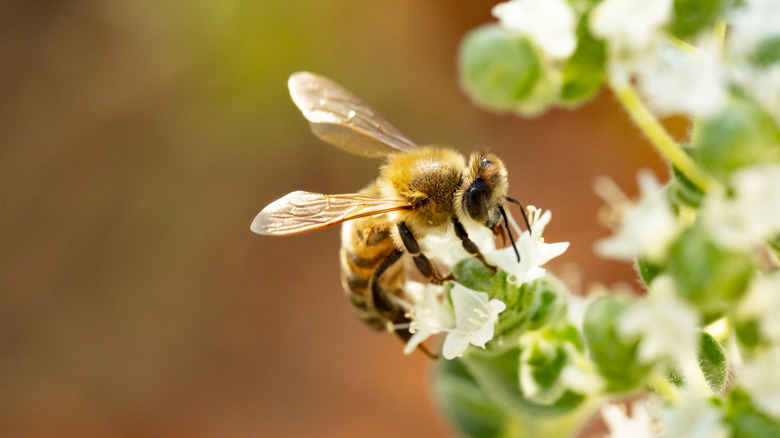
If you're trying to create an outdoor space that pulls double duty, allowing at least a portion of your herbs to flower is a great way to create a culinary garden while also attracting the beneficial pollinators you love. When you're looking for the best plants for your pollinator garden, there's a wide variety of herbs to choose from. For example, summer-blooming thyme can attract pollinators. It's not your only option, however, as you can also incorporate another summer-blooming herb that bees and butterflies will enjoy as much as you do.
For kitchen herb enthusiasts, oregano (Origanum spp.) is a common choice. This genus features 45 species, many of which often end up in backyard gardens. Home cooks may be most familiar with common oregano (Origanum vulgare), a fragrant, flavorful plant with clusters of pink flowers the pollinators adore. However, there's also sweet marjoram (Origanum majorana) and ornamental oregano (Origanum laevigatum), the latter of which is often grown specifically as a flowering ground cover that attracts butterflies and bees with its showy summer flowers.
While hearing about so many different types of oregano may sound overwhelming, many of these species require similar care. As a result, picking the right species for you often comes down to personal preferences.
How to grow oregano to bring more pollinators to your garden
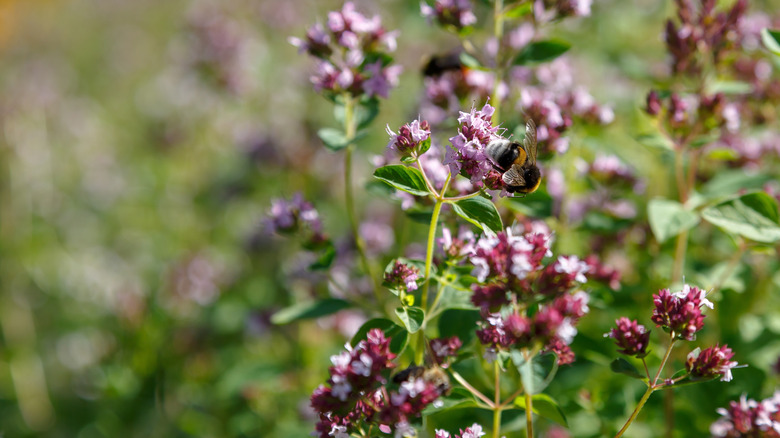
Don't forget that when growing oregano for the specific purpose of bringing more pollinators to your garden, you'll need to allow it to flower. Flowering can change the flavor of the leaves, so if you're trying to cultivate a culinary garden that pollinators also frequent, you may wish to save some plants for harvesting and others for blooming.
Additionally, oregano is a perennial, which means you'll want to brush up on its USDA growing zones before planting. Fortunately, these species are quite durable, their hardiness zones ranging from 3 to 10, depending on the species. Oregano also grows well in containers, which means you can overwinter it indoors when pollinators aren't as common. Overall, oregano grows best when offered full sun, though some species also do well in partial shade if they're prone to scorching. This means that, depending on the type of oregano you pick, choosing to plant your pollinator-friendly herbal garden in a south- or east-facing location is often beneficial.
Oregano is a fairly durable plant. It holds up to drought and heat with relative ease, and it even prefers occasionally dry soil. However, that doesn't mean you can skip watering it entirely. When watering, just ensure that the soil dries out completely before you schedule that chore again. You don't want to overwater it and leave it in soggy, waterlogged conditions.