

Grow The Best, Blooming Peonies With An Organic Fertilizer

We may receive a commission on purchases made from links.
I'm a master gardener who specializes in natural and organic growing methods, so I get a lot of questions about which fertilizer is the best for peonies. Most of the time, people ask about bone meal because they've seen influencers and gardening websites promoting it as the secret to bigger peony blooms. While bone meal can be beneficial in specific situations, sprinkling a cup of bone meal around your peonies in spring is definitely not guaranteed to trigger ginormous blooms. There is some truth to this peony hack, but it's more nuanced than most of the "hacks" explain. Bone meal is pushed as a solution because it is loaded with phosphorus, which is the nutrient that is most closely linked to flowering in plants.
You'll commonly find bone meal commercially with a nitrogen, phosphorus, potassium ratio (NPK) of 0-12-0 or 3-20-0. You can see that it's almost entirely phosphorus with barely a trace of nitrogen or potassium. But overloading your soil with phosphorus isn't a particularly smart idea, especially over the long term. Phosphorus only helps your peonies if your soil happens to be short on it. Most of the time, if you've been using balanced soil amendments like DIY homemade compost, then your soil probably doesn't have a significant lack of phosphorus. Unless a soil test indicates your soil needs phosphorus, a more balanced approach is usually the better option. A natural product like fish and seaweed fertilizer is a better option. These natural products will support overall plant growth, giving you solid, stable tubers and root systems, strong stems, and big, healthy blooms.
Fish fertilizer provides all-round nutrition
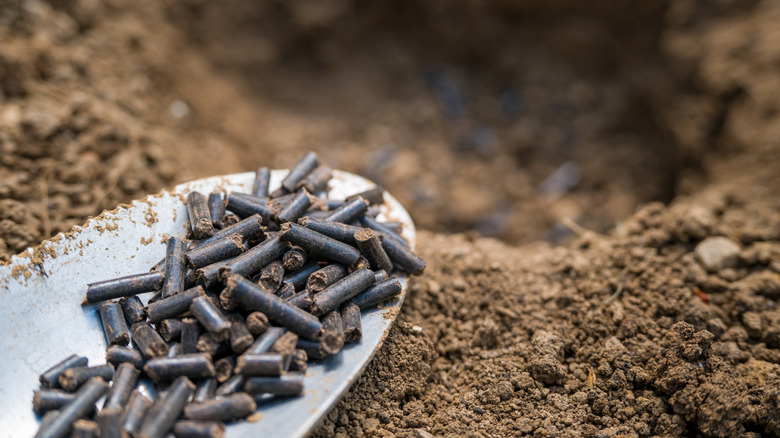
Where regular soil amendments of nutrient-rich compost, buried fish scraps, and composting in place aren't enough to bring the soil back to full health or to cope with heavy feeders, try a well-balanced all-around organic fertilizer like GS Plant Foods Liquid Fish & Kelp Fertilizer, with a nice 2:3:1 NPK ratio. Another strong option is FOOP Garden's Organic Liquid Plant Food. I frequently recommend these products because they provide key macronutrients along with trace minerals. Balanced organic blends like this don't shock plants with a sudden rush of any one nutrient. Instead, they supply a moderate dose of key nutrients that plants can readily absorb without being overwhelmed, assuming you follow the package directions.
I also like to make my own blend of fish, blood and bone, which contains roughly even percentages of nitrogen, phosphorus, and potassium, so they'll nourish the soil in a safe, balanced way. Granular mixes like this provide a slow-release dose of key nutrients that the soil microbes break down into bioavailable forms the peonies and other plants can make use of. Too much nitrogen would encourage the plant to put off loads of lush leaves but you'd get weak stems and fewer flowers. Too much phosphorus inhibits the uptake of other nutrients, especially zinc and iron, and results in stunted growth. Too much potassium can interfere with the uptake of minerals such as calcium and magnesium, potentially inhibiting growth. This is why a balanced natural fertilizer is usually the better option, unless you have a specific diagnosed nutrient deficiency in your soil.
If you still want to try bone meal
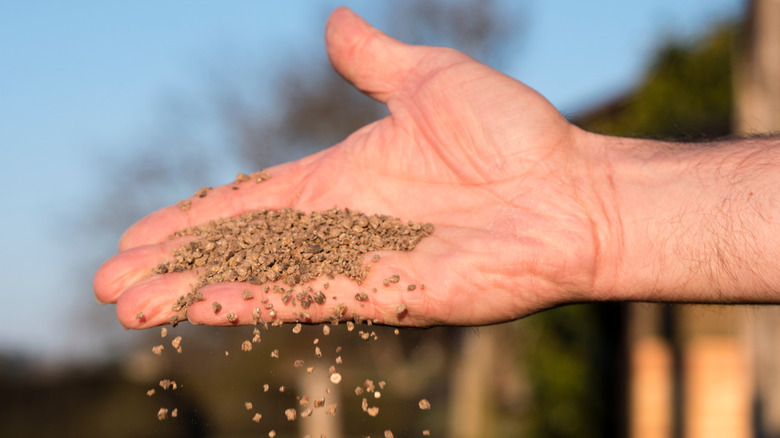
The internet is awash with very convincing influencers and blog posts telling you that bone meal is the answer to all of your peony problems and you may want to give it a go, even though I am recommending the opposite. Before you go sprinkling bone meal haphazardly across your beds, get a soil test kit. Soil test kits are cheap, easy to use, and will save you a lot of headaches down the line. I really like Rapitest's Soil Test Kit and always keep a stock in my shed.
Remember that phosphorus doesn't leach out of soil the way nitrogen does. Repeated bone meal applications year after year can create significant nutrient imbalances because phosphorus tends to accumulate in the soil. If this happens, your plants will show classic symptoms, leaves showing chlorosis, or yellowing, especially between veins, and stunted growth. New leaves might appear healthy, but they'll be small and eventually discolor, too. This phosphorus overload can actually look like some kind of nutrient deficiency, and I've seen gardeners make this mistake a lot. They look at their plants, assume because the plants are sickly, there's a deficiency, and then panic-fertilize, applying a whole bunch of fertilizer that just exacerbates the problem. Again, get yourself a soil test before you make any decisions. In the unlikely event that you do have a phosphorus deficiency, it's most likely to occur in highly acidic or highly alkaline, or clay soils. Even then, I wouldn't recommend just blindly reaching for the bone meal. Instead, I'd work it into a complete organic formula alongside blood and fish meal, that feeds the whole plant instead of just one nutrient. I'd also add finished compost and other rich, organic matter to improve soil quality and build soil health to successfully grow peonies with big, beautiful, healthy blooms for years to come.