

Not Banana Peels: The Salty Kitchen Scrap To Add To Your Compost
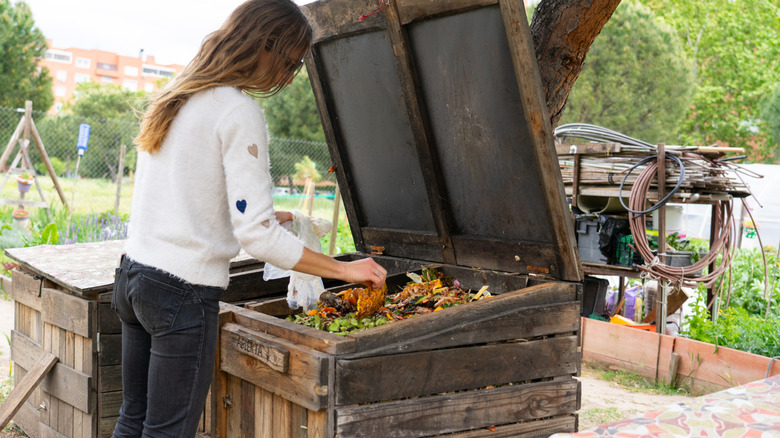
When you first start composting, you learn about the things you should never add to a compost heap, including meat, dairy, and pet waste. While it's easy to understand the big-picture dos and don'ts, when you dig down deep into the individual items, it gets a little confusing. For example, while pistachios are technically part of a plant — which you can usually throw into a composter — the shells might not be something you have ever considered adding.
However, the outer bits of pistachios are a kitchen scrap perfect for amending your garden soil, especially if you're looking to add carbon and micronutrients like calcium and potassium. If you want to make sure your soil is balanced, let them break down in your composter first. It helps to speed up decomposition and makes it easier for your plants to get the nutrients from the shells.
But you don't just want to throw them directly into the composter. Unlike some other food options, it needs a bit of prep before adding it to your compost. One of the first steps is to make sure you remove any salt from your shells. If you have unsalted nuts, you're pretty much good to go. If there is salt on them, you will want to remove that. You need more than just a quick rinse, though. To ensure the salt is fully removed from the shells before you compost, soak them in water overnight, then drain and rinse.
Break down your pistachio shells for better composting
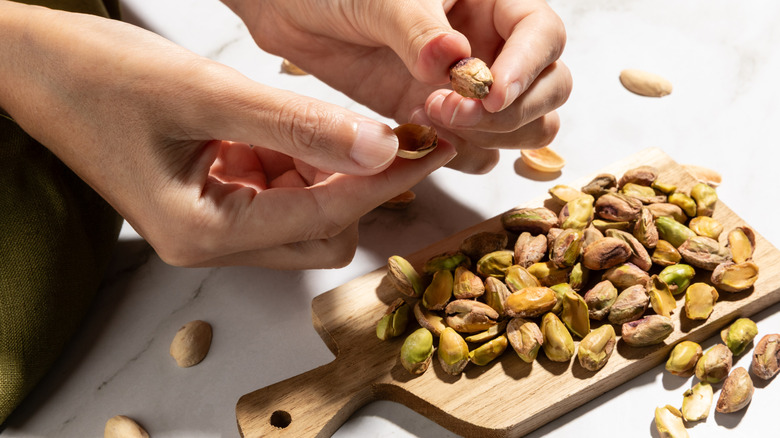
While removing the salt is all you need to do before composting, you can take steps to help these hard shells break down a little faster. Soaking them, whether salted or not, works well because it speeds up the composting process. Though not necessary, it may also be a good idea to smash up your pistachio shells a bit before placing them in your composter. They break down pretty slowly, so if you want them to go a little faster, smash them a few times in a towel before composting.
If you have a sturdy food processor, you can throw them in there as well, or grind them up with a mortar and pestle. It doesn't have to be perfect, but the finer the shells, the faster they will disintegrate. Still, it can be pretty slow.
Another way to speed up the process is to burn them. Since you can compost things like wood ash, throw some pistachios into your fireplace or your next outdoor fire. Then, when it cools, you can scoop up all the ashes and throw them into your compost. Since the shells are now a fine ash, they will take far less time to break down. It's an extra step, but if you are already having a nice fire, it doesn't take much additional work to throw in your shells.
What else to know about composting pistachio shells
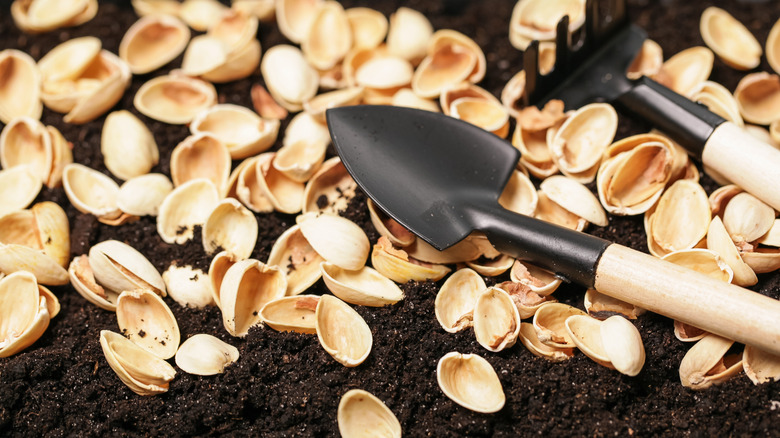
Though pistachio shells are part of food, they are considered more of a brown compost than a green one, since they provide carbon. So it needs to be mixed into a pile with items like grass cuttings or food scraps to be most effective. Pistachio shells work in any pile, but are an exceptionally great addition to overly wet ones, since they can absorb some of the water and help dry it out. Though you want your compost to be moist, being too damp can cause issues, so adding something to absorb that moisture a little, like these shells, helps balance it out again.
They work with most composting methods. They do best in hot piles, where you keep your pile between 90 and 140 degrees Fahrenheit. However, they do also break down over time with bokashi and cold composting. You can even include finely ground shells in vermicomposting or a worm farm, as long as you add the powder in small doses and remove the salt first, since it can be harmful to your worms. If you find yourself with enough shells that you're worried about overwhelming your compost and yard, consider some amazing ways to repurpose pistachio shells instead. It can work as a weed barrier, especially if you put a hardy layer of them on top of the soil instead of mixing them in.