

Not Zinnia, Not Honeysuckle: The Fresh-Smelling Flower Pollinators Love
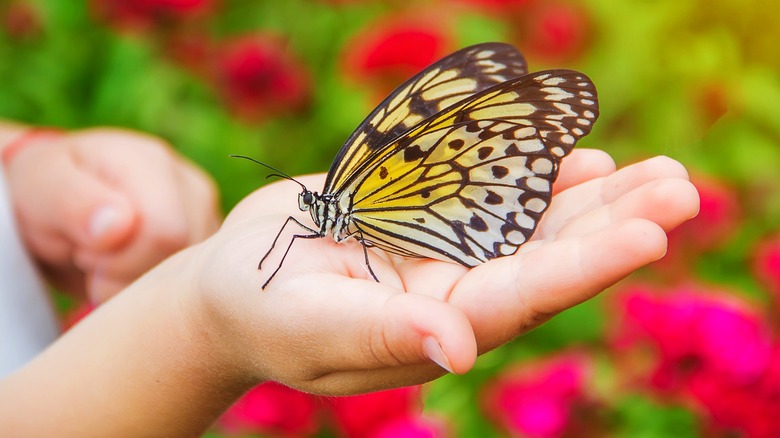
When it comes to flowering plants that draw pollinators, autumn sage (Salvia greggii) might not be at the top of your list, not with colorful zinnias and honeysuckle vines around. But this small flowering shrub deserves a spot in your garden as well. Among autumn sage's many charms? It's long-blooming, low-maintenance, and can bring pollinators like bees, hummingbirds, songbirds, and butterflies to your yard.
Autumn sage is a small shrub that grows to around 30 inches tall, and it usually blooms in shades of red or pink, depending on the cultivar. (A few other colors you might find include white, yellow, and orange.) The plant actually gets its name from its leaves, which smell of sage when handled. What's more, both the leaves and flowers are edible. In the higher end of its growing zone, autumn sage's foliage stays green during winter. Meanwhile, its two-lipped, tubular flowers are most prolific in the late spring and fall, but will appear during the warmer months as well.
In general, autumn sage is perennial in USDA plant hardiness zones 6 to 9. However, check the cultivar, because slight variations can sometimes make a significant difference. For example, if your climate is somewhat "on the bubble" in terms of cold hardiness, opt for 'Wild Thing.' On the other hand, 'Furman's Red' is a little more heat-tolerant than its sister autumn sages and is rated up to zone 10.
Autumn sage's happy place is a sunny, sandy slope or rocky bed
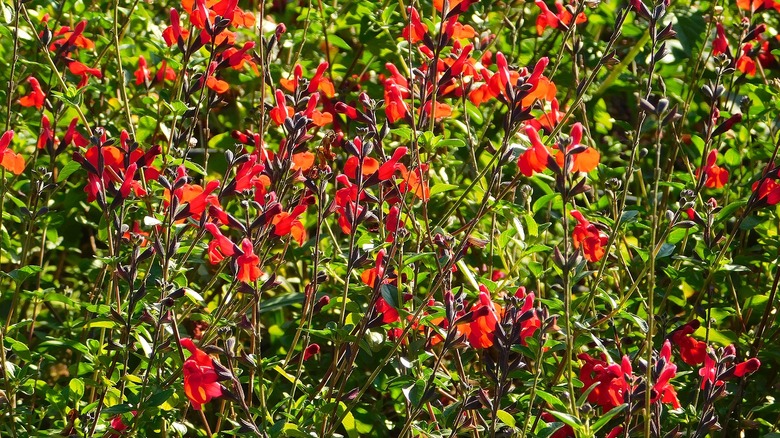
In the wild, autumn sage is often found growing on rocky banks or slopes. So if you have similar spots on your property, consider reserving them for this small shrub. For warmer locations, a spot that gets a bit of afternoon sun is ideal, while on the cooler end, mulching is important to protect the plant's root system in winter. As for watering, autumn sage requires very little; a deep watering twice a month is sufficient.
Because autumn sage typically doesn't exceed 3 feet in height or spread, it's an ideal plant for a sloped yard and among the best flowering shrubs to grow if you have a small yard or garden. When planting, space young autumn sage plants about 12 to 36 inches apart, depending on the cultivar's stated width. Also, given that this Texas native is a plant that thrives in sandy soil, make sure its growing area is well-drained. Add sand or sharp stones, if needed.
To keep pollinator-attracting blooms growing in the warmer months, pinch back the tips of the branches often during this time. It's also helpful for bushier growth to prune back the branches by as much as one-third in early spring. If you're not growing autumn sage on a slope or another out-of-the-way place, be sure to set it where the plant's stems won't get much foot traffic. Otherwise, autumn sage is a low-maintenance flowering shrub that doesn't get much troubled by diseases, insect pests, or even deer.