

Not Granite Or Limestone: The Natural Retaining Wall Idea To Add Visual Interest To Your Yard
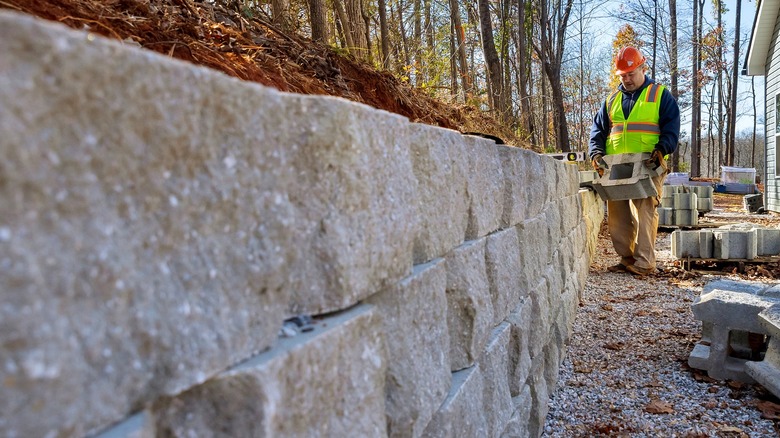
There are plenty of stone retaining walls that would look amazing in your yard, and the hardest decision you'll likely make is which material to use. If you want to add some eye-catching visual interest, you may have considered using something like granite or limestone. However, there's another natural material that's not only aesthetically pleasing, but durable and long-lasting as well: coarse basalt, one of the best natural stones for a retaining wall that'll add privacy to your yard.
As an igneous rock, basalt is so tough because it was formed from volcanic magma, which has had plenty of time to cool and harden. A lot of this material can be found around the Pacific Northwest, and it's relatively popular for use in hardscaping. It has a dense consistency, making it excellent for structures such as retaining walls. As this natural stone material is quarried, coarse basalt is available in rock pieces that are not uniform in size or shape. This means your retaining wall is going to be one-of-a-kind.
Advantages of using coarse basalt for a retaining wall
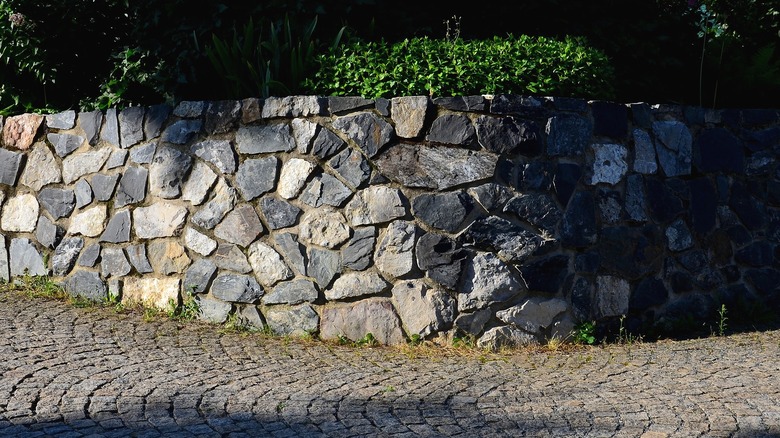
A retaining wall that's built from coarse basalt rocks will look quite rugged in appearance, so it'll naturally blend into your landscaping while still grabbing the eye as an outstanding feature. You can use the various shapes and sizes of the boulders to create a distinctive wall pattern. As for colors, unweathered basalt looks dark gray (charcoal) or black. Weathered basalt, however, can appear more earthy, resulting in colors such as gray, tan or brown, yellow or orange, and even gold.
Once your wall has been built, the natural stone requires very little maintenance and will look fantastic for years to come. The hardness of the stone (5 or 6 on the Mohs hardness scale, which ranks diamond at 10) even makes it resistant to abrasions and scratches.
The only drawback of using coarse basalt is that installation can be time-intensive because you'll have to work out the best placement for the various-sized stones. Primarily, you want the larger ones toward the base of the wall and save the smaller ones for near the top. Also, you'll have to decide whether you want to dry stack the boulders or use mortar to fill in the gaps.
Essentially, if you're not overconfident in building a wall using coarse basalt, it's probably best to leave it to the experts. Lastly, once your barrier is standing, consider adding to its natural beauty with some cascading plants that will happily spill over your new retaining wall.