

Ditch Traditional Cement For An Eco-Friendly Alternative That Looks Good & Lasts A Long Time
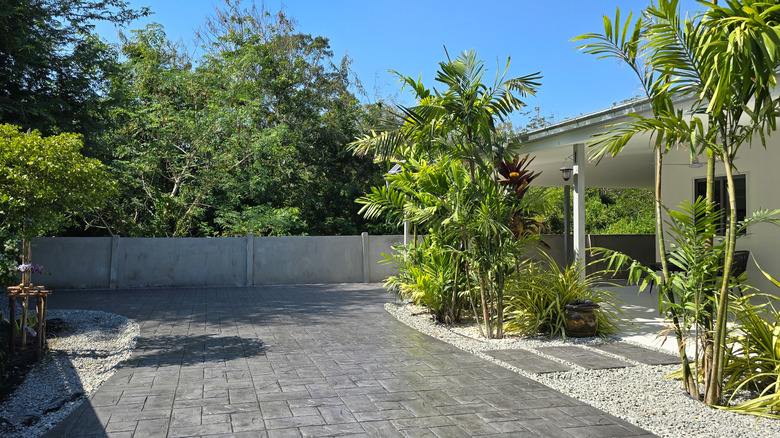
Traditional cement is one of the main components of concrete. Cement is mixed with sand, water, and other aggregates like gravel before it can be used to build everything from patios and driveways to high-rise homes. Unfortunately, making cement has a hugely negative impact on the environment. Clay and limestone need to be heated to over 2700 degrees Fahrenheit (1500 degrees Celsius), which uses massive amounts of energy. Worldwide, cement manufacturing produces billions of tons of harmful carbon monoxide every year. That's more than most countries. There are a number of ways to ditch the concrete in your yard, yet it remains popular because of its affordability, strength, and durability. In an ideal world, we would make concrete without environmentally damaging cement. Fortunately, there are now more sustainable alternatives known as "green concrete," and they hardly look any different than the original.
Rather than being one specific product, green concrete is a broad term for several different formulas. The material can be made in a number of ways, but basically, some of the components in an ordinary concrete mixture are swapped out for materials that would otherwise be thrown away. For example, it might be replaced with the byproducts of steelmaking or power generation. Originally produced in the late 1990s, green concrete uses less energy and produces lower emissions than concrete made with cement. The inclusion of recycled materials can also make it cheaper, and some formulas can even outlast traditional cement-based concrete.
Green concrete is a new option that uses more sustainable components
It's important to point out that so far the materials in green concrete haven't completely replaced traditional cement. However, some materials like blast furnace slag can replace as much as 80% of the cement found in ordinary concrete. Furnace slag, the waste from iron and steelmaking, can also be added for strength. Using green concrete can also prevent waste going into landfill, as is the case with fly ash, a byproduct from coal-fired power stations, which becomes ashcrete. Finally, instead of quarrying for more traditional aggregates, old concrete from demolition projects can be ground down and recycled into green concrete. It's a sector that continues to develop, and a variety of other ingredients may be used.
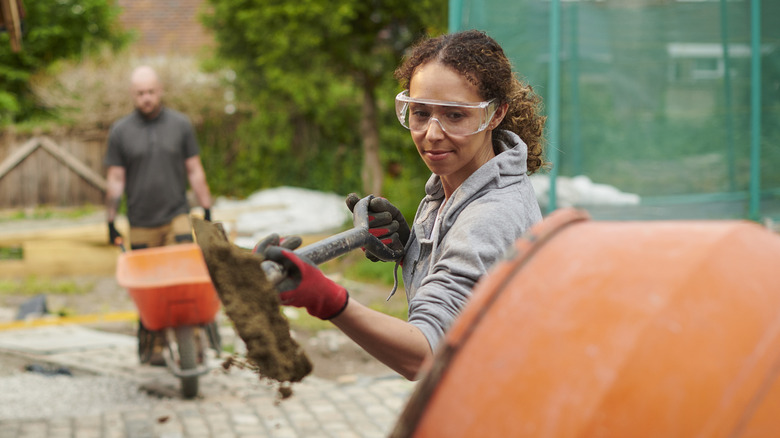
Whether you're pouring a small patio or constructing a building on your own property, green concrete should behave in much the same way as the ordinary stuff. It should be compatible with most existing concrete tools and machinery, and it's appropriate for anything from garden walls to pathways and driveways. In fact, it could even be tougher and longer-lasting. The main challenge is one of availability. Unfortunately, you can't yet pick up a bag of green concrete mix at your local hardware store. It may also be difficult to find contractors experienced in its use because it's relatively new. Nevertheless, if you're committed to green project upgrades that keep your home sustainable, it's worth considering, and the availability of green concrete is bound to improve as time goes by.