

Grow The Best Peonies By Avoiding This Common Natural Fertilizer
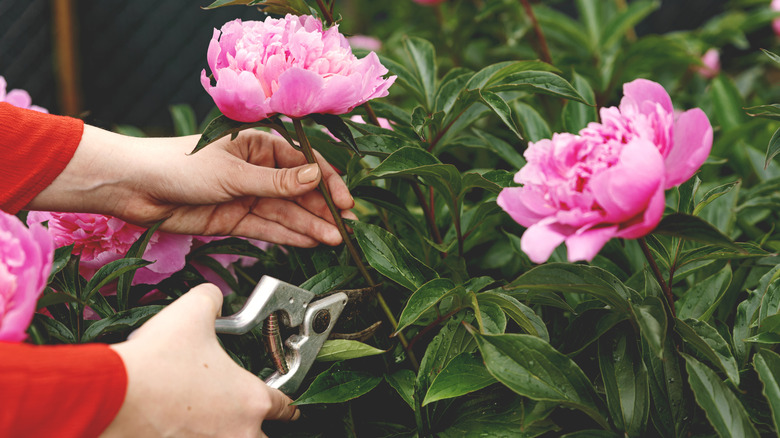
With their iconic, fluffy blooms, peonies (Paeonia spp.) are the darlings of any cut flower garden. These beauties have a six-week blooming period that starts in late spring and ends in summer. Even when peonies aren't blooming, their lush, glossy foliage provides visual interest in the garden. Luckily, this stunner isn't too fussy about its growing conditions, as long as you pick the best peony roots for your garden to maximize beautiful blooms. It thrives in a wide range of climates, from USDA Plant Hardiness Zones 3 to 9. If you're currently caring for or planning on planting peonies, you're probably curious about the inputs they need to thrive. While you might have heard that coffee grounds are a good soil amendment for peonies, it's actually best to avoid using them as food for this plant.
All plants require specific nutrients to grow. Lots of common household items can be used as natural fertilizer, and used coffee grounds rank high among them in gardeners' — and coffee fanatics' — eyes, mostly because they're readily available and free. It's true that this abundant kitchen scrap is a good source of organic matter for flower beds. However, coffee grounds may also make garden soil more acidic, though the effect is likely mild. Peonies thrive in neutral to slightly alkaline soil — they prefer soil pH levels between 6.5 and 7.0. With that in mind, coffee grounds may not be a suitable natural fertilizer for this particular genus of flowering herbaceous perennials. Coffee grounds are better suited for acid-loving plants such as azaleas, blueberries, or heathers. You can, however, use coffee grounds sparingly in your compost as a source of nitrogen. Just make sure it doesn't exceed 25% of the mix.
Eggshells are a better kitchen scrap fertilizer than coffee grounds for peonies
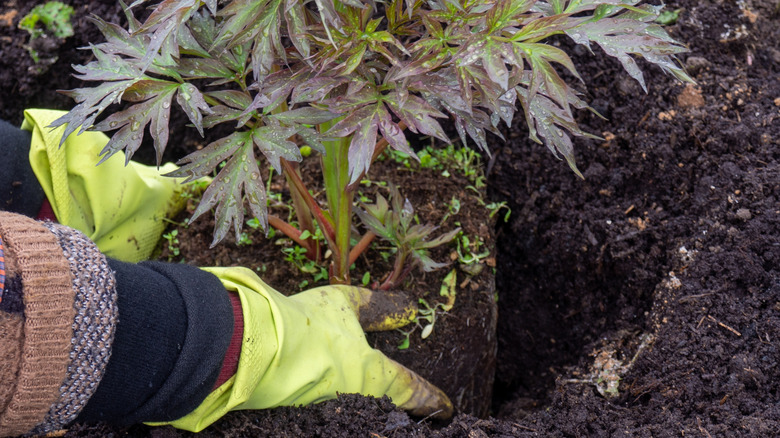
If you want your peonies to bloom abundantly, you need to feed them with a low-nitrogen fertilizer. Nitrogen encourages excess foliage growth, while phosphorus and potassium are needed for lots of flowers. Switch out the nitrogen-heavy coffee grounds for crushed or powdered eggshells. The latter kitchen scrap is an excellent source of calcium for plants, which encourages stronger stems and protects against infection from fungal diseases. Another helpful organic fertilizer blend for peonies is one part manure, one part compost, and one part bone meal. When you apply fertilizer matters just as much as the ingredients. Fertilize your peonies at planting, then again in spring and as the plant is going dormant in fall. Peonies typically don't bloom in their first season, so if that happens to you, don't worry — it's not due to using coffee grounds as fertilizer.
Fertilization is only one part of the picture for thriving peonies. Proper care starts the minute you get your bare root plants home from the nursery. Plant peony roots in fall and choose your planting location wisely — peonies aren't fond of getting moved around too much. Peonies also require well-drained soil and 6 to 8 hours of sun daily. Their top-heavy blooms are prone to drooping or breaking off in heavy wind and rain. An often overlooked mistake you'll want to avoid when planting peonies is choosing an exposed spot. Provide support for the tall flower stems if needed, too. After you plant your peonies, water them well and continue to keep the soil moist. Deadhead spent blooms to encourage more flowers. Once the foliage dies back in fall, cut the plant down to the ground and apply a light layer of mulch.