

We Tried A Common Cleaning Hack To Lift Baked-On Grease, But The Results Were Far From Sparkling
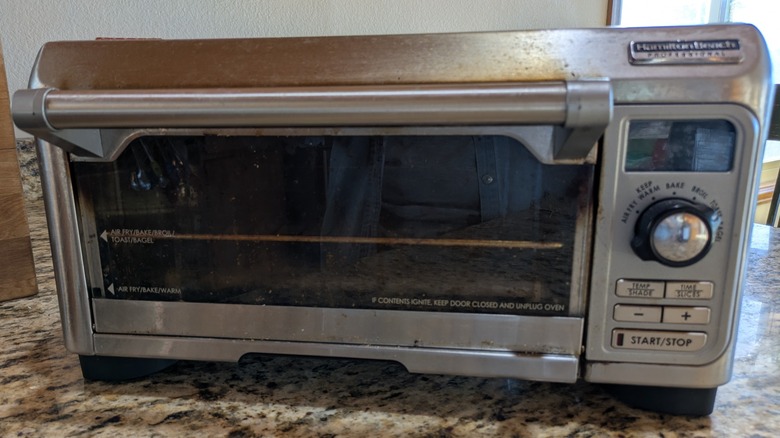
Dirty microwaves are a major pet peeve of mine. You'd think that toaster ovens, with their similar size and function, would also bother me when in a gross state. But no — I'd allowed mine to go at least a year without a proper deep cleaning. With guests coming, it was in my best interests to make the toaster oven less gross. I like DIY cleaning products with few ingredients and low price tags. I'd seen home remedies online for scrubbing burnt-on grease from baking sheets with the help of hydrogen peroxide and baking soda. My toaster oven's rack and removable drip pan had accumulated many months of grime that soap and water was powerless against. Would this budget-friendly duo vanquish what dish soap and vinegar wasn't able to?
If TikTokers' testimonials are to be believed, a paste made of baking soda and hydrogen peroxide spread thickly onto a greasy, stained surface would magically eat away at an unwanted layer of crud on a metal baking sheet. The hack doesn't call for exact measurements of either ingredient, but instead to make a thick paste. Once spread on the surfaces, the mixture needs to sit eight hours up to overnight for full effectiveness. I had both ingredients on hand, and the low effort the trick required made it worth seeing if the toaster would come away visibly improved.
Supplies and steps to degrease a toaster oven
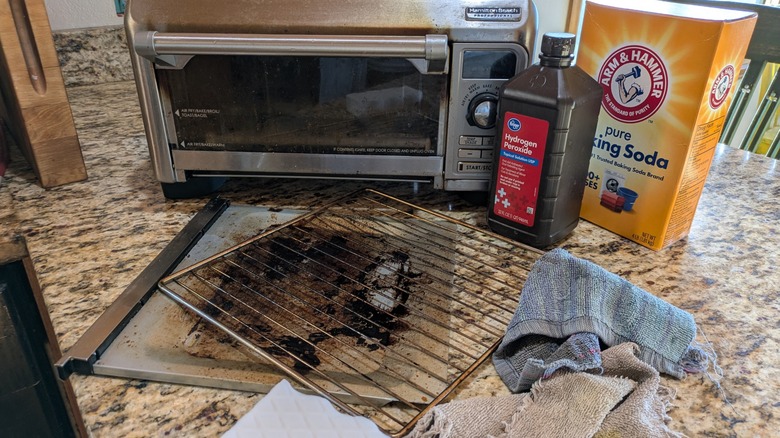
First, I wanted to make sure these ingredients were safe when combined; there are certain substances like bleach and acids (think vinegar or lemon juice) that react and create harmful gases when mixed together. Likewise, mixing hydrogen peroxide and these popular cleaners is a bad idea. With a bit of research, hydrogen peroxide and baking soda work safely in tandem for lots of applications, so I felt comfortable moving forward.
To the kitchen I went with a handful of rags, a Magic Eraser, and a mostly full bottle of store brand hydrogen peroxide that hadn't been opened for long. Out of the pantry came the Arm and Hammer baking soda, too. Once I set it on the counter, I realized that using a Magic Eraser might not tell me enough about whether the ingredients worked. After all, grimy grills are no match for a clean with a Magic Eraser, so I saved the foam scrubber for something else.
After a preliminary unplugging, disassembling, and decrumbing of the toaster, I placed the rack and lower tray on baking sheets and mounded a generous pile of baking soda atop both as well as on the interior of the toaster's door. Next came an equally generous dousing of hydrogen peroxide. With a gloved hand, I mixed and spread the paste evenly over all of the surfaces, and went on with my day. I'd check on the progress in eight hours, hopefully uncovering toaster components with renewed shine and nary a spot of grease.
Did a clean toaster lie under the baking soda-hydrogen peroxide crust?
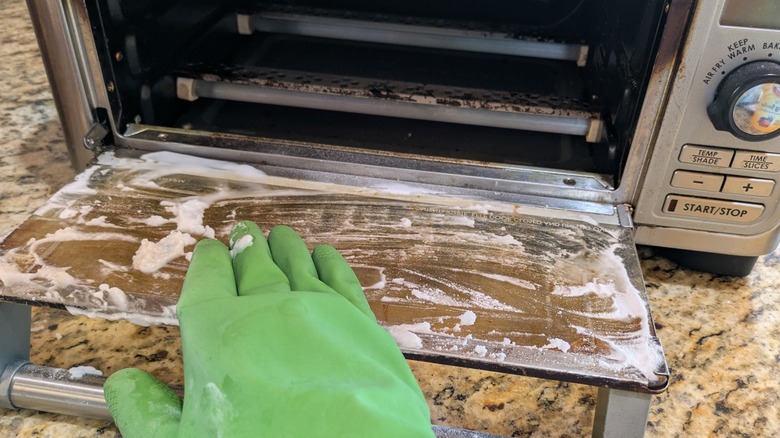
My watch told me that eight hours had indeed passed, so I re-donned my gloves and worked a damp rag over the dried layer of baking soda and hydrogen peroxide. As I chipped away flakes of paste, the metal and glass surfaces looked pretty much the same as they did prior to the treatment. Should I have loosened the paste by letting some water soak into it first? The directions called for cleaning the paste away with a "light scrub" followed by a wash with soap and water. Was my wipe-away a little too feeble to count as a light scrub? Would a better post-paste soaping make the necessary difference?
Not feeling satisfied with this first attempt at the process, I decided to go for round two. Maybe a "light scrub" with a bit of water to soften the paste, then soap and water, could have been the missing steps from my first attempt. With the vague timeframe of "overnight" being hard to quantify, I let the mixture do its magic for about 18 hours, mostly to fit with my schedule. That extra chunk of time along with more thorough scrubbing did little to lift the baked-on stains left behind by my first attempt, but at least I removed my doubts. Despite how unattractive I find aluminum foil linings in or on kitchen appliances, I'd probably be better off trying this hack that can change the way I clean my toaster oven.
Hydrogen peroxide and baking soda didn't degrease my toaster
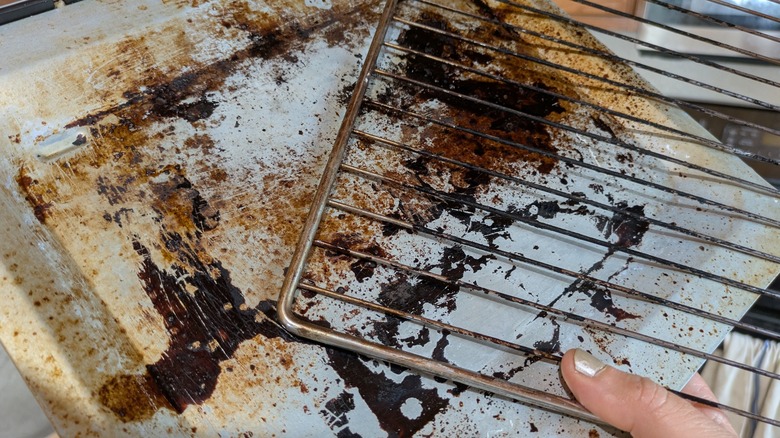
My experience with this cleaning recipe was unsuccessful, but it's hard to say if a year or so of basically cured grease on my toaster would be vulnerable to all but the most noxious chemicals. With extra time, fresh hydrogen peroxide, and more scrubbing with soap, I did my due diligence to test this trick. I concluded that this pairing is no match for old, baked-on grease. However, if the online video testimonials of sparkling-clean cookie sheets are to be believed, the hydrogen peroxide-baking soda treatment might be more effective on newer stains.
On a lark, I asked my Alexa device if altitude can change the effectiveness of either hydrogen peroxide or baking soda, as I live at 8,500 feet. Because altitude can influence everyday tasks (like baking, for example) in sometimes unexpected ways, Alexa's "yes" sparked me to search for more reliable backup for this. Not being able to find (or understand) more scientific sources, I can't help thinking that someone living closer to sea level might still have better luck degreasing their toaster with this two-ingredient paste.
Given the safety and cost of the ingredients and the minimal time and effort it required, I won't advise against trying this method; after all, your lesser-stained toaster components might respond better to the combo. It may be worth giving a hydrogen peroxide-baking soda treatment a try on your own toaster oven, as long as you don't live in the mountains!