

Not Coffee Grounds: The Kitchen Scrap You've Trashed That Is A Great Tomato Fertilizer
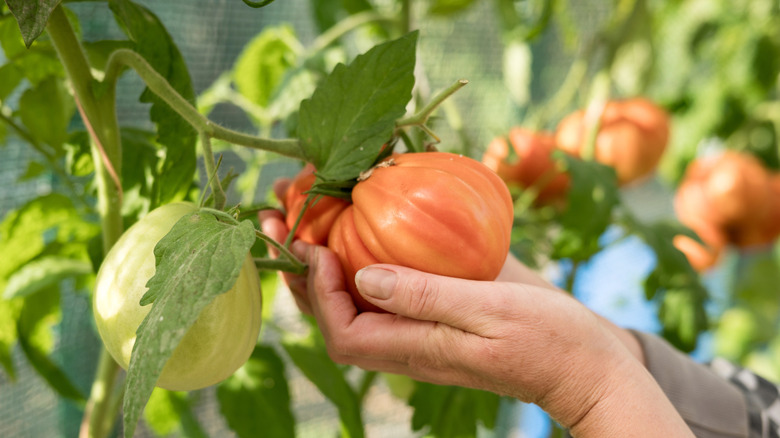
Every year, there seems to be some brand new trend, hack, or gimmick that promises to boost your tomato plant quality, production, or yield. Most of them don't work, are based on rehashed nonsense that somebody found online, or are just aimed at selling you a product. I'm a seasoned organic gardener who grows a lot of food crops, and I have a number of tricks up my sleeve that help me get fantastic results without chemicals and without spending a huge amount of money.
My favorite lesser-known gardening hack for tomatoes and many other heavy feeding crops like pumpkins, is to bury fish scraps deep beneath the root zone at planting time. This is an ancient gardening technique that really works, even if it sounds a bit gross. It's not talked about very much anymore because fewer people have access to fresh fish on a regular basis and, for many people, the idea of burying raw fish pieces in their gardens is not terribly palatable. You can get fish meal and fish emulsion (liquid fish fertilizer concentrate), but this is comparatively expensive and real fish does the job just as well.
The fish acts as a slow-release fertilizer close to the root zone. As the raw fish decomposes, it releases its nutrients into the surrounding soil. The plant roots grow down into this nutrient-rich layer and are able to take up the nutrients provided by the decomposing fish. Fish carcasses are rich in nitrogen, phosphorus, and potassium, as well as calcium, all of which are important for plant growth. This is especially useful for plants like tomatoes that are very demanding when it comes to feeding. They require access to relatively high amounts of nutrients for proper leaf growth, strong root development, and good healthy fruit.
What fish to use, and what to avoid
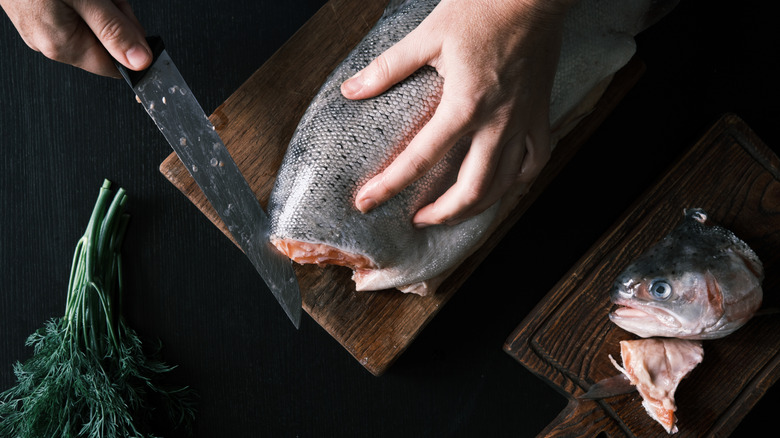
Make sure you use raw fish, never cooked. Cooked animal products take longer to break down. Additionally, when you cook fish, it's highly likely that you'll add salts, seasonings, oils, and sauces, which would then make their way into your soil. Depending on what you've used, this can cause significant issues for the soil and your plants. Fats, for example, are particularly bad and will inhibit rapid decomposition and you'll end up with a slimy, rotten mess right at the root zone of your tomato plants. I use whatever fish scraps I have available. For me, that's often salmon heads and frames, as I can find these at minimal cost locally, but I'll also happily use whole smaller fish like sardines. But I'll use any raw scraps, including heads, carcasses, and fins, tails, and guts, especially if they're free.
If you're preparing fish but you're not quite ready to go out and bury it in the garden, do what I do. Freeze it in an airtight box or freeze it double-bagged to reduce the smell and just keep adding to it. Then, at planting time, you can just get them out of the freezer and bury them beneath your plants. If you don't know anybody that fishes on a regular basis who would willingly give you their scraps, it's worth visiting your local fishmonger as they will often provide bags of scraps for free or at very little cost.
How to bury fish under your tomatoes
Burying fish under your tomatoes really is as easy as it sounds. And it's one of the best ways to set your tomatoes up for success in a low-maintenance garden. You just have to get it deep enough. Raw fish smells even to humans and predators and scavengers like foxes, dogs, and raccoons all have much more sensitive noses than we do and they'll all happily devour old fish scraps if they can get to them. Just burying them a couple of inches deep isn't enough to keep predators from digging them up.
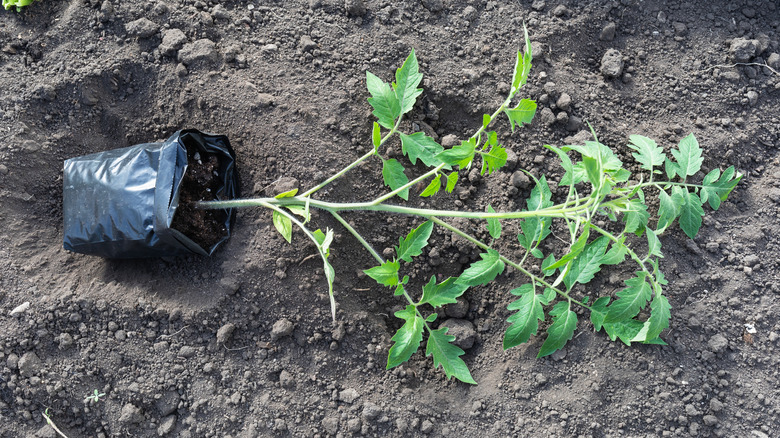
I bury my fish scraps about 18 to 20 inches deep, and I recommend you do the same. Just make sure you dig your planting hole deep enough to accommodate the fish scraps and then a layer of good quality compost or some of the topsoil that you just dug out. Then plant your tomatoes on top. I like to bury my tomato plants deep or sideways to give them the deepest, strongest root system possible. As they grow, the roots will grow directly into the area that contains the decomposing fish, where they'll be able to access all of the important nutrients that the fish bones and scraps are releasing as they break down. This technique only works at planting time because you have to get the fish deep enough that it won't be disturbed by predators and it needs to be right under the root zone to be most effective. This is not a job you can do mid-season once your plants are already in the ground.