

Water Heater 'Vacation Mode' Or Off: Which Setting Saves You More?
Packing your bags for a well-deserved getaway usually involves a mental checklist of top safety tips for extended stays away from home, like locking the windows. But when it comes to your water heater, a debate divides homeowners: is it better to switch the unit entirely off, or trust that dedicated "vacation mode" dial?
Turning the water heater completely off saves the most money. Water heaters suffer from standby heat loss, constantly losing warmth to the surrounding air. By shutting the unit down, you stop paying to heat water you aren't using. The common myth that reheating a cold tank uses more energy than maintaining its temperature is generally false. Because standby heat loss continues while a tank stays hot, shutting it down for an extended absence typically saves more energy. However, a complete shutdown isn't always the best choice. For short weekend trips, the savings amount to pennies, and you will have to wait hours for a hot shower when you return. And, turning off an older gas water heater with a standing pilot light also means you'll need to relight it when you return.
To keep your home safe during extended stays, use vacation mode for short trips under four days or to avoid the hassle of relighting a gas pilot light. This setting adjusts the temperature to around 50 degrees Fahrenheit (much colder than your usual setting), saving energy while keeping the system active. Crucially, if you are leaving during freezing winter weather, do not turn the water heater completely off. Vacation mode may help reduce the risk of freezing around the water heater, but your home's heating system remains the primary defense against frozen pipes. If you are leaving for weeks or months during warmer weather, turning the unit completely off maximizes energy savings. In that scenario, you should also shut off the main water supply to prevent catastrophic leaks while you are away.
The breakdown of turning the water heater off or on vacation mode
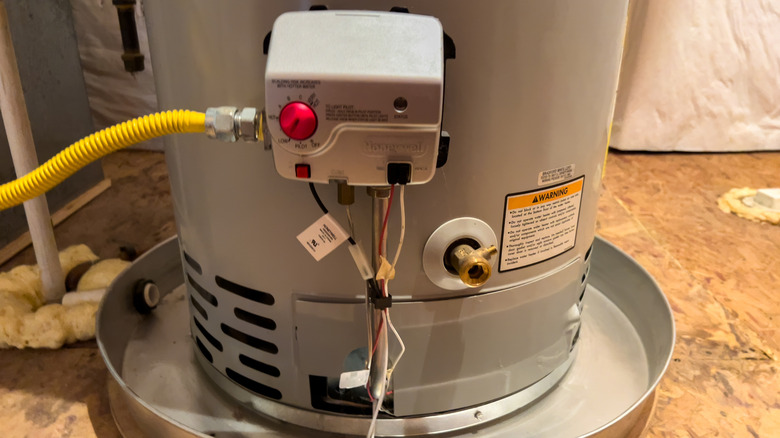
To choose the right strategy for your home, it helps to understand exactly what happens inside your tank when you adjust these settings. While both options reduce unnecessary energy use while you're away, they work differently.
Most modern storage-tank water heaters feature a dedicated "VAC" or vacation setting that drops the internal water temperature to a baseline of about 50 degrees. The primary advantage of vacation mode is freeze protection. By maintaining this low baseline, the system helps prevent your pipes from freezing during a winter cold snap. It also offers a fast recovery time, often requiring less than an hour to bring the water back up to temperature when you return. However, because it still maintains a low temperature, the system suffers from minimal standby heat loss, meaning you will see a marginal amount of energy consumption on your utility bill while away.
Conversely, turning the unit off shuts down the heating system entirely, eliminating the water heater's operating energy use while you're away. Because the heating elements or burners never fire up, standby heat loss is eliminated. You aren't paying a single penny to maintain water temperature, making it the most mathematically efficient choice for long-term absences. The trade-off is time and maintenance friction. When you get home, a completely cold tank can take several hours to reheat, depending on the type you have. And, if you have an older unit, you'll need to find and relight the pilot light when you return. Most importantly, turning a water heater off in an unheated area during freezing weather can increase the risk of frozen pipes or damage if the home isn't otherwise protected from freezing temperatures.