

Not Eggshells: The Tomato Fertilizer That Boosts Calcium And Helps Prevent Blossom End Rot
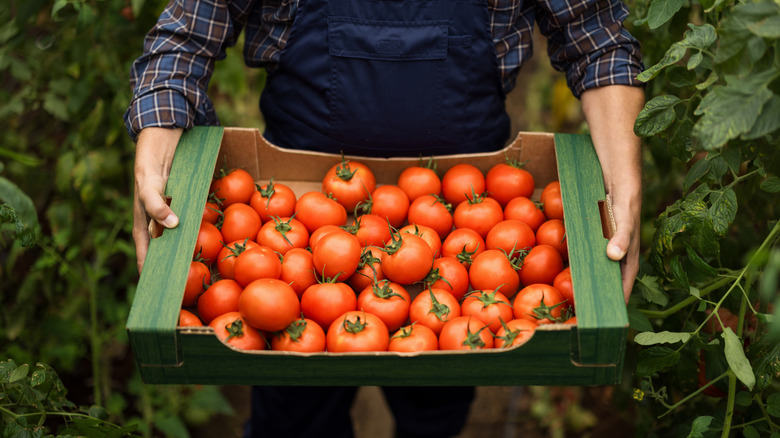
Tomatoes are a classic crop you'll see in many a hobby garden. However, they can be a bit tricky to grow sometimes. These finicky plants need a lot of doting to help them produce fruit effectively. Water, heat, and soil conditions all factor into how well your plant will grow. If conditions aren't exactly to your tomato plant's liking, it can be susceptible to disease and less willing to produce. One lesser-known gardening hack for growing tomatoes is using a soil amendment called gypsum.
Gypsum, also known as calcium sulfate, is a naturally occurring evaporite mineral. Essentially, it's the result of water evaporating and leaving behind mineral anhydrite. It's frequently found near hot springs, caves, and saline lakes. Farmers have been utilizing gypsum to give their soil a boost for over 150 years. It's a great source of both calcium and sulfate. Calcium is a key for a plant's growth and development, and you can add this secret ingredient to your lawn or garden to support your plants.
Gypsum is particularly helpful for tomato plants. These garden staples are extremely susceptible to blossom-end rot, a physiological disorder brought about by a lack of calcium. If you notice a significant number of tomatoes with bruised or rotten bottoms, this is likely the issue you're grappling with. Eggshells are often touted as a convenient soil amendment to help increase calcium levels in your garden soil. However, this isn't the best solution for blossom-end rot. While eggshells are calcium-rich, they don't tend to break down fast enough to provide a meaningful amount of nutrients to your tomatoes right away. Gypsum is far more readily available. If you're concerned about calcium levels in your tomato bed, this might be a great soil amendment to lean on.
How to protect your tomatoes from blossom end rot with gypsum
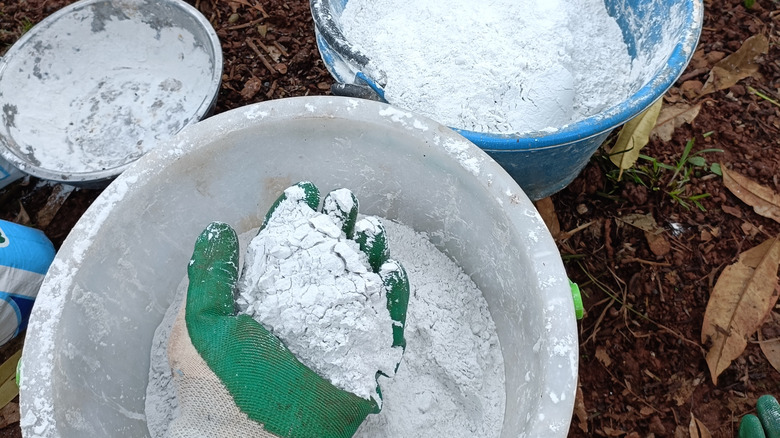
Always conduct a soil test first to get a good idea of what nutrient levels you're working with. If pH levels are normal and calcium is low, gypsum is an excellent amendment to help prevent blossom-end rot. Apply one-fourth of a cup of gypsum to each of your tomato plants when you transplant them. This is one way to give tomatoes a major nutrient boost and help support healthy growth as they establish themselves. If you notice blossom end rot in a mature plant, you can also add gypsum to try correcting the issue.
Calcium isn't the only factor to consider when mitigating the risk of blossom-end rot. Water uptake is another vital component to consider. Gypsum can aid in loosening compacted soil to improve soil drainage and absorption. It's also vital to stick to a consistent watering schedule. If you run a soil test and it seems there's enough calcium, you may need to adjust your watering schedule. Tomatoes require moist, not sopping wet, soil. Watering your tomatoes every day or every two days is usually just fine.
If calcium levels are good and you're watering your plant consistently, another cause of blossom end rot is conditions that encourage your tomato plant to grow faster than its roots can keep up with. A few sunny, hot days might encourage the plant to have a growth spurt without the opportunity to take up enough calcium to support its fruit. If this is the case, pluck the affected tomatoes and continue caring for your plants as you were. Just because those fruits suffered from blossom end rot doesn't mean future fruit won't grow normally once root development catches up with the rest of your plant.