

More Than Medicinal: This Summer-Blooming Herb Draws Pollinators And Smells Fantastic
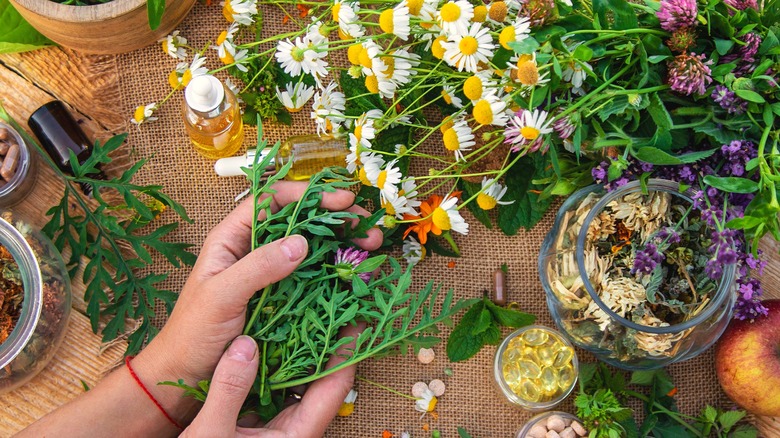
Let's talk holy basil (Ocimum tenuiflorum), also known as tulsi. This is the basil variety believed to bring luck to a home, and it's on our list of underrated herbs to try planting in 2026. Holy basil offers a number of benefits for gardens. Specifically, the aromatic plant is both a pollinator magnet and a natural pest repellant. While both bee and butterfly pollinators are drawn to holy basil, deer and rabbits will avoid it.
The spicy fragrance and flavor of this annual herb, meanwhile, have been compared to licorice, mint (it's a member of the mint family), cloves, and sweet basil. Throughout the summer season, it produces tubular-shaped flowers in three main colors: white, pink, and light lavender. (See 10 other fragrant herbs that'll make your home smell incredible).
As for culinary applications, tulsi leaves are typically cooked rather than eaten raw like its sweet basil cousin. What's more, one of its nicknames is the "Queen of Herbs." But perhaps best of all, especially when it comes to home gardening: Holy basil is easy to care for.
Growing holy basil in your garden
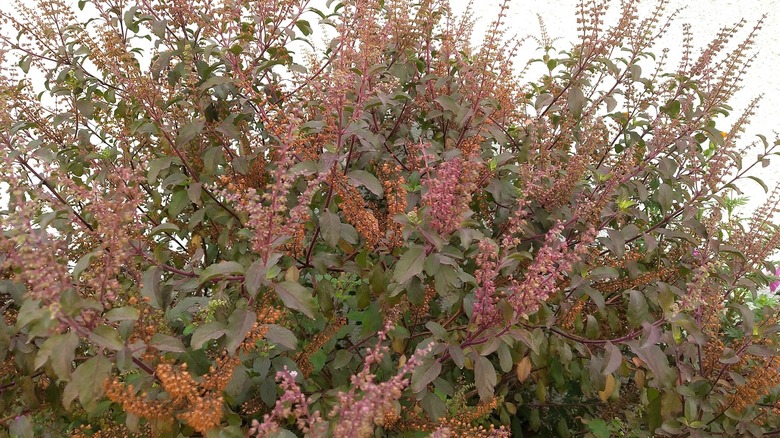
To grow holy basil, direct-sow seed in the soil or start seeds indoors six weeks before you plan to plant them outdoors. Sow in well-draining, moist, loamy or sandy soil that's rich in organic matter in a spot with full sun. Watering through drip irrigation is recommended so that water doesn't splash onto the foliage (and result in basil downy mildew); use this approach to keep the soil moist with an inch of water weekly. To keep your holy basil bushy, prune it regularly, snipping off the top 2 to 3 inches.
The most threatening pest currently for holy basil is the Japanese beetle. If you find these bugs, hand-picking the beetles off is the best approach. Harm can also come to holy basil plants via fungal disease, such as Fusarium or powdery mildew, as well as bacterial disease, like bacterial leaf spot. The plants require effective airflow for disease prevention.
Holy basil self-seeds liberally, so you can propagate it from seeds you collect from dry flowers remaining on stalks at the end of the season. Even though it's an annual, its self-seeding means you will probably have a few new plants growing in the spring. To keep it from going to seed, you can harvest or pinch back regularly, leaving a few plants to go to seed for collecting. You can also propagate from cuttings.