

Everyone Had It In The '50s, Now It's The Rare Glassware Worth Hunting For
We may receive a commission on purchases made from links.
Drinking glasses don't have to be fancy to get the job done — but it certainly helps when they are! Even if you're just savoring a cocktail after dinner or pouring some lemonade for a midday pick-me-up, choosing a glass with some personality can help to make a mundane moment feel special. Gay Fad glassware, in particular, is perfect for this task, as this brand's quirky designs can help you bring a little kitsch into your kitchen.
In 1939, artist Fran Taylor had a vision. Rather than accepting the fact that household objects were often plain and purely utilitarian, she decided to upgrade them. She began by painting floral motifs on metal trashcans, and as her offerings grew in popularity, she expanded her line to include other household necessities. As WWII raged on, however, rations on metal followed. Instead of giving up, she pivoted to glassware, eventually becoming the developer of over 1,000 designs under the Gay Fad label between 1945 and 1962.
As trends changed, Taylor didn't just stick with florals. The company's designs are unapologetically mid-century modern, featuring everything from quirky cartoons to graphic, embellished prints. Of course, the natural inspiration never left the picture entirely — bamboo, fruits, and flowing branches remained common motifs throughout the company's original life. While Gay Fad's original success saw a shocking end in 1962 due to a legal battle with a manufacturer, it's been revived in recent years by new owners John and David Annecy. The designs offered by these new owners are certainly worth a look if you're interested in mid-century décor, but if you want to experience the full glory of Gay Fad's heyday, vintage shopping is the way to go.
How to find and identify Gay Fad glasses
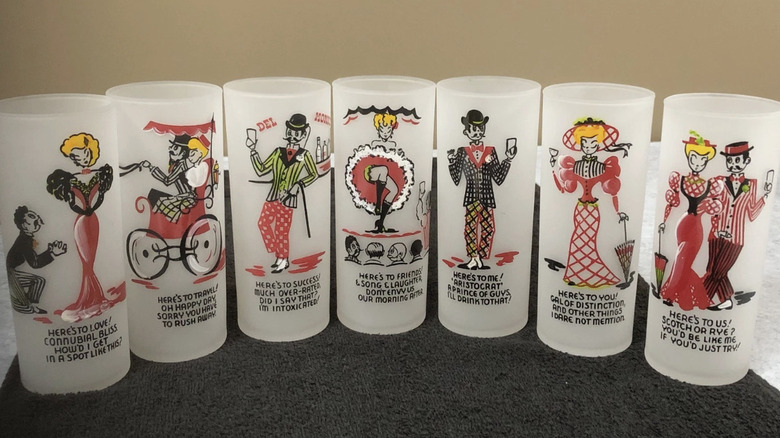
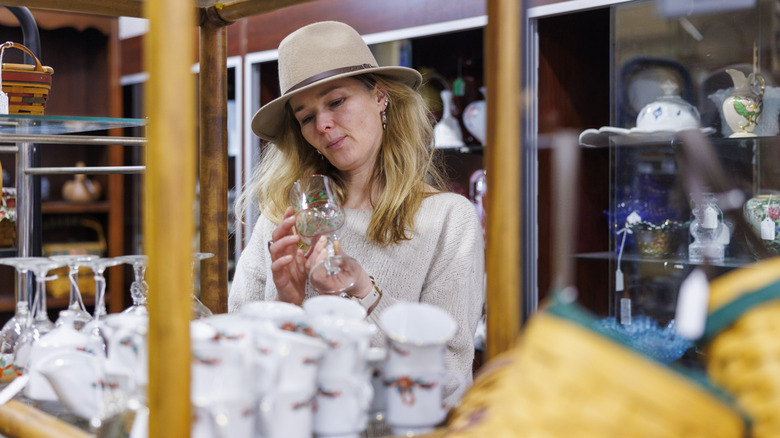
If you're a frequenter of vintage stores, antique malls, or estate sales, you've likely already crossed paths with some of Gay Fad's designs. Unfortunately, however, it's not always easy to tell what you have. One of the most common indicators that a glass was produced by Gay Fad its its frosted appearance, both inside and outside. This is because, rather than sandblasting the surface of the material, Gay Fad dipped glasses in hydrochloric acid. With that being said, not all glasses feature this finish. Designs could also be hand-painted, screen-printed, or acid-etched, throwing even more of a wrench into the identification game. If you're lucky, you'll stumble across a piece with a small "GF" etched close to the art, but this is only common on older items. If you're truly curious, consider taking a look through old catalogs or browsing online listings with the same print to get a better idea of its origins and whether or not its a genuine Gay Fad piece.
While certain identification can be tough, it's still worth keeping an eye out for. Antique and vintage stores are likely to have designs on hand (along with experienced staff members that can give your more insight into their origins), but you can also search online through resale sites like Etsy, eBay, and Facebook Marketplace. While these glasses have quite a bit of personal importance to collectors, they're not one of the most valuable items to seek out at the thrift store — prices typically range from $20 to $100 for sets. That might put a damper on things if you're shopping to get rich, but the affordability of these items makes them great for adding a bit of mid-century charm to your home on a budget.