

Forget Sand: The Beachy Byproduct That's Being Added To Cement For Eco-Friendly Concrete

Concrete is hard-wearing, tough, and cheap. It is used everywhere from bridges and roads to high-rise homes and DIYing a concrete patio that adds style to your yard. The problem is that concrete — which is made from cement, sand, aggregates, and water — is extremely bad for the environment. Cement production is often the focus of this bad rap, releasing billions of tons of harmful carbon dioxide into the atmosphere each year. The production of greener alternatives is being ramped up to combat this. Sand is often overlooked, yet it can comprise upwards of 30% of the concrete mix and is often taken from rivers or coastal areas. The environmental damage this causes leads to less biodiversity, faster erosion, and more flooding. Recently the construction industry has been trying to replace some of the sand or cement with a beachy by-product: seashells.
It's important to point out that nobody is going out and harvesting marine life just to turn it into a sand substitute. There wouldn't be any ecological benefit in that. The shells in question are actually recycled waste from seafood production. Every year the industry throws away literally millions of tons of shells from clams, cockles, mussels, oysters, and scallops that often just end up in landfill. In the future, more and more of these shells could be washed to remove the salt, crushed into pieces, and used to create more eco-friendly concrete.
Using crushed seashells instead of sand shows promise, but is not there yet
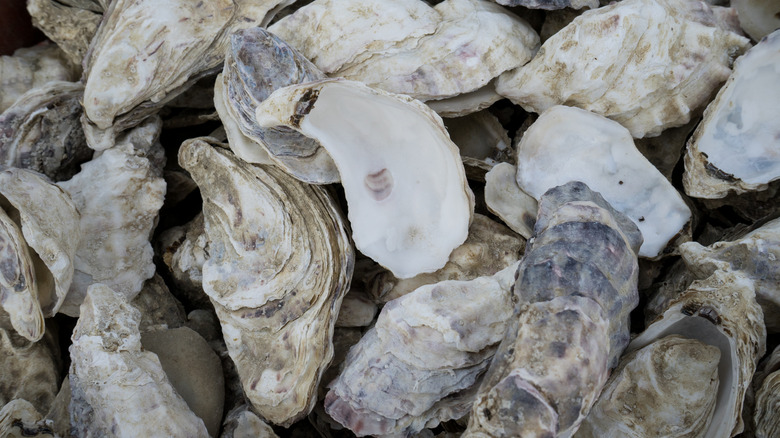
One of the key components in concrete is actually calcium carbonate, which impacts both durability and strength. This is frequently harvested from limestone, but the calcium carbonate found in seashells has similar properties. The main challenge is getting the mix right. Not surprisingly, different seashells have different compositions. According to research published in Materials in 2024, tests with oyster shells, for example, have shown that replacing 40% of the sand produces concrete that meets minimum building standards. However, the concrete made with oysters was lighter and slightly weaker than ordinary sand-based concrete. A different 2024 paper published in Materials declared that seashell content shouldn't replace more than 20% of the sand, and that the resulting concrete was not suitable for structural use. So while it could be a more eco-friendly material for hardscaping in your yard, you couldn't build a home with it just yet.
The future of seashell concrete is exciting, but if you were hoping that you could use it for green projects to make your home more sustainable, you may have to wait a while — or experiment with the mixture yourself in your garden. A number of studies and test projects are still being conducted, but as of yet there are no commercial products available. Concrete is relied on to support major construction projects, and the lives of millions of people depend on its strength, so it's understandable that extensive research is needed before you'll find bags of eco-friendly seashell mix at your local hardware store.