

Ditch Asphalt: The More Fashionable, Timeless Alternative That'll Make Your Driveway Pop
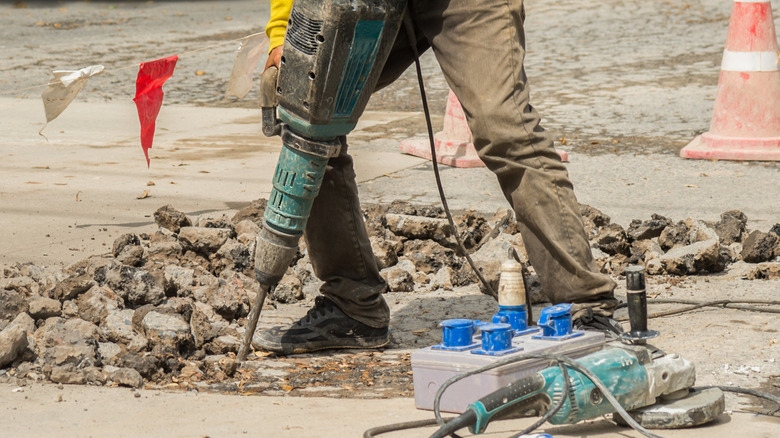
If you think asphalt or blacktop is your only choice for your driveway, there are several more stylish alternatives. Although asphalt is an affordable and long-lasting driveway material, its jet-black appearance after installation and the weathered gray look it eventually develops may not deliver the look you want for your home's entrance.
For a more interesting design, consider choosing paver stones for your driveway. Pavers can add character that may boost curb appeal. One option is Indian sandstone pavers. They offer the durability and look that make them a popular choice not only for driveways, but also for patios, pool decks, and walkways.
Indian sandstone is a natural material quarried in India, as its name suggests. Indian sandstone forms over millions of years as sand is compressed beneath layers of soil and other sediments. Minerals naturally cement the sand grains together, creating hardened sandstone. This process means Indian sandstone's primary component ends up being quartz, but other minerals are also present. This material can appear in a variety of colors, including red, brown, gray, white, and more. This highly durable stone has been a popular building material for thousands of years.
Key benefits of using Indian sandstone for your driveway
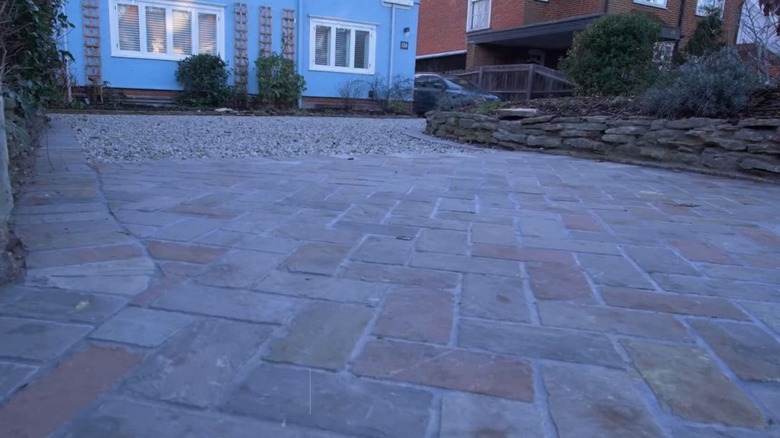
Any good driveway material has to be durable enough to withstand harsh weather and vehicle traffic. Indian sandstone meets this basic requirement because it doesn't easily show wear and tear from harsh weather. It offers the strength to manage the weight of vehicles because of the way it forms underground under significant pressure. As long as the pavers are properly installed, they can manage the heavy loads from parked and moving vehicles. If you need to create a slip-resistant surface, you can add texture through tumbling or honing techniques.
If you're confident in the durability of Indian sandstone for managing the weight of vehicles on your driveway, you can focus on one of this material's biggest advantages: its style and color options. The individual pavers naturally have veining and visible grain that enhance the material's appearance. Each stone has unique colors and patterns, creating a more aesthetically appealing driveway than concrete or asphalt. Some people appreciate that Indian sandstone is a naturally occurring material, making it an attractive and environmentally friendly alternative to some manufactured driveway materials.
Indian sandstone is also relatively low-maintenance. To remove dirt and leaves, a garden hose is usually enough. Some people choose to use a pressure washer on a medium or low-power setting (less than 2,000 PSI) with a wide spray nozzle to help minimize the risk of damaging the stone.
Why you might want to skip using Indian sandstone
Indian sandstone generally costs less than some premium natural stones, but it's worth noting that it's still significantly more expensive than asphalt. A new asphalt driveway will cost about $7 to $13 per square foot to install, while Indian sandstone costs about $25 per square foot for the materials alone. Installation adds considerably more to the total project cost.
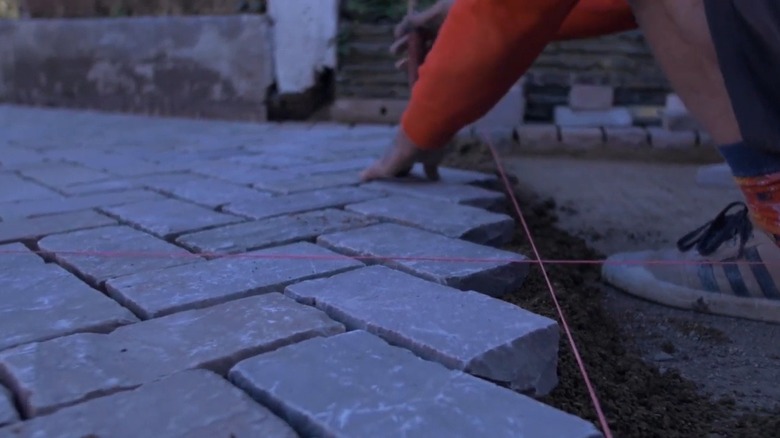
If you want to install a paver stone driveway made of Indian sandstone yourself, you're going to encounter some challenges, especially if you're new to the process. You'll have to spend time compacting the base material to reduce the risk of the pavers cracking under the weight of vehicles. Professionals may then recommend creating a mortar that goes over the base before laying the pavers. You need to avoid making the mortar mix too wet, as some individual pavers may sink too far into the material, leading to uneven surfaces. Additionally, because individual Indian sandstone pavers can have slightly varying thicknesses, you'll need to check each paver for proper alignment and levelness.
One downside to using Indian sandstone for your driveway is the porosity of the material. As it absorbs moisture, it may show stains. Dealing with puddles immediately and cleaning the materials regularly should help you avoid staining, especially if you live in an area with frequent rain. Indian sandstone isn't as dense as concrete, meaning it may show scratches in tough environments.