

Ditch Traditional Concrete: The Sustainable Alternative That'll Last A Long Time
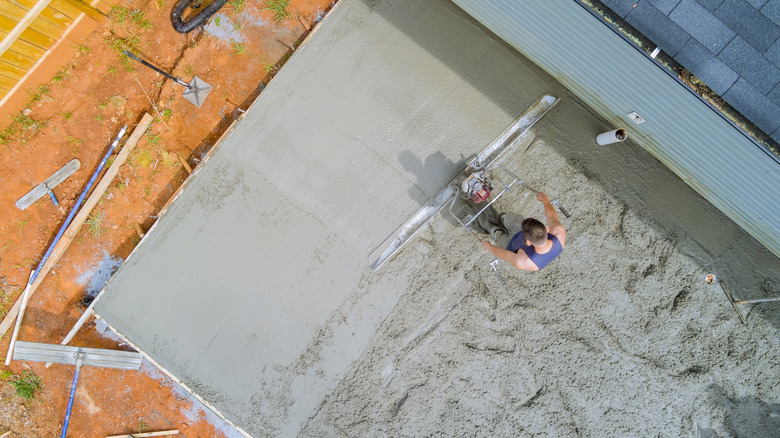
Concrete is the most commonly used construction material worldwide. In fact, if you add together all other building materials, the amount of concrete used is more than twice that sum. With this stuff so commonplace, it might come as a shock to know how environmentally damaging concrete is. Cement is the culprit, concrete's main ingredient and major resource suck.
It's time to say "Goodbye, cement" in favor of something that's lighter on the planet but just as good, if not better. Researchers have concocted an alternative called ashcrete that's even stronger than conventional concrete, and its primary ingredient is repurposed waste. To give you an idea of ashcrete's remarkable durability, it's being used to construct dams thanks to both its muscle and its water resistance.
The "ash" part of the name comes from its reuse of fly ash, a residue left over when power plants burn coal. This substance takes the place cement holds in a traditional concrete recipe, and it hardens into a tougher, more durable product. Fly ash and other recycled materials make up about 93% of ashcrete, and even though fly ash is a fossil-fuel byproduct, reusing it for ashcrete creates nearly 90% fewer greenhouse emissions than making concrete.
It also takes less water to produce ashcrete than concrete, another serious ecological concern. What's more, ashcrete is more affordable due to its high content of waste material. If you're looking for a sustainable material to replace your concrete driveway or need new pavers for a project, consider using ones made from ashcrete.
A few of ashcrete's home uses along with some caveats
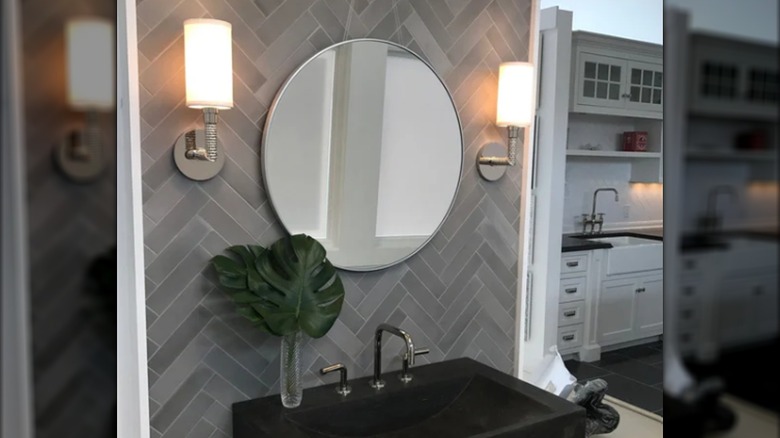
Ashcrete is becoming a popular material for roads, sidewalks, and other infrastructure in the U.S., but you can bring it home for a driveway, patio, and more. Concrete countertops have gained popularity in recent years, but we now know that it's better to opt for an environmentally friendly countertop instead. Ashcrete can stand in for this unsustainable material. The countertop manufacturer Corian is making counters from ashcrete that are both affordable and attractive. You can also purchase ashcrete tiles for backsplashes and flooring.
Once ashcrete is fully cured, it will hold up for a long time, but it's a bit more finicky than concrete. It's more temperature-sensitive; cold weather dramatically slows down the curing and strengthening process, so it's best to take on ashcrete projects in warmer seasons. It also takes longer in general, even without weather concerns, to reach full strength. However, if you're not in a time crunch, ashcrete will eventually harden into a mighty surface that should last for years.
While things made of ashcrete will last a long time, the material has a limited future if and when coal-fueled power plants are phased out. And it's a bit dubious to call this material "sustainable," since its main component is a fossil-fuel byproduct. Still, for now, ashcrete solves several problems by making use of what would otherwise be waste, and providing an improvement in performance over concrete.