

The One Thing You Should Do In July For Healthier Tomatoes
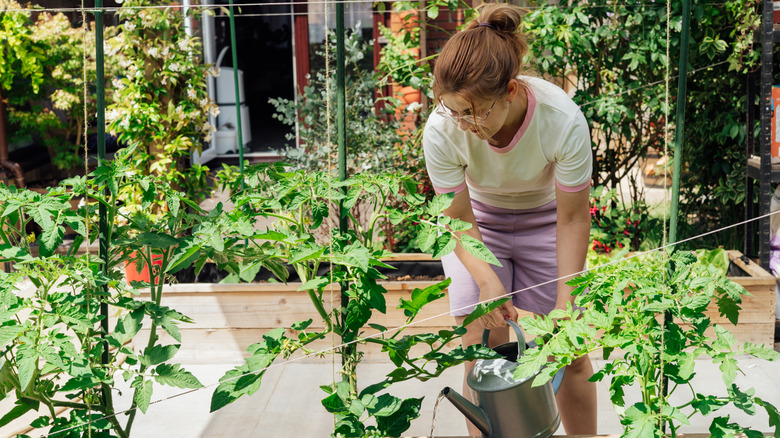
Tomatoes are an excellent backyard crop for gardeners of all experience levels to grow. Under optimal conditions, they're capable of prolifically producing fruit for an entire growing season. Since these beloved plants can be a bit finicky, gardeners have an array of best practices for keeping them happy. However, no amount of clever hacks for growing healthy tomatoes will make a difference if your plant succumbs to blight. Removing the bottom leaves in July is one way to prevent this.
Early blight is a fungal disease that can ravage the leaves, stems, and fruit of tomatoes, potatoes, and peppers. If left unaddressed, it can cause the plant to lose its leaves and fruit. In some cases, early blight can lead to complete plant failure. The warm, humid weather often present in July can exacerbate this issue. Symptoms include moist-looking patches on the leaves or stems of your tomato plant. These lesions expand and turn brown and crispy over time. You may also notice fuzzy, white growth on the plant's leaves or stems, or dark spots on the fruit.
Luckily, there's a simple solution to help stop blight – remove the bottom leaves before the infection has a chance to spread. This fungus starts at the base of plants, working its way upwards. Even if you don't see signs of blight yet, trimming these bottom leaves can help prevent spores that might be present in the soil below from creeping onto your plant. Since blight thrives in July weather conditions, this is a great time to take preventative measures to hinder its spread. With a bit of TLC, you'll be rewarded with a continuously bountiful harvest.
How to trim leaves to stop blight on your tomatoes
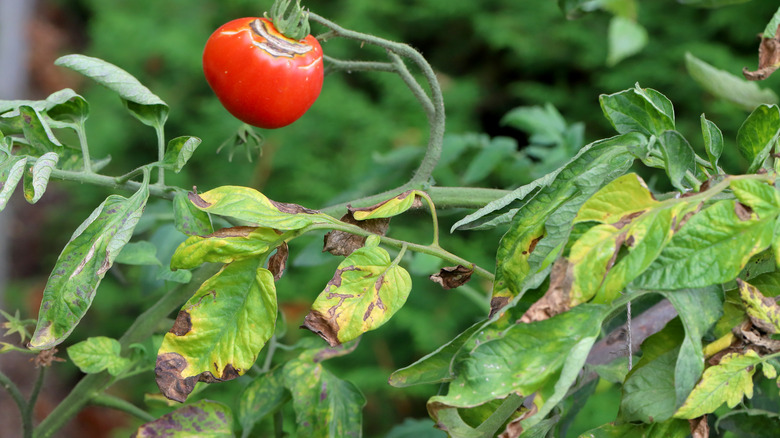
In July, remove any infected leaves near the bottom of your tomato plants, or just strip the bottom layer if you're trimming your plant preventatively. Early blight on the bottom leaves of your tomato plant may manifest as small, crisp splotches or soggy-looking leaves and stems. Dispose of these leaves far from your tomato plant so the disease can't spread. Some gardeners choose to bury or burn them. If you catch blight early, you can save the rest of your tomato plant.
To ensure the rest of your plant won't succumb to blight, you can remove up to one-third of the leaves from the bottom of the plant. After trimming up your plant, keep the remaining leaves dry to prevent any lingering spores from infecting more of the plant. Wash your hands and sanitize any garden tools you used after handling infected vegetation.
There are a few other ways to prevent blight and grow healthy tomatoes. Rather than watering from overhead, carefully water at the base of your plants with a drip system or watering can. Proper air flow is another key preventative measure — be sure to keep the area around your plants weed-free and support your plants with stakes or a trellis if needed. Lastly, add mulch under your plants to block any fungal spores that might be lurking in your soil. If you tend to struggle with blight in your home garden, you can choose blight-resistant tomato varieties that are specifically bred to be more resilient against this fungal infection.