

Why July Might Be The Best Time To Harvest Basil In Your Garden
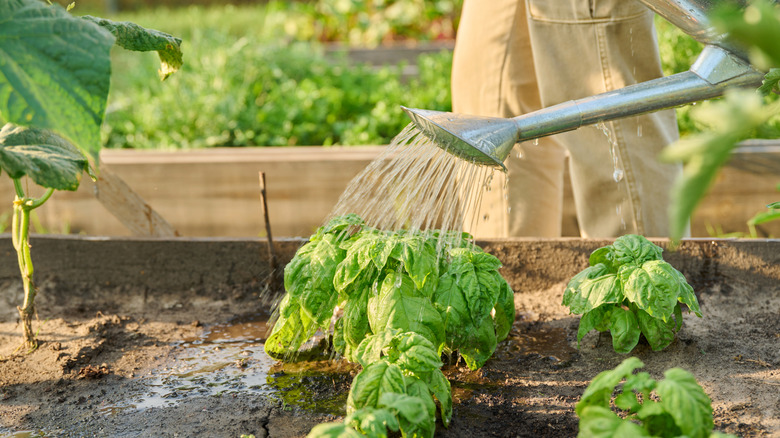
Gardens are in full swing in July, with annual flowering plants blooming everywhere. Your petunias are full of flowers, your snapdragons are wild with color, and the first cheerful sunflowers are starting to form huge dials. Overall, this is good news — unless you grow basil. Once the flower spikes appear on the plant, the leaves develop a less-appealing flavor. Instead of lamenting lost opportunities, take action with your shears and one helpful tip for growing basil to ensure a bountiful harvest. The minute those pretty little blooms start to pop up in July, it's your sign to pinch off the flower stems and harvest as many basil leaves as possible.
For petunias and snapdragons, flowering is the goal. However, the edible plants we grow for their foliage — like lettuce, bok choy, cilantro, spinach, and, of course, basil — turn bitter and stop producing once they flower and go to seed — also called bolting. When basil starts to bolt, usually in mid-summer, all you have to do is pinch off the flower stems. This encourages the plant to prioritize the production of leafy growth over flowers. July is one of the best times to do this because basil is at peak growth. If you continue to pinch the flowers off this heady herb throughout the summer, you can continue to enjoy fresh, fragrant, tasty leaves until the first frost.
Learn how to harvest basil in July
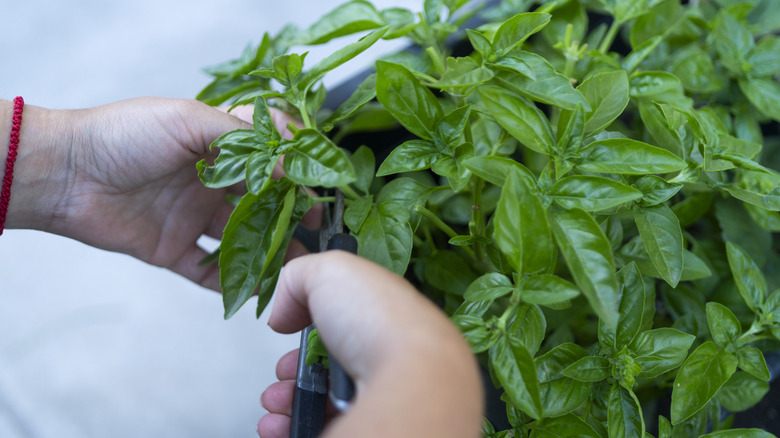
There's a wrong and a right way to harvest basil so it keeps growing back strong all season. Don't make the mistake of picking one leaf at a time in July. Instead, it's better to cut the stems right back to a pair of nodes or side shoots. The plant will branch out from wherever you make your pruning cut, so you can actually increase your yield with this method. Start pruning each branch — or even simply pinching off stems with your fingers — in this manner when the plant has six or eight leaves, then continue doing so throughout summer. July is still pretty early in the basil growing season — your herb has plenty of time to keep producing and will, hopefully, get even bushier. In just the same way, if you see any flower buds, pinch them back, too.
Another way to prune basil in July for the bigger harvests is to cut the plant down to the ground. As long as it has a well-established root system, it will grow back. Repeat the process as many times as you wish in the growing season. Since basil is an annual herb, it will stop producing as it gets closer to the end of summer; it's slowing down growth and dying. If you live in an area with downy mildew, avoid harvesting infected basil plants. The disease is transmitted through the air, and pruning can distribute it around your garden. Throw infected plants in the trash instead of composting them. Sweet basil is more susceptible to powdery mildew than the spicy and citrusy varieties.
What to do when you have more basil than you can use
Other than problems with powdery mildew and the need to deadhead the plant throughout the summer, it may turn out that your biggest pain point when growing and taking care of basil plants is having too much. If you end up with an overabundance of basil in July as a result of this method, don't worry. Basil makes an excellent companion plant, helping to deter insect pests, like whiteflies, aphids, and thrips, from tomatoes (and other nightshade family plants like eggplant and peppers), root vegetables, chives, and lettuce — among other plants. Allowing it to flourish next to other garden plants is often beneficial. And, of course, you can harvest the foliage for culinary use, drying or freezing any excess or gifting it to family, friends, neighbors, or food banks.
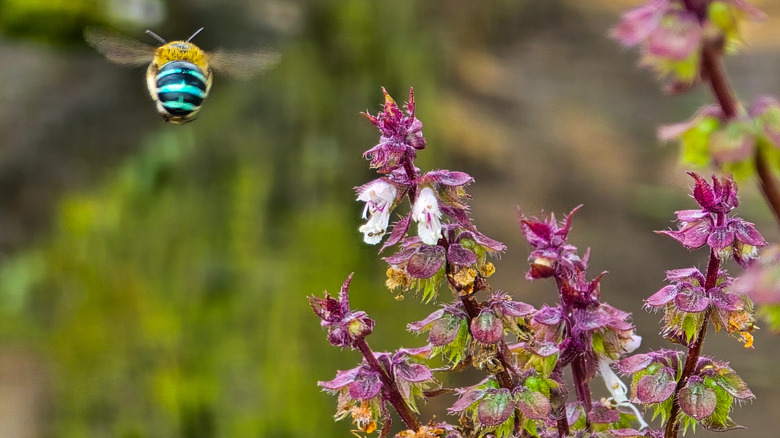
Once you've harvested all you need, you can relax your care and let it flower and go to seed. While basil blooms aren't particularly showy or colorful, they're beloved by pollinators of all kinds, including those all-important native bees. The clusters helps insects preserve energy. As long as the plants aren't diseased, leave them in the ground into the cold months of the year. The upright seed heads add visual interest to winter gardens, while the seeds inside feed small songbirds like goldfinches. Any seeds the birds don't eat will fall to the ground, where they will overwinter and germinate the following spring. Then you can start the cycle of pruning all over again with new seedlings.