

Everyone Used It In The '60s: The Kitchen Accessory You Could Still Find Helpful

From chipping it out of blocks to automatic dispensers, we've come a long way in pursuit of our love for ice. But in the '60s, the metal ice cube tray was king; it wasn't a perfect solution, yet with features that are still useful today, it was still an improvement on what came before, and the road to a better design is quite interesting.
Today's refrigerators with their automatic ice dispensers look nothing like they used to in the 1920s, so someone had to figure out a way to make ice at home, and that person was Guy L. Tinkham. His early 1930s design used an aluminum tray that would divide the ice into cubes when flexed, similar in concept to today's plastic trays. The version most people actually remember arrived in the 1950s, in the form of Edward H. Roberts' lever-operated aluminum ice cube tray.
That lever changed everything. Instead of wrestling with a stiff tray, you simply pulled the handle up, and the cubes cracked free. It became the defining feature of the metal ice tray for generations of home cooks, and that satisfying crack is something a lot of people still remember fondly.
Why you might want a metal ice cube tray today
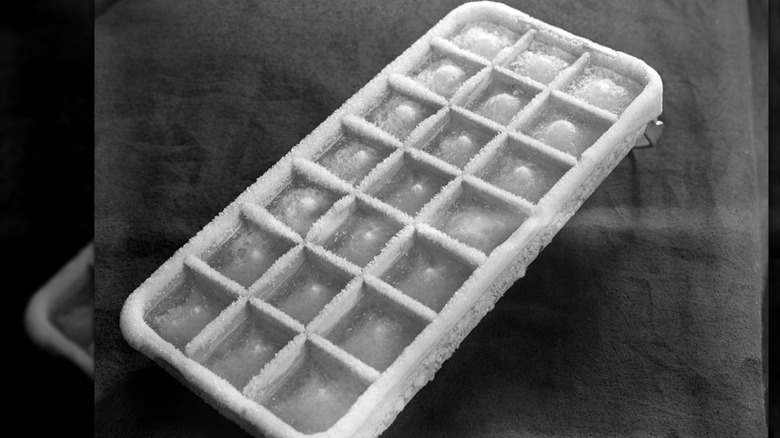
The case for going back to a metal ice cube tray isn't really about nostalgia, even if that's part of the appeal: there's also hard science. Plastic and silicone may be convenient, but they don't conduct heat away from water nearly as well as aluminum, which means faster freezing. Aluminum also doesn't absorb odors, so your ice actually tastes like ice rather than whatever else has been sitting in your freezer. With these benefits, along with elevated health concerns about BPA and microplastics, you may find that plastic ice cube trays are no longer needed.
Then there's the lever. If you've ever pulled one up and heard that sharp crack as the cubes break free all at once, you already know there's nothing quite like it. It sounds like it should be satisfying, and it absolutely is. However, there is one thing you should consider before you go shopping for one of these. If your hand is even slightly wet when you grab an aluminum tray, there's a real chance your fingers are going to stick to it. So make sure your hands are dry first.
Also, don't be surprised if you spill a few ice cubes on the floor; it might take some getting used to. As for getting your hands on one, you have options. Modern aluminum trays are available, but if you're working on giving '60s kitchen appliances a well-deserved comeback, original vintage trays can be found for around $20.