

23 Patio & Paver Trends That Are Taking Over In 2026 (So Far)
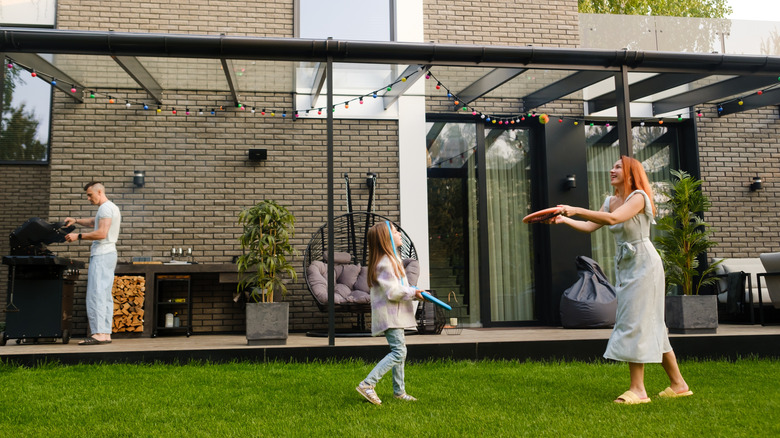
Gone are the days when homeowners settled for a cute pair of chairs, a compact coffee table, and a sturdy plant for company on their patio. 2026 came with increased demands for a curated experience underscored by warmth, character, and nature-esque charm. While it's important that the current patio and paver trends match the overall style of the home and the neighborhood, it's equally important that every material, layout, and color choice comes across as intentional.
In a serious need for a digital detox and relaxation, homeowners are increasingly blurring the boundaries and treating their outdoor spaces as an extension of indoors, echoing their themes and floor designs. Responding to a need to seamlessly blend their hardscape with natural surroundings, they're now exploring trends that tap into earthy, sun-baked colors, natural materials, and textured surfaces. Old-time favorites like checkerboard patterns and firepits are receiving refreshing updates. Sustainability is set to gain further momentum in 2026, with designers incorporating reclaimed, recycled, and permeable materials, apart from circulating water features. You may also notice materials being combined for a refreshing appearance, to create defined zones, or mark out wellness hubs. Some are even lifting a page from the European handbook, making sure you're transported to their vacation spots without actually boarding a flight. Overall, lots of exciting changes are coming to patios and pavers in 2026, which you'll find summarized below.
Extending the living room into the patio
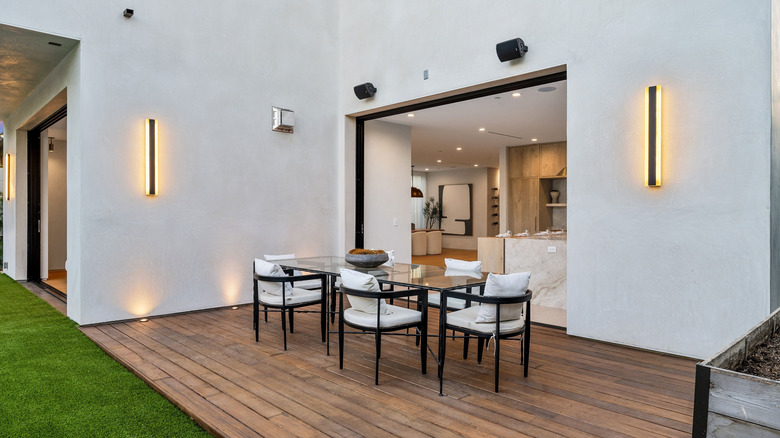
In 2026, rather than treating indoor and outdoor spaces as separate elements, homeowners are designing them in tandem and seamlessly extending their living spaces or kitchens onto the patio. This directly addresses the current demands for outdoorsy spaces where people can decompress and recharge, without compromising on indoor comforts and warmth. Expect an influx of built-in banquette seating, as you would find in breakfast nooks, anchored around entertainment systems, cooktops, or a firepit. Aside from accommodating larger gatherings, it creates space for more people if multiple generations are living together in a household.
Curves are back
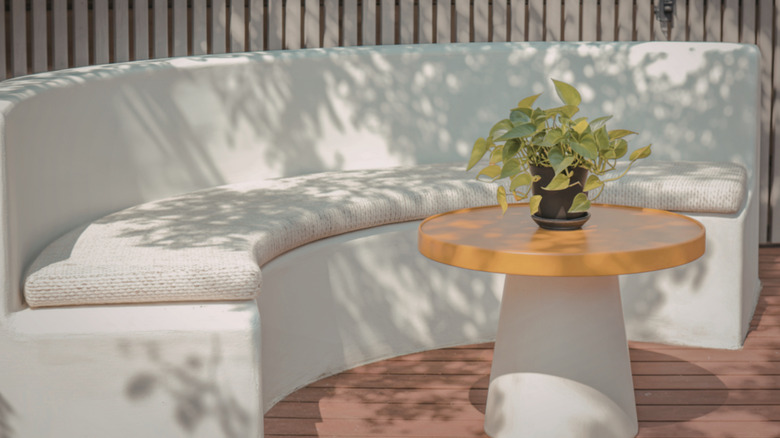
Although patios are underscored by the idea of creating an entertainment or rejuvenation space, they can read a bit harsh when they're just clad in concrete pavers. So, to instill them with a retreat-like feeling and soften the overall aesthetic, designers are incorporating curved and scalloped accents into the space in 2026. Think like curvy coffee tables or crenated lounge chairs. In fact, some patios are even shaping up to be circular to encourage interaction. The best part, though? Since such silhouettes are considered timeless, your patios will appear trendy for many years to come, as long as you maintain them well.
Bring in the Mediterranean feels
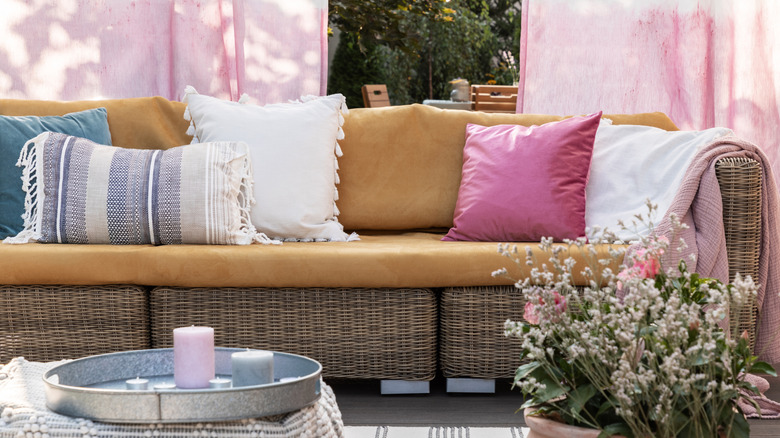
2026's patio trends are also drawing inspiration from Mediterranean boutique properties. Just because you can't spend your summer in Europe sipping vintage Château Cheval Blanc, doesn't mean you can't bring those vacay feels into your home. Imagine decking your patio in bold, colorful stripes through the upholstery or the parasol, with bistro furniture for company. You may also find, as Aimee Meisgeier highlighted for Homes and Gardens, that "Wrought iron pieces with a European feel to them are making a resurgence [too]."
Sun-kissed and grounded colors are on a rise
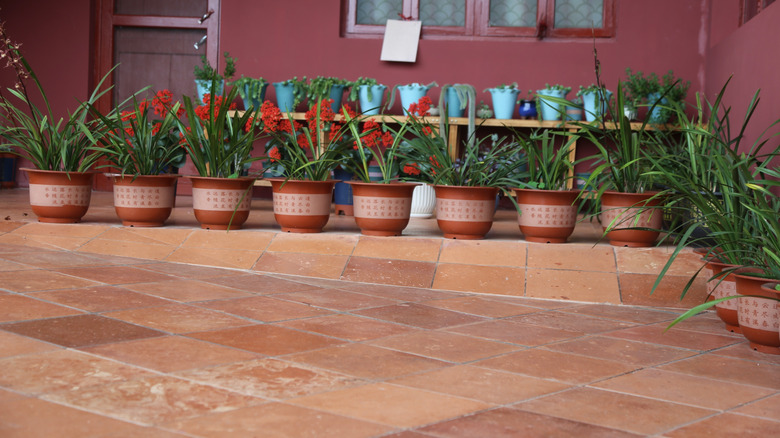
Gone are the days when cool-toned whites or grays ruled the roost, inside and out. Instead, in 2026, designers are bringing back colors in furniture and architecture. Keeping in line with the existing preferences for an organic, natural aesthetic, they're tapping into grounded colors like caramel, terracotta clay, and beige that meld into the surroundings. With the sunlight reflecting off their façade, and a fire pit to boot, such patios lay out a warm invitation to hunker down and relax to ambient music.
Bump up tactility
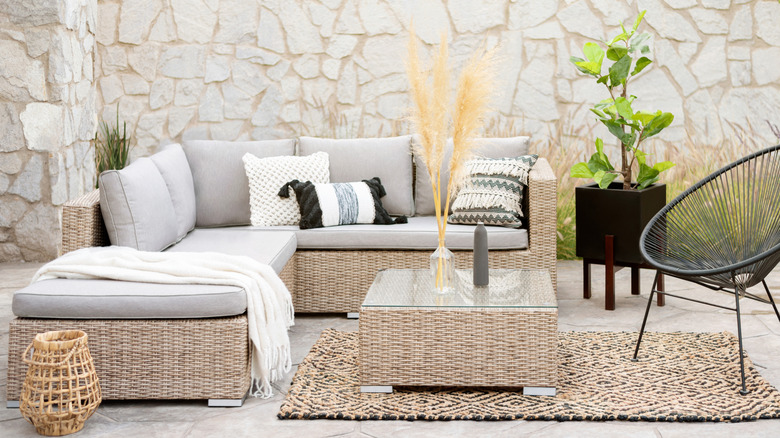
For some time, designers have been refocusing their attention on texture, bringing in artisanal tiles, honed finishes, or limewash into the interiors, rather than keeping it flat and simple with plain finishes. So, it's no surprise that this trend has spilled over into the outdoors. Through stone walls, cobblestone paths, and handmade tiles, and tumbled finishes, they're infusing organic textures into the patios in 2026. These bring much-needed depth and character to the area while drawing out the naturalistic settings.
Restorative zones
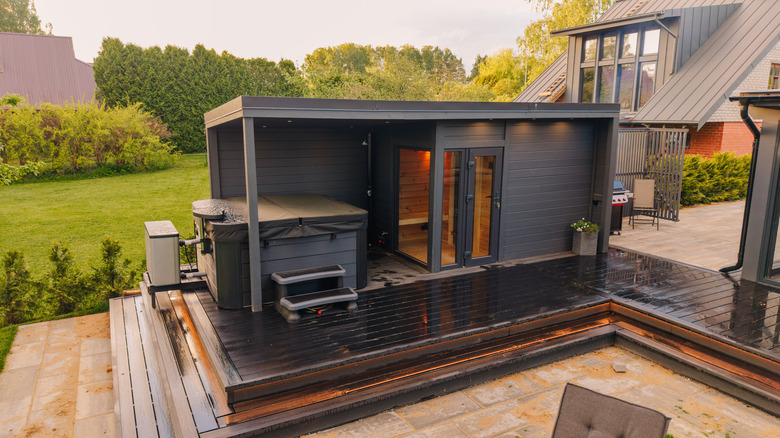
Wellness is no longer a function of what you eat or how active you are throughout the day; this philosophy is also seeping into how we design our homes. "People are asking for spaces that support rituals: Cold plunges, saunas, breathwork zones, morning sunlight moments, and quiet areas where phones are not present," Ali McQuaid Mitchell tells House Beautiful. As deepening our connection with Mother Nature is becoming important, designers are now creating these zoned wellness hubs on the patios, especially if they're shaded, covered, or heated, as you can spend more time outdoors even when the conditions are less than favorable.
Checkerboard floors, with a twist
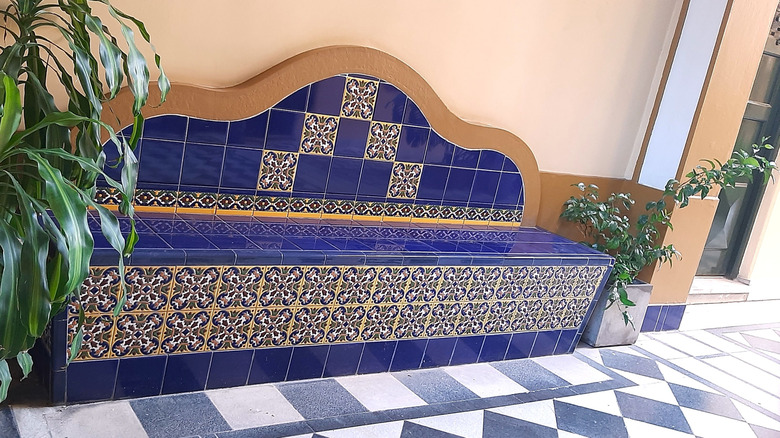
Checkerboard-style floors were one feature that everyone's kitchen had in the '60s, and now they're getting a well-deserved revival, not only inside our homes, but also for patios. What's different this time around, according to Houzz, is that designers aren't limiting themselves to the monochromatic black and white look. Instead, they're tapping into warmer neutrals to lay out the checkerboard style, such as pairing off jewel-toned burgundy red or earthier sage with creamy whites.
Stone-effect pavers
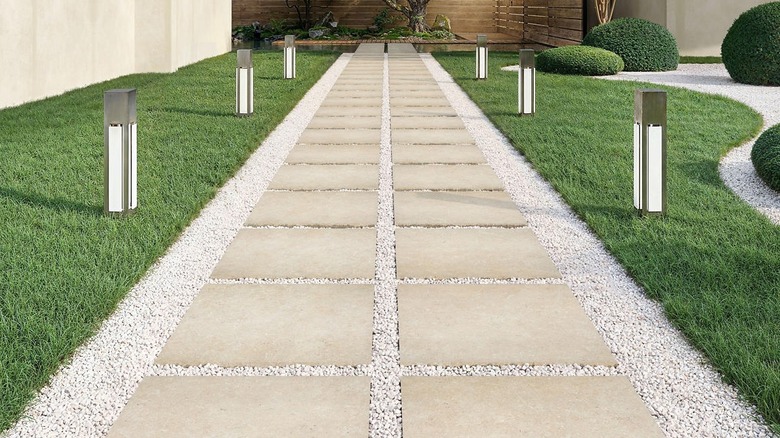
Although natural stone slabs reign supreme for that rustic, farmhouse look, installing them is an expensive affair. Luckily, you can achieve a similar look without spending as much and still be on-trend in 2026 by covering the patio floor in stone-look porcelain pavers. They're easy to maintain and are less likely to discolor from baking under the sun, and thus will look great for years to come. Be sure they're approved for outdoor use and are slip-resistant to avoid any accidents, like this Lookout Xterior Paver 24X24 Stepwise Textured from Daltile. Tumbled edging is set to become more popular as well.
Mixing materials for micro-zoning
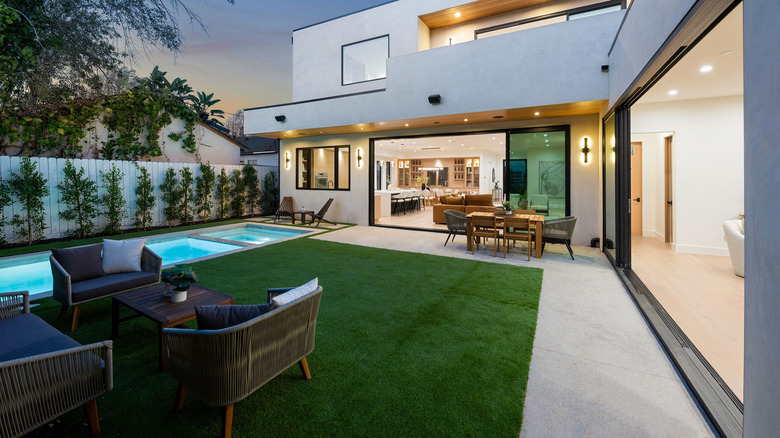
Rather than treating the patio as a wide expanse outfitted with different features, designers are creating micro-zones that fulfil distinct functions by mixing in different paving materials. For instance, per their requirements, homeowners may divide the patio into a dining spot, a lounging area with a fire pit, a cozy nook, or it may simply surround themed garden borders. These then get covered in suitable materials like stain-resistant porcelain tiles in the dining spot or cobbled tiles along the borders. The key to making this work is to stick to similar colors and undertones.
Layer up lighting
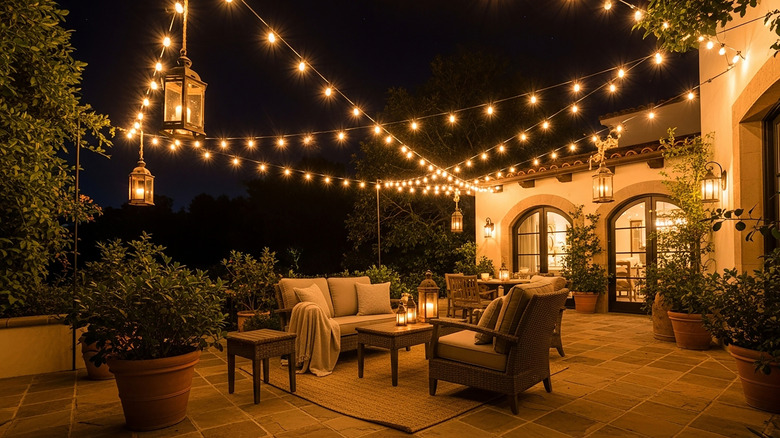
If you're still hanging whimsical string lights on your patio, you may want to find ways to repurpose them elsewhere around your home because they aren't making the cut in 2026. Just as indoor lighting is planned in multiple tiers (at eye level for specific tasks and then above to set the ambience), patio lighting is undergoing a similar transformation. Some of the ways to illuminate outdoor spaces without the hassle of hardwiring lights entail tapping into solar lights along the paths or posts, dimmers or chandeliers for mood-setting, or rechargeable lamps and lanterns in the entertainment zone.
Sculptural fire pits
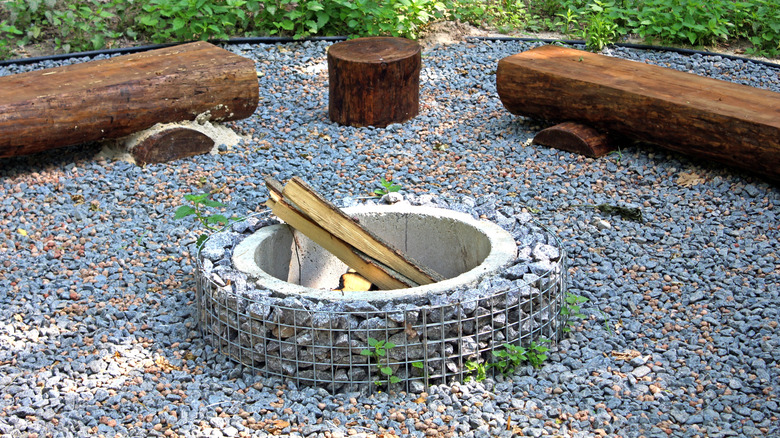
Although fire pits have been a near-staple in the patio, especially for homeowners who love to dine and host friends, they're becoming simpler in 2026. Rather than the overly designed, built-in fire pits that did everything from holding drinks and snack plates, designers are electing for small, sculptural pieces that keep the area warm — as originally ordained. Nowadays, "...many clients prefer a smaller fire bowl or chiminea, leaving more room for planting and seating," garden designer Oliver Burgess let Homes and Gardens know. Trendy pieces feature heavy contouring or handmade details, tying into currently-trending curved silhouettes and texture.
Softening the hardscape with plants
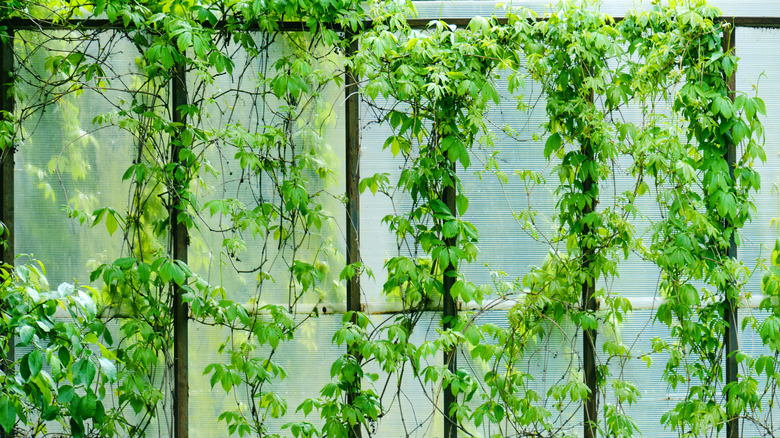
2026 also brings a change to the minimal patio hardscape through plantings, with Houzz's 2026 Summer Trends Report mentioning a major uptick in small patio gardens and cottage patios. Homeowners are looking to create privacy screens with vines and evergreen shrubs that can tolerate reflected heat and help lower the temperature a bit. Some are also growing aromatic herbs, edimentals, and fragrant flowers to tantalize their senses and produce food for themselves and pollinators. Senior citizens, especially, are gravitating toward container gardening to bring an elegant touch to their patios without hurting their knees. For minimal upkeep, utilize native or climate-adaptive plantings.
Covered patios
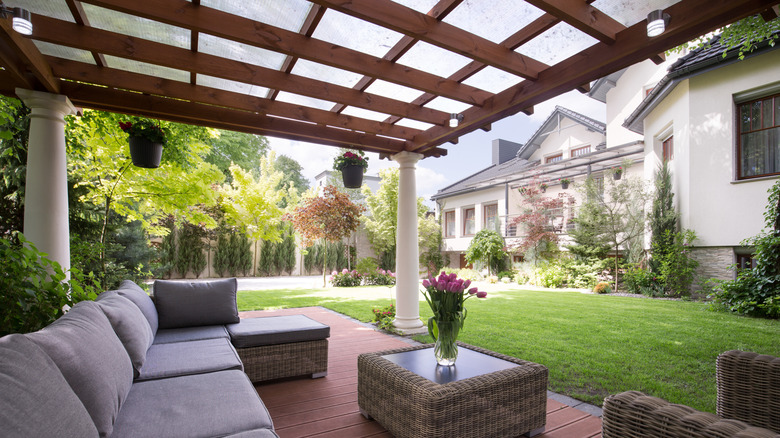
Gone are the times when patios were left open to the elements. In 2026, homeowners are embracing cover and shade so they may continue entertaining, meditating, or cooking in their outdoor area through the summer heat, rain, or cold. The best part, though? You don't have to spend a fortune on them. You can start with something as simple as a cantilever umbrella or a shade sail, going all the way to retractable awnings, pergolas, pavilions, or three-season rooms closed off by glass panels. These also provide some structure and definition to the space.
Sustainable and organic materials
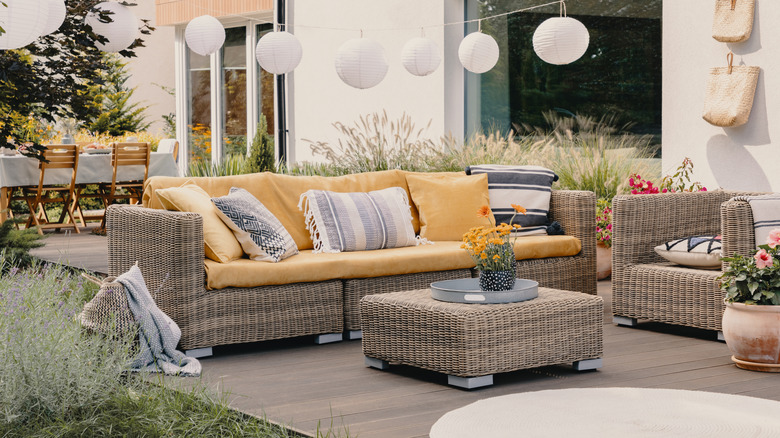
The theme of sustainability continues strongly in 2026, with homeowners ditching cheap plastics that look drab in a couple of uses and are bad for the environment for high-quality, durable, thoughtfully-sourced, and organic materials. You may notice more recycled and reclaimed materials, including stone, cedar, or patinated hardwoods that add character to a patio. You may also notice an uptick in wood, FSC-certified teak, or rattan materials in furniture. Since they're highly durable, they are worthy investments, despite their relatively hefty price tags.
Patio flooring echoing the indoors
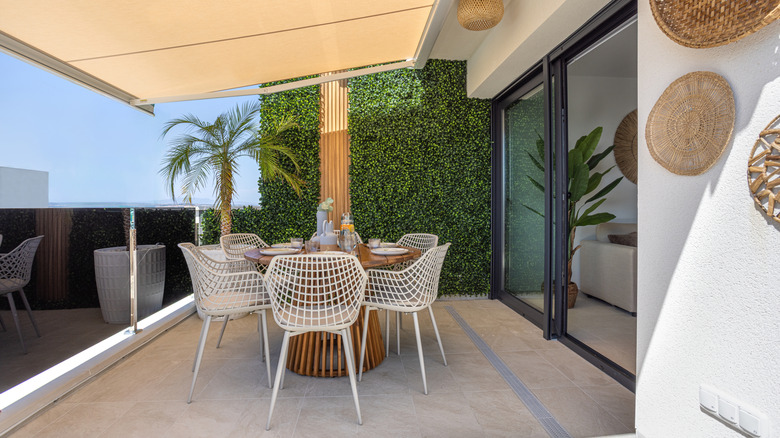
To completely take the guesswork out of the equation, designers are looking to replicate the indoor flooring on the patio. This allows for a continual flow that looks expansive and luxurious. Imagine natural stone or stone-look porcelain tiles extending seamlessly outdoors, without any visual breaks. Limestone finishes and travertine are also popular for this strategy. However, be sure that the tiles are thick and durable enough to withstand the outside elements and use flush transitions for minimal breaks.
Compact water features
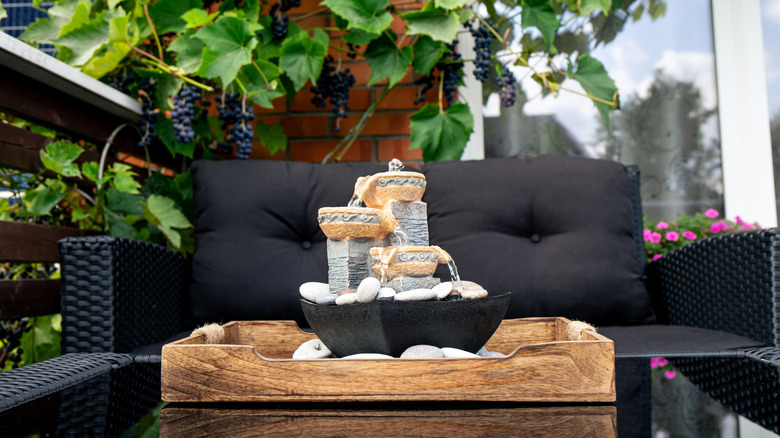
In the hopes of creating a tranquil sanctuary, homeowners are looking to add compact water features that won't require complex and expensive installation (let's leave the ponds for the garden). This runs the gamut of bubbling urns, fountains with a small footprint, micro-pools, or even a decorative bird bath with a misting sprayer. Not only will these features animate your backyard with a flock of thirsty birds, but the ambient sounds can mask traffic noises, creating a place where you can truly relax and detox.
Permeable pavers
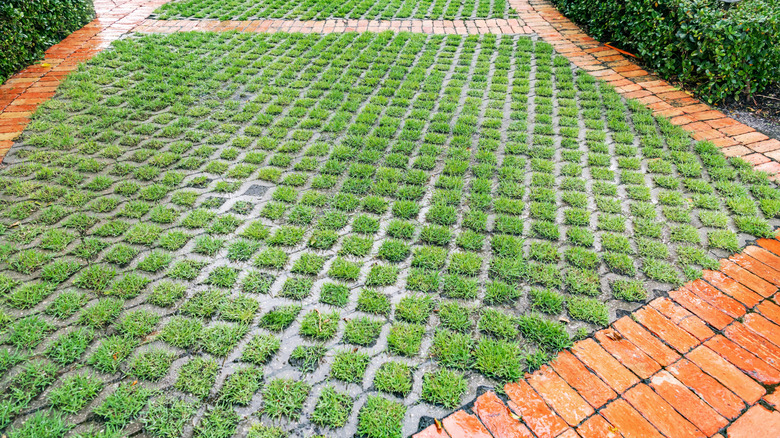
While you may already be aware of the several permeable paving types to try for a stunning driveway display, it turns out this trend is creeping into patios, too. According to the 2026 U.S. Houzz Emerging Summer Trends Report, searches for permeable patios soared by over 130%. Since rather than collecting water after a heavy downpour, they absorb it through the joints into their porous underlay, they prevent any unnecessary damage to the foundation slab. Indeed, many municipalities are actively encouraging their adoption through financial incentives. Better yet, you can trod on them barefoot.
Large-format pavers
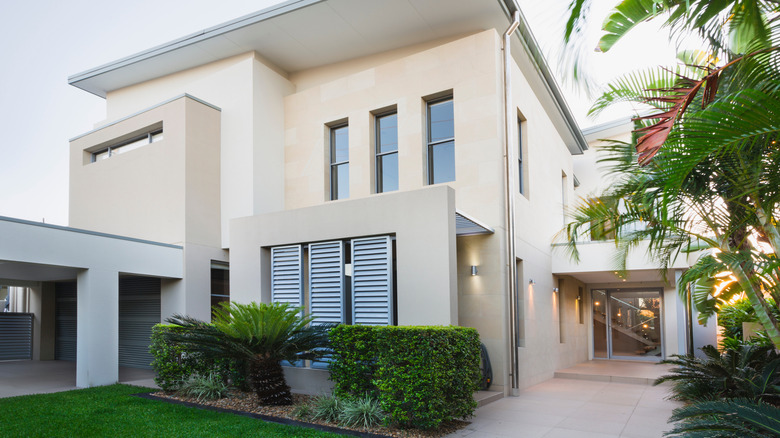
Another 2026 trend that's common to both indoor and outdoor spaces is the wide adoption of large formats in tiles and pavers. Think along the lines of 24 by 24 square inches for patio flooring or even wider at 24 by 48 square inches for walkways adjoining it. The reason? As you can cover the area with fewer joints in between, the area appears fluid and spacious, reading like an upscale resort. Better yet, it requires less upkeep, and frankly, we could all do with less weeding since removing those unwanted volunteers growing in between stones is an absolute nightmare. Porcelain in blue-gray or beige tones, and terrazzo translate well in large formats.
Self-binding gravel
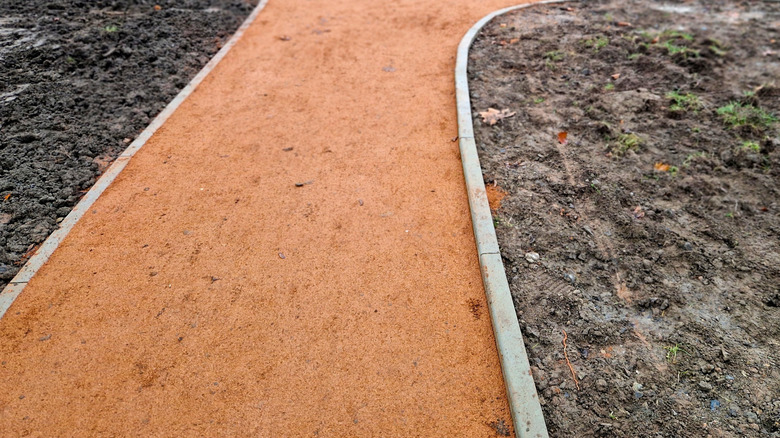
Made of crushed stone, self-binding gravel includes fine dust aggregates that ensure it compacts enough to look put together, unlike loose gravel. As it can absorb water, many homeowners and designers are considering it as a flooring option in 2026 as an alternative to porous pavers that are relatively more expensive to install. "I think self-binding gravel will continue to grow in popularity in 2026, particularly within contemporary and naturalistic garden designs," Nick Woodhouse clarifies to Livingetc. Its rustic charm may also work for a farmhouse, country, or vintage aesthetic.
Brick pavers
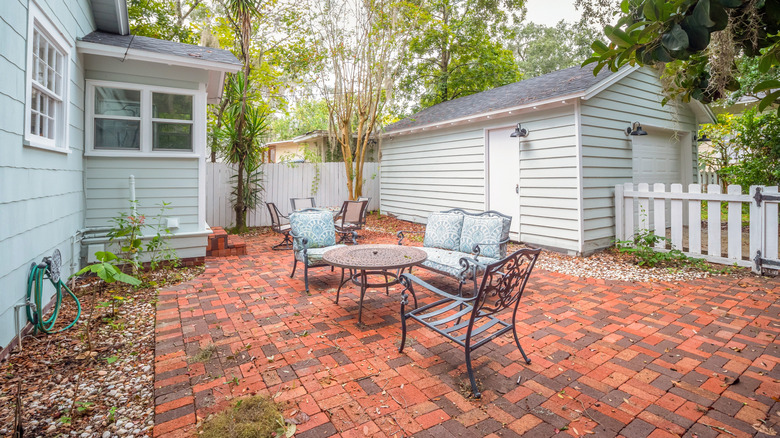
Perhaps as a counterpoint to the burgeoning popularity of large-scale tiles, some designers are also noticing a complete segue to smaller brick or clay pavers. "I'm seeing clients moving away from the large-scale architectural pavers toward smaller-scale, rustic materials, such as brick pavers," Katie Kiser informs Veranda in an interview. They're highly durable, even against regular thaw-freeze cycles, easily lasting over 40 years. Given their earthy texture and clay make, they retain a timeless appeal through the years.
Crazy paving
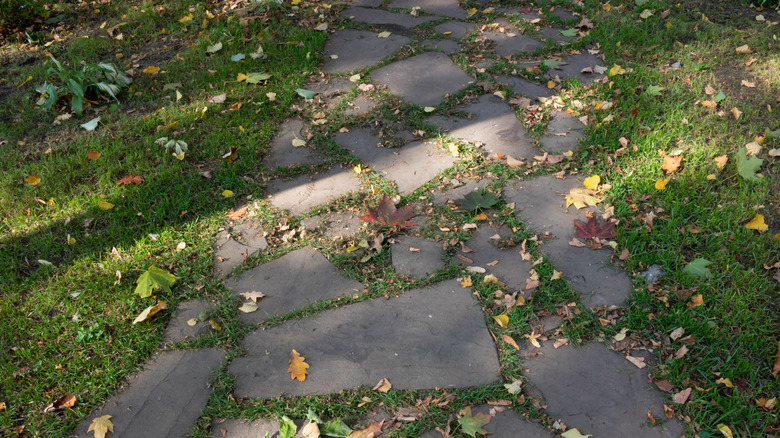
Remember the slew of rough flagstones arranged haphazardly that you could hop on as a game? These 70s favorites are back on trend for 2026. Since no singular piece is similar, arranged freely (though tastefully), they form a pleasant mosaic of organic texture that will turn your patio inviting. Depending on your home's architecture, you may pick from natural stone, sandstone, travertine, or bluestone — just avoid the stereotypical white grout lines. But bear in mind that they sit haphazardly and may flake over time, so you've got to be careful about seating arrangements or soften the area with traffic-resistant groundcovers.
Random modular look
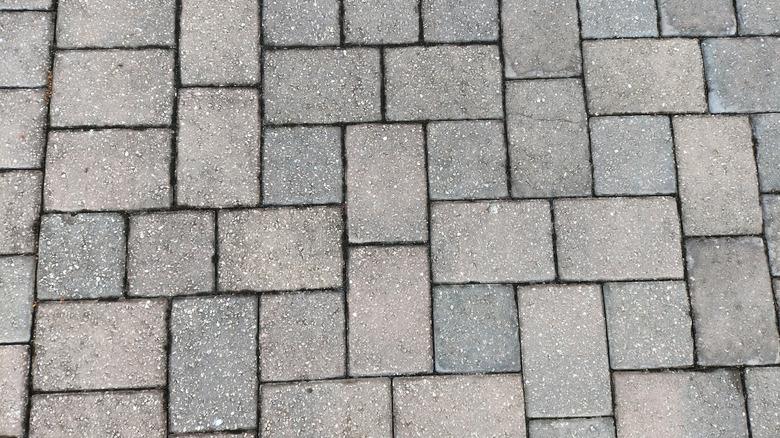
On large patios where a large expanse of flooring can start to look boring or industrial, or where homeowners are fitting in an outdoor kitchen, designers are jazzing things up with the random modular or French look. Like many other patio trends on the list, it too has European leanings and is at times touted as an alternative to the checkerboard pattern. Therein, they choose materials in at least three different sizes in a mix of square and rectangular shapes, which are arranged to create a seamless look. The unpredictable seams keep things looking fresh and elegant.
Tiered design
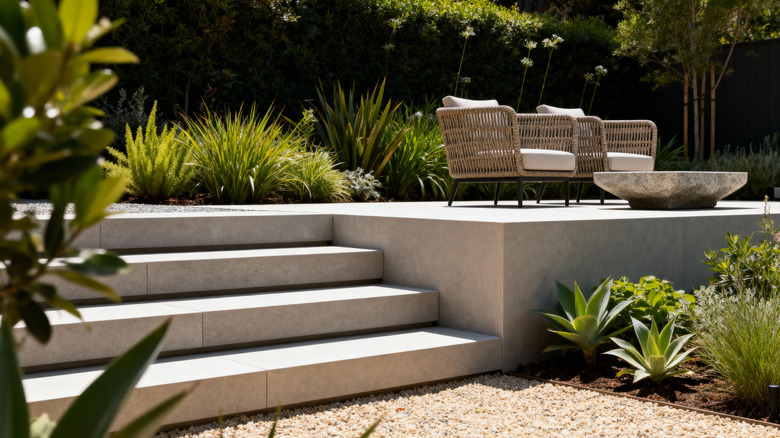
For outdoor spaces where the ground has a steep slope or is unstable underfoot, designers are increasingly opting for a multi-stepped or tiered design. By incorporating decking platforms made of composite wood, gentle ramps, or raising the patio over a couple of steps, they ensure the area remains usable, despite the complexities. Depending on the overall design, they also use this opportunity to create distinct micro zones so that those who are enjoying their morning cup of joe don't stray into the space of someone doing yoga.