

Strawberries Flowering But No Fruit? These 12 Things Are Probably To Blame
We may receive a commission on purchases made from links.
Strawberry plants are resilient and easy to grow, but it doesn't take much to run into problems with fruit set. I've got two decades of experience as a Master Gardener and I adore strawberries, so I grow a huge amount every year. Generally, my strawberries fruit reliably and give me mountains of beautiful, sweet red fruit. But there are times when every strawberry gardener gets excited because they see their strawberry patch covered in those lovely white blossoms, only to be sorely disappointed when they get hardly any fruits forming.
People often assume that if their strawberries aren't producing fruit, they've got some weird or exotic problem. In reality, the causes of strawberries flowering but not producing fruit are typically mundane. There may have been a late frost during the bloom period or a pest invasion, nutrient deficiency, or a disease. Or they're just old. Garden strawberries (Fragaria × ananassa) are perennial in USDA Hardiness Zones 5 through 9 and they are generally at their most productive for the first four years. After that their fruiting powers decline, but as they put off so many runners, once you've got an established strawberry bed you shouldn't ever need to buy new plants. Keeping your strawberries, the soil they're growing in, and the wider garden healthy is the best way to maximize your strawberry yield.
A late frost may have already killed this year's king berry
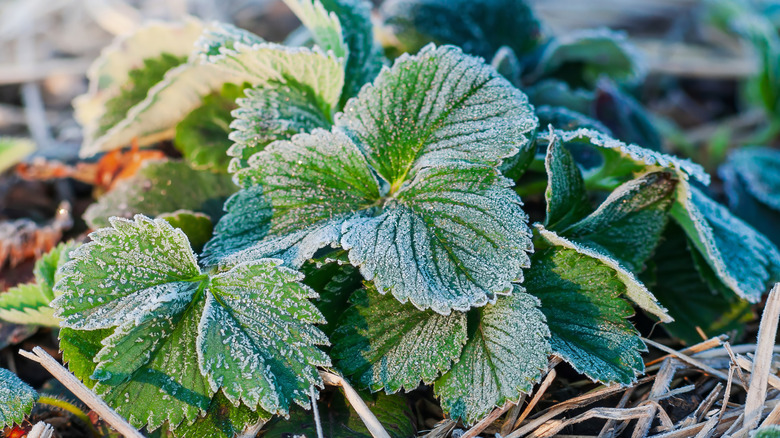
The first flower that opens on a strawberry plant is called the king berry or king bloom and it's usually the biggest strawberry of the season. It tends to open earlier than the others, which unfortunately makes it most exposed or vulnerable to a late cold snap. If you take a look at the center of a strawberry flower the morning after a cold spell and see that it's gone black or brown, that's a key indicator of frost damage. The color change happens sometimes within a few hours but can take up to a day to appear. Even if the petals surrounding that center look fine, if the middle is brown or black, then that berry is essentially dead.
The king berry takes the brunt of this because it's the most developed flower when a cold spell hits. Smaller later flowers on the same plant usually come through unscathed as they are not as far along as the flower of the king berry. There's no correcting frost damage on an open strawberry flower. All you can do is keep the bed well mulched and protect your plants from frost by adding a floating row cover if there is a cold night forecast.
Microscopic cyclamen mites are hiding in the crown
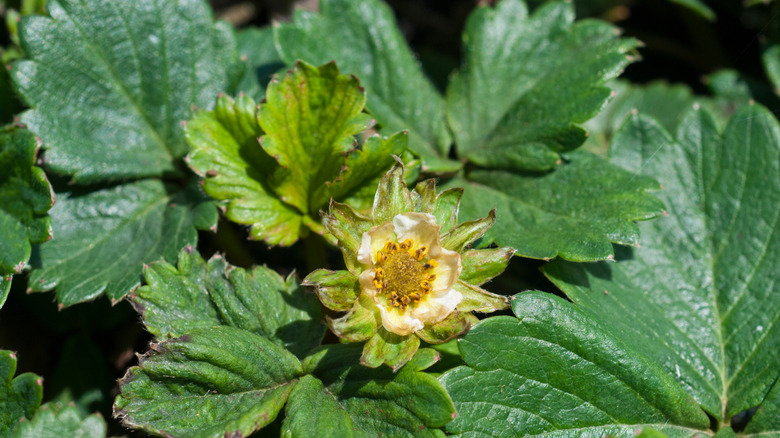
Cyclamen mites are a real pain because they are hard to see and can infest your plants before you realize there's a problem. Adult cyclamen mites are only about a quarter of a millimeter long so you need a 20x hand lens or a microscope to spot them. By the time you realize there's a problem, the mites have already done the damage. These irritating pests hide away in the folded young leaves and under the calyx of unopened flower buds on strawberry plants, where they feed out of sight. This makes the flowers wither and die before fruit can develop. Any fruit that does survive the onslaught of these voracious mites comes out shrunken and deformed, with seeds looking like they are popping off the surface.
Once you see the damage start to appear, you'll know that this season's harvest is already affected and you shouldn't expect a good crop. Getting rid of cyclamen mites is particularly difficult because of their tiny size and the fact that they hide in leaf folds and beneath flowers, so spraying with miticides is often not terribly effective. Because cyclamen mites spread quickly from plant to plant, it's important that you isolate any plants you think may be affected and probably any close neighbors, too. If the infestation is bad, you may want to bag and discard that particular plant. If you suspect smaller numbers of mites on a plant, you can lift it and submerge it in water heated to 109 degrees Fahrenheit for around 15 minutes. This drowns the mites without damaging the plants.
A weevil called the clipper snipped the buds before they opened
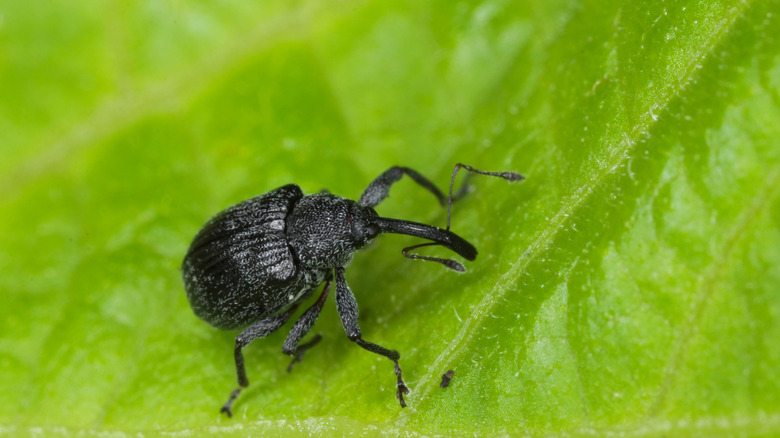
I loathe strawberry bud weevils, often called strawberry clippers or strawberry blossom weevils. These infuriating pests damage the flower buds before they open and can reduce plant yield by 80% if left unchecked. The female strawberry blossom weevil chews a hole in an unopened flower bud, lays an egg inside, and then girdles or clips the stem just below the bud so it can't open. The bud then dries up and hangs from the stem instead of blooming. The larvae develop inside the girdled buds, feeding on the plant tissue. Then they emerge as adults in early summer and head off to wooded or shrubby edges to overwinter.
If you are finding clipped buds dangling, particularly along the edge of your strawberry patch, there is a good chance that the strawberry blossom weevil is the culprit. Start at the border rows and examine the underside of leaves and the base of flowers carefully. These pests are not particularly easy to get rid of because they have few well-documented natural predators and there are no commercially available nematodes that specifically target these weevils. Using floating row covers can help stop the adult clippers from moving in, but you'll need to cover the plants about a week or so before the buds open, and then, once they are flowering, only to remove the cover so pollinators can get in there and do their thing. The best control for strawberry clippers is prevention, and that primarily involves practicing good garden hygiene. Minimize brush piles, overgrown shrubby borders, dense hedgerows, and leaf litter, as this is where the weevils overwinter. With a bad infestation, you may want to cover the most severely affected plants with a bag and lift them inside the bag to discard them so that the weevils can't spread.
Not enough pollinators are visiting the blossoms
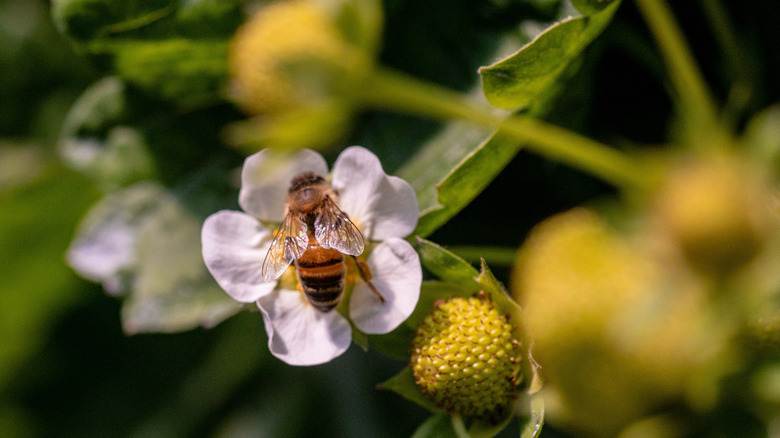
It's true that strawberries can self-pollinate, but self-pollination alone isn't usually enough to get a decent crop of fat, juicy strawberries. Each strawberry receptacle has up to 500 ovules and wind and rain can only move pollen around well enough to fertilize a small percentage of them. Bees and other pollinators do most of the pollination work for strawberries, so if there aren't enough of them during the bloom window, many of those ovules won't get fertilized. You'll end up with small, deformed, or cat-faced strawberries.
What we think of as the fruit only expands around the ovules that actually get pollinated. If too many don't get pollinated, the berry ends up lopsided with seeds bunched on one side, bare patches, or unsightly sunken or folded patches. While they will still be edible, they aren't generally as tasty and definitely not as appealing to look at. If you want to grow a decent crop of strawberries, make a pollinator-friendly garden, plant lots of wildflowers and strawberry companion plants like borage that bees flock to.
The soil is running short on boron
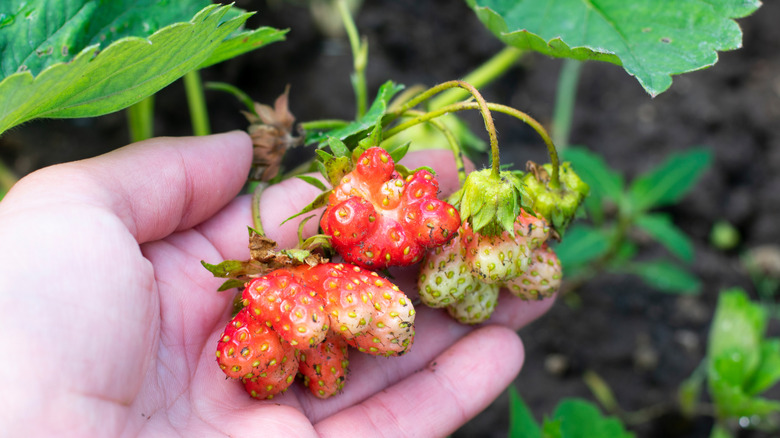
Nitrogen, phosphorus, and potassium are the three nutrients that get all the attention, but well-balanced soil contains many other micronutrients that don't often get mentioned. These are equally important to healthy soil and productive plants for strawberries. One significant deficiency that can cause greatly reduced berry yield is boron. This particular nutrient leaches out of soil, especially if that soil is sandy. While a boron deficiency isn't necessarily common, it's also not terribly rare. If there isn't enough boron in the soil, flowers end up smaller and petals often don't develop properly. Any fruit that does form doesn't expand the way it should. You get weird, bumpy, little malformed berries.
You shouldn't guess though, as there's a narrow window between boron deficiency and toxicity. Instead, I strongly recommend you perform a soil test. A simple test like a MySoil Soil Test Kit can quickly tell you if your soil is lacking any particular nutrient and then you'll know how to amend your soil to bring it back into balance.
A leafhopper-spread infection turned the flowers into leaves
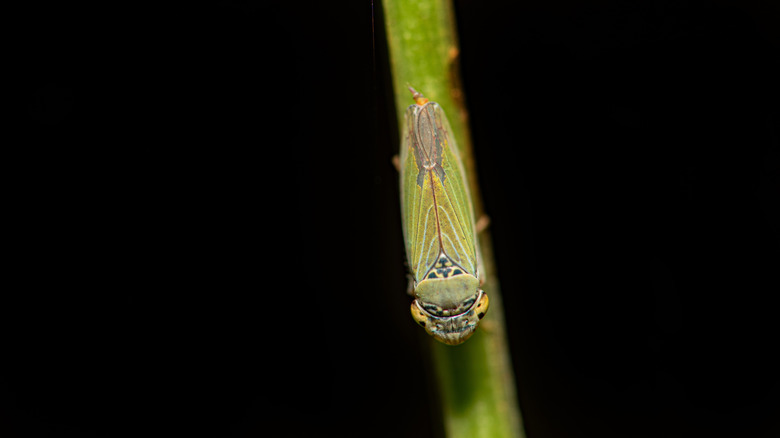
Leafhoppers do double duty as a significant pest to strawberry plants. They pierce leaves and stems with the sucking mouthparts and feed on the sap, weakening the plants and reducing fruit size and yield. Equally — if not more — destructive, they also spread strawberry green petal disease. This particular strawberry plant disease is caused by phytoplasmas, which are bacteria-like organisms that get carried between plants by feeding leafhoppers. The infection causes a condition called phyllody, which is where the plant grows leafy tissue where the berry should be and the flower itself may stay green instead of turning white. There's no cure for an infected plant. All you can do is pull it and dispose of it. That also means you shouldn't keep any runners from that plant, either. If it's already sending out runners, make sure you remove them at the same time as you remove the mother plant.
Floating row covers are one of the best ways to protect against leafhoppers and the infection they spread. You can try killing leafhoppers with insecticidal soaps, horticultural oil, or neem oil, targeting the spray to the underside of leaves where leafhoppers are most likely to be. Do note, however, that even though these are low toxicity and organic in nature, they are still fairly broad-spectrum insecticides and may harm beneficial insects, so use with caution. A great way to control numbers is to start a pollinator-friendly garden, which will also help encourage predatory insects that feed on things like leafhoppers. Ladybugs are natural pest controllers, as are lacewings, hoverflies, and predatory wasps, so you should make a point of making your garden friendly for these creatures.
Anthracnose is blighting the blossoms before fruit can form
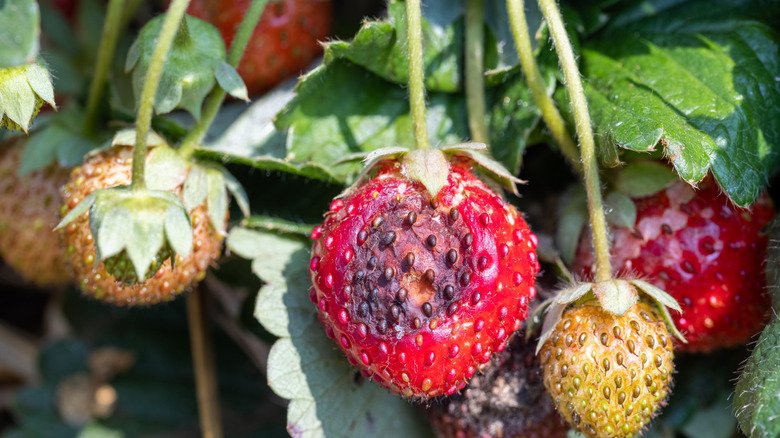
Anthracnose is one of the most common plant diseases that affect strawberries. In humid conditions like a warm, rainy spring, just as plants come into bloom, your strawberries may be hit by anthracnose as these are the conditions it thrives in. This fungal disease can directly infect open flowers and leave them blighted and brown. If it does, those flowers won't produce fruit. Anthracnose can also infect the actual fruit shortly after pollination. In this case the berry will form, but stays small, hard, misshapen, and inedible. Either way, your crop yield will be greatly reduced.
Some of the best preventions for anthracnose when it comes to strawberries are good airflow, drip irrigation instead of overhead watering, and making sure there's no standing water. A good layer of straw mulch around the plants will also help limit the risk of your plants contracting this fungal disease.
Too much nitrogen is producing leaves instead of berries
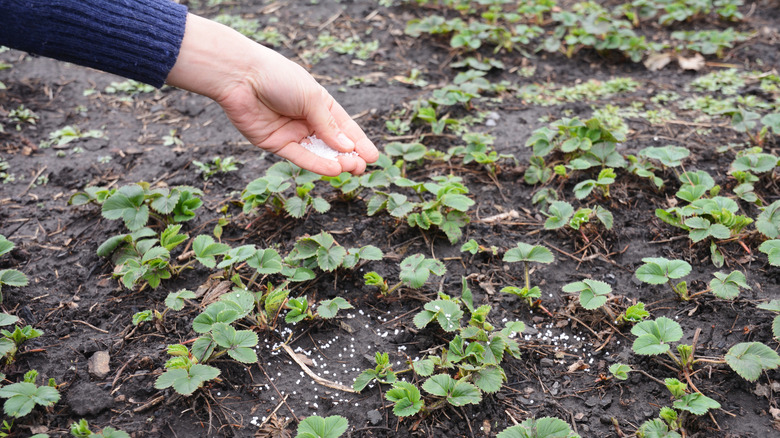
Nitrogen is an important macronutrient for strawberries, but one mistake I see people make with all kinds of plants (not just strawberries or even just edibles) is giving too much nitrogen, thinking they are helping when actually they are doing the opposite. When you give a plant too much nitrogen without other key nutrients to balance it out, the plant takes that as a signal to produce huge amounts of leafy growth. In the case of strawberries, it will also produce more runners. That means it pulls its energy reserves away from fruit production and sends them into leaf and runner growth instead. You end up with beautiful, huge strawberry plants that look like they're doing fantastically well, but they produce fewer blooms, and even less, if any, fruit.
This can happen purely by accident, too. If you fertilize your lawn and it's reasonably close to your strawberry bed, excess nitrogen fertilizer can run off the lawn and affect your strawberries, especially if you water heavily or get heavy rain. Yes your strawberry plants look beautiful with their lush dark green leaves but if you look closer you'll see few flowers. If this happens to your strawberry bed, don't apply any more nitrogen-heavy feed until after the harvest window. I usually recommend using a more balanced homemade fertilizer. Any one of the common types of DIY fertilizer teas, such as comfrey or nettle, does a good job at providing readily available, well-balanced nutrition.
The bed is overdue for renovation
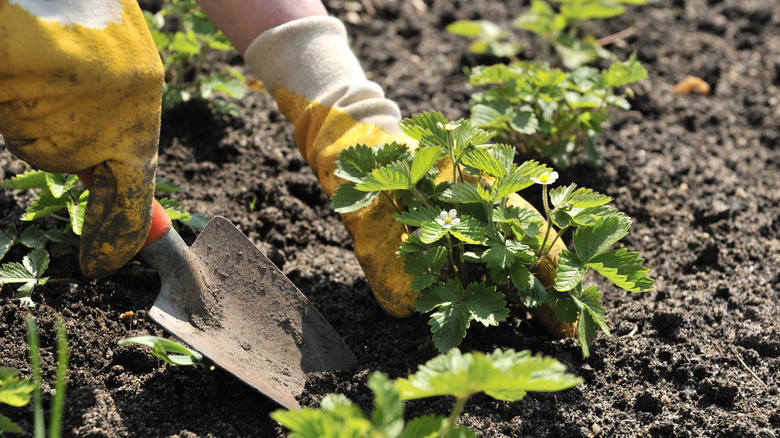
While it's true that if you plant June-bearing strawberries you will never need to buy new plants, the original mother plants only perform at their best for three or four years. After this time, increasing disease pressure, over-crowding, and general soil depletion mean that your bed gets less productive. Plus, although older plants will keep flowering, they generally get worse at turning those flowers into fruit as they get older. If you find that your strawberry bed is declining and you are getting fewer or smaller harvests despite plenty of blooms, then you may need to renovate it.
After the last strawberry harvest, mow the bed to about 2 inches above the crowns. This helps get the plants ready to produce buds for the following season, and it gets them ready to go dormant for winter. Remove the oldest plants that have obviously peaked already and replace those with maiden plants. When I'm doing a full renovation I will often remove the younger plants that have established themselves between the rows and then use those to replace the old plants in the rows. Use this opportunity to remove as much old rotting matter, including old straw mulch, fallen leaves, and fallen fruits, as possible. This reduces any pest build-up and limits hiding spots for overwintering. If you feel like the bed is just too old and overwhelming to fully renovate, then you can lift the plants you want to save and start a new bed in another spot in the garden.
The plants were allowed to fruit in their first year
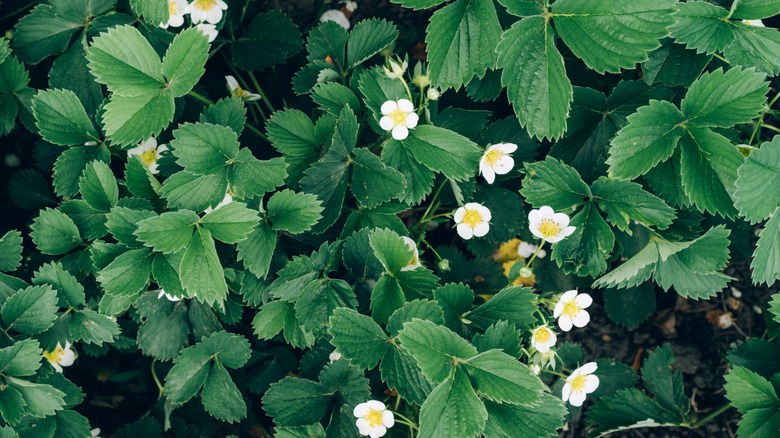
Even experienced growers (who should know better) get overexcited those first flowers and fruits forming, but letting a first-year, or maiden plant, fruit is a mistake. I know it seems wasteful to remove the flowers on young strawberries, and you're likely thinking that it makes no sense — if you just let them flower and fruit you'll be eating wonderfully sweet homegrown strawberries in just a few weeks. However, if you let a first-year plant produce fruit, it won't properly develop and establish itself. By the time it reaches its peak in its third or fourth year, it still will never have developed the strong crown and root system that it needed. In fact, ruthlessly removing the flower buds in that first year is the best thing you can do for your new strawberry plants. It tells the plant to divert its energy into root establishment and crown growth, which will pay off every year after in the form of more and larger fruits.
If you have already made that mistake then the best thing you can do, in all honesty, is start again. If it were me, I would take runners from the plants and propagate those in my greenhouse. Then, I would replace the entire strawberry bed with them the following year, remembering not to let them fruit. As these runners then become your maiden plants, let them get established, remove every single bud in their first year, and then enjoy bigger, healthier harvests every year thereafter. If you don't want a gap between harvests, then plan ahead when you want to renovate your bed. Keep in mind that eventually you'll have to replace your mother plants with maidens.
Day-neutral and everbearing types are taking their summer break
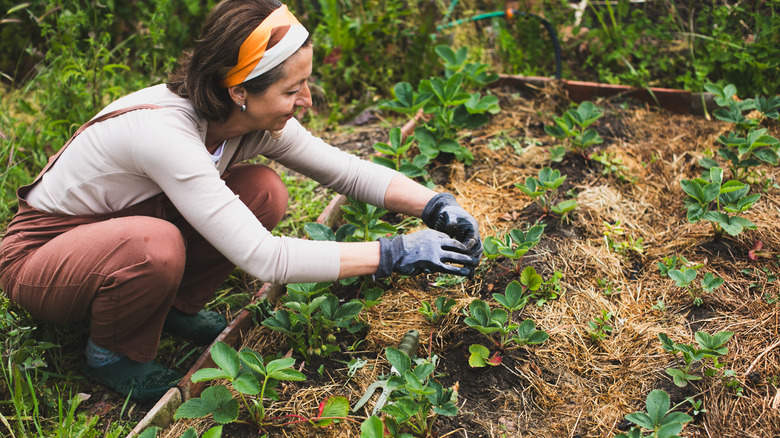
There are multiple types of strawberries, and day-neutral and ever-bearing varieties don't fruit the same way. June-bearing types produce a single large crop over a two- to three-week period and then stop. You can get early, mid-, and late-season varieties so you don't get too much of a gap through summer. Everbearing and day-neutral types tend to start off strong and then go through a quiet stretch in July.
Most day-neutral strawberries, for example, grow and flower best between 45 and 85 degrees Fahrenheit. Once it gets hotter than this, production stalls but starts again once temperatures cool. These keep fruiting intermittently from July through October, while ever-bearing types give you one main harvest in late spring and another in late summer or early fall. You can help lower temperatures by providing shade cloth, an extra layer of mulch, and consistent watering.
Unchecked runners are draining the mother plant's energy
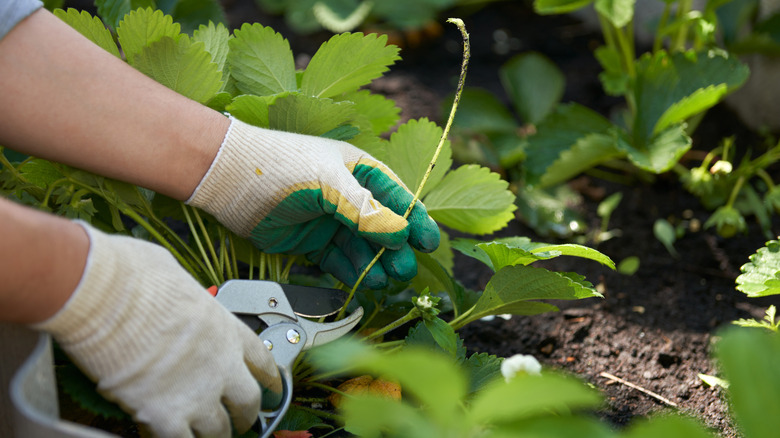
I find it fascinating that a single mother June-bearing strawberry plant can produce over 100 daughter plants in a single growing season. That's a lot of extra strawberry plants! If you've got June bearers and you take care of them, you'll never have to buy new plants even if you're starting a brand new bed. I regularly gift maiden plants that I've grown from runners to friends and family to start their own strawberry beds. I've even given them away to local schools and community groups, as there are always more that I can possibly make use of.
In spite of their reproductive ability, you shouldn't just let your plants keep producing runners unchecked. Each one it produces pulls resources away from the mother plant, and that's less energy and reserves that the plant has available to turn flowers into fruit. Runners and flower stalks come from the same part of the crown so if you let the runners go wild and unchecked you'll get fewer flower stalks and fewer buds. Make sure you cut runners back regularly through the season and only propagate the plants you know you need.