

Lawn Mowers Can Do A Lot More Than Just Cut Grass
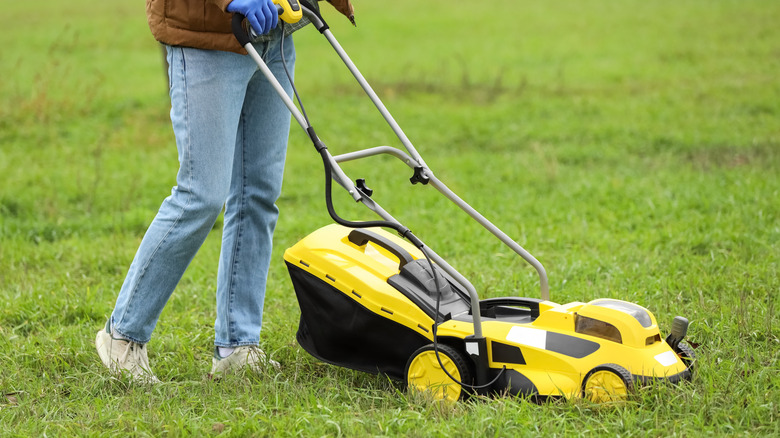
While there's no doubt that your lawn mower gets a lot of use during the warmer months to keep your turf beautifully manicured, it can actually do a lot more than just cut your grass. Those powerful blades can help with a variety of garden tasks to save you a ton of time and reduce your workload quite considerably. In addition to keeping your lawn tidy, your summer workhorse can gather up autumn leaves, clean perennial garden beds, and trim down cover crops.
If you're tired of raking up all those autumn leaves week after week, why not let your mower lend a helping hand? If you have a bagger that you can attach, just run the mower back and forth over the leaves so that the blades chop them up and then deposit them in the bag. They're then the perfect size for adding to your compost or mixing with grass clippings to make humus for your garden beds. You want to ensure that you have your mower set high enough to just grab the leaves and shred them up. It's also important to allow the leaves to dry out a bit after rain, if you can, to avoid one of the potential drawbacks of mulching leaves — the fact that wet leaves may not mulch as easily, and you may not end up picking them all up.
Make light work of cleaning up your perennial beds
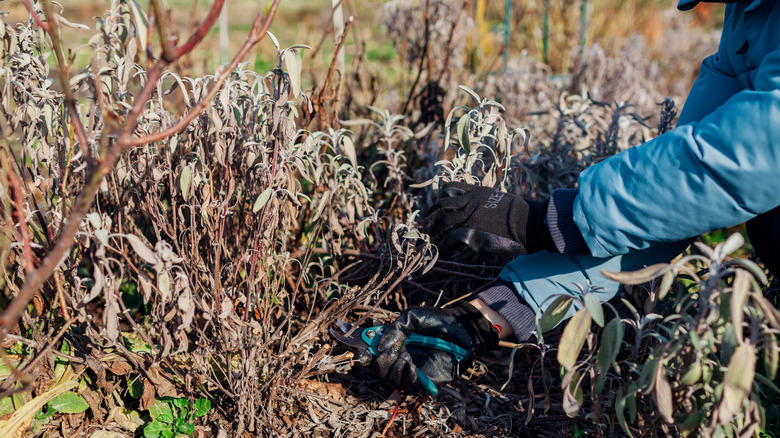
Instead of putting in all the heavy work of clearing and cutting back your perennials in the fall, you can just leave all the barren stalks and dead leaves until the end of winter. Once the debris has thawed a little and just before your perennials are due to sprout again, run your mower over the beds to mulch up the remnants of last season's growth. A mulching mower is ideal for this because it will chop everything up beautifully, so that you can actually leave it on the ground to act as mulch for your plants, once they start growing again.
Make sure that you set the blades quite high, around 5 inches, so that you don't damage the dormant crowns of the plants. Take your time passing over the bed so that the mower blades have a chance to chop everything up. You might even find that you'll have to make a few passes to mulch up all the debris nicely. This will save you a lot of time and heavy labor.
Turn your cover crop into mulch easily and quickly
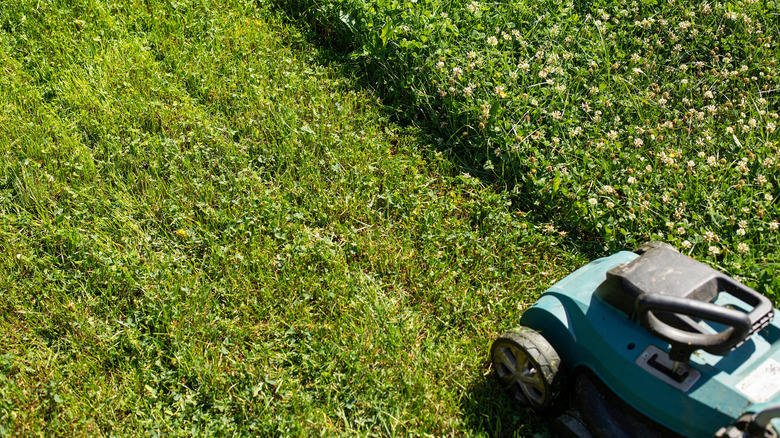
If you're in the habit of growing various cover crops, like clover, buckwheat, or alfalfa, over your vegetable beds during the colder months, you'll know that it will need to be worked into the ground before you can plant your seeds or transplants. Your mower can help you make short work of this. All you have to do is run the blades over the garden beds to chop up the cover crop, which has most likely died from the snow and frost anyway.
Once all the dead remnants of the cover crop have been mulched with the mower, you can then rake them up to use as weed-suppressing mulch on the paths or add them to your compost. This mowing method is particularly beneficial to the health of the soil because it leaves the roots in the ground to keep the microbes happy. If the cover crop hasn't died off completely, you may have to make a couple of passes over a period of two weeks to make sure that it won't regrow. If you're not going to sow seeds but just plant seedlings, you could even leave the mulched cover crop over the soil as it will eventually break down and add nutrients, which your vegetables can use for their growth.