

Not Coffee Grounds Nor Banana Peels: The Kitchen Staple That's A Great Tomato Fertilizer
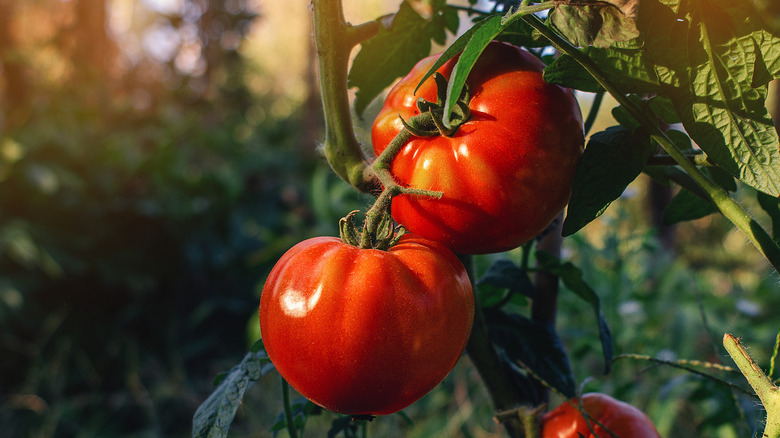
It's easy to understand why tomatoes are such a popular crop. A single plant can produce up to 30 pounds of fruit, they are central to the cuisines of various cultures, and you can grow them without artificial insecticides or fertilizers. Coffee grounds and banana peels are an excellent source of nitrogen for your tomatoes. If you compost them first, they will improve the health of your tomato plants, which will increase your yield and the quality of the fruit. But you don't have to be a master gardener to know that discarded plant parts are good for crops. Once you learn how to use other discarded items from your pantry or fridge, you'll find that there's simply no reason to buy fertilizer anymore. Start by feeding your tomato plants some yogurt.
Everyone knows that yogurt is good for people. It's a source of nutrients like calcium, phosphorus, potassium, and magnesium. These nutrients improve everything from your digestive health and sleep patterns to the strength of your teeth and kidney health. But these nutrients aren't just nourishing to humans — they will also feed your tomato plants. Calcium helps stave off rot on the bottoms of your tomatoes, phosphorus feeds the roots of the plant (this is especially critical in dry environments), potassium also prevents rot, and magnesium aids in photosynthesis. But best of all, this natural fertilizer will reduce your reliance on synthetic fertilizer, which harms the environment. Yogurt even adds nitrogen to the soil, which helps plants develop. In fact, yogurt is just one of many ways to add nitrogen to your soil for a healthier garden in no time.
How to add yogurt to your garden for the health of your tomato plants
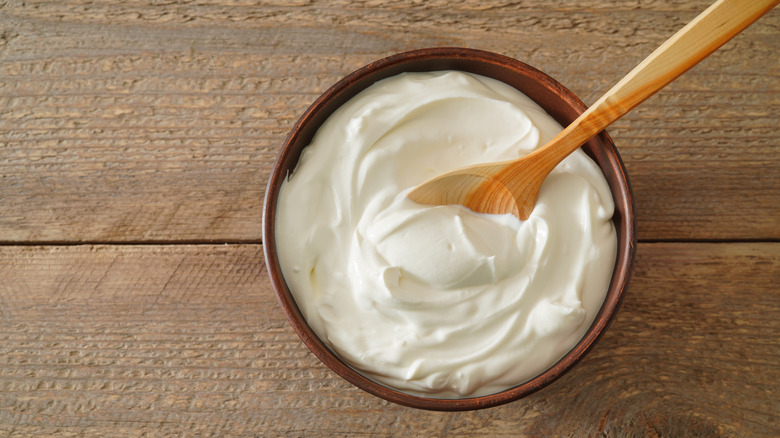
For this project, you will turn your yogurt into a liquid mixture, which will better allow it to reach the roots and feed your plants. But before you get started, you'll need a few tools. Your most important ingredient is your yogurt. You can use any yogurt you like, as long as it is unsweetened. Sugary yogurt can attract pests. Next, you'll need a gallon of water, either in a bucket or a pitcher. Lastly, you'll need a measuring cup. Once you have these items, you should be able to complete the rest of this simple process in just a couple of minutes.
Simply fill your bucket with a gallon of water, then measure a cup of yogurt and pour it in. You can mix the solution with a paint stick or a stir spoon. The final step is to pour the mixture onto your plants. You want to make sure to pour it at the base of the plant so as much water gets to the roots as possible. Don't pour too quickly, as you could wash the soil away from the roots. Use the same amount of water you would usually use on your plants. Full-grown tomato plants need about two gallons of water a week.
You should add this mixture to your plants either once or twice a month. Once you develop a system that is right for your garden, you should grow healthier tomatoes in more plentiful numbers. Yogurt can attract pests, but if you're not worried about that, you can use yogurt as a natural fertilizer in your garden by adding it to your compost.