

How To Protect Small Shrubs & Trees With An Amazon Find That Keeps Pests Out
We may receive a commission on purchases made from links.
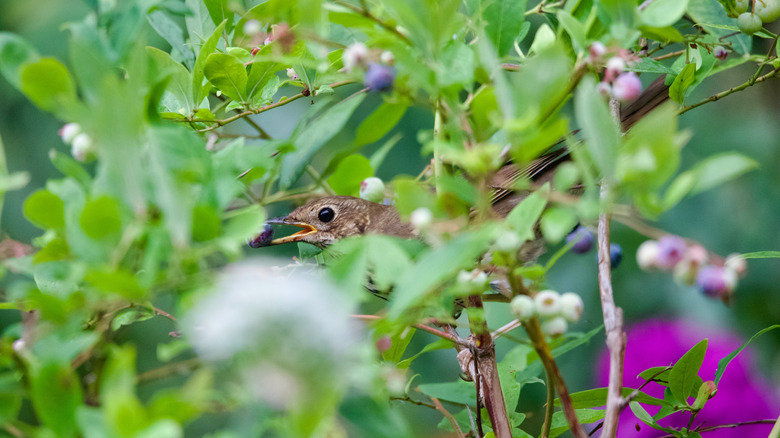
If you grow small shrubs and trees in containers on your patio or balcony, you'll invariably have to deal with pests attacking your plants at various times over the warmer months. You may also have to face off against birds and squirrels stealing your crop if you happen to grow dwarf peaches, apples, or other varieties of fruit trees. Then, of course, there are also those delectable patio tomatoes that you'll need to protect from hornworms and birds. If you want to avoid relying on harmful pesticides, there's a useful Amazon find that you may want to try: Satxtrem Drawstring Blueberry Netting.
These large netted bags are designed to fit comfortably over your shrubs and trees and be secured at the base with an attached drawstring. They're available in a range of sizes and will keep pests away from your plants while still allowing plenty of sun and water through. The idea of these netted bags is similar to products like the Lmadfly Pop-Up Crop Covers for raised garden beds and smaller fruit protection bags, which provide an easy way to protect the fruit trees in your yard. You can even use these larger bags for small trees or bushes that you might have growing in the ground, as they won't hinder the growth of your plants. Customers who have purchased these bags mostly have positive things to say about them and concur that they keep pests away from their blueberries, tomatoes, blackberries, figs, and other edibles. You just need to be aware that the material is going to degrade over time when exposed to the elements, so you may have to replace the bags every year or two.
How to use these bags the right way and what to avoid
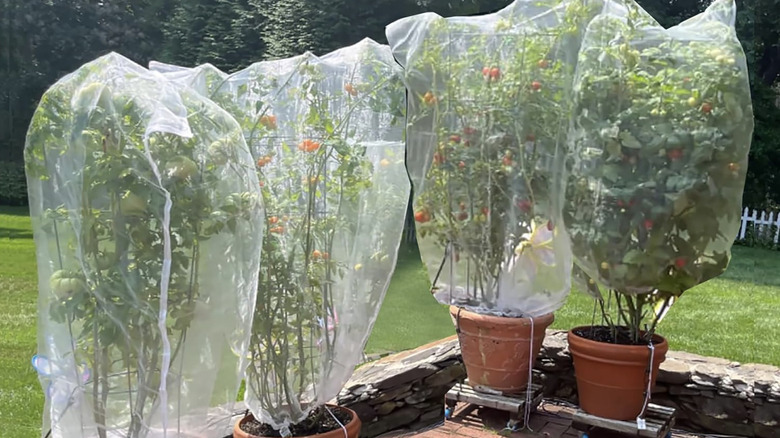
These bags work really well at keeping pests off your plants, but they also keep pollinators away from your edibles. That is why you want to think very carefully about how and when you want to use them to avoid one of the crucial mistakes everyone makes when growing fruit trees. Fruiting plants like blueberries, blackberries, tomatoes, peaches, apricots, apples, and pears all need bees to visit the flowers and spread the pollen around. While crops like tomatoes have self-pollinating flowers, you will limit your harvest if you stop the bees from doing their job.
There are a couple of ways you can allow pollination while still protecting your edibles. Many fruiting trees and bushes, like blueberries, will flower all at once and then set their fruit. For these, you want to leave the plants uncovered until all those tiny fruits have formed, and then place the nets over them. But what about plants that can flower continuously, like tomatoes, peppers, and eggplants? To protect these from pest infestations, you can cover them with the net bags and supplement nature's touch with a bit of hand pollination. The easiest way to do this is with the simple tomato tickle trick. This involves either gently shaking the stems with flowers on them or using something like an electric toothbrush to tickle each bloom. This will move the pollen from the stamen (the male part) to the stigma (the female part). You can even just use a soft paintbrush to "fluff" each flower, including the larger blooms on eggplants.