

Not Basil: The Summer-Blooming Herb That's A Great Tomato Companion Plant
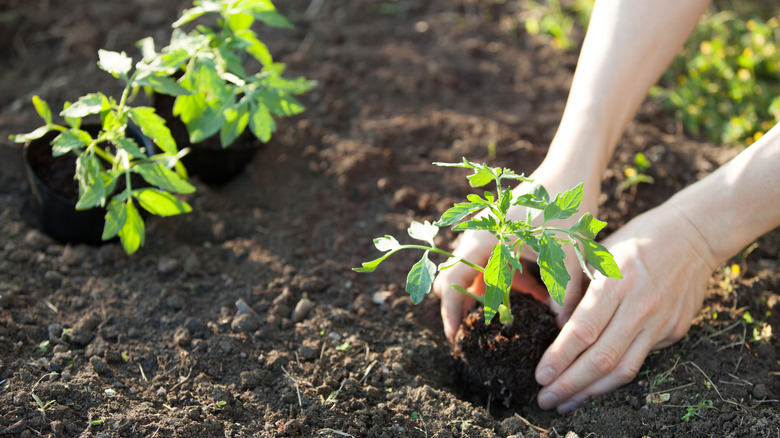
Tomatoes are, fortunately, one of those helpful garden plants that are capable of self-pollinating. While it's true that a single vine will usually produce fruit without another plant nearby, it will benefit from another's pollen. That's where flying insects like bees come in handy. They help to move pollen from flower to flower — often across many plants. Without them, the delicious bounty of summer and fall would almost disappear. If you have the space to spare, pairing tomatoes with other flowering plants that like the same growing conditions, such as basil, can attract more pollinators and is one of the best ways to help your vegetable garden thrive. However, basil isn't your only herbaceous option. Thyme, another strongly scented flowering herb, is also a great companion plant you should grow next to tomatoes in your garden.
Thyme (Thymus spp.) has so many benefits for both vining and bush tomatoes. First, this summer-blooming herb has flowers that pollinators love. When bees, butterflies, and possibly even hummingbirds flock to the tiny blooms of a thyme planted next to a flowering tomato, there's a good chance they'll visit its neighbor, too. However, there's also the added benefit to a patch of thyme in the garden. The oils in this fragrant herb's leaves and stems — mostly a phenol monoterpene called thymol — may repel some common garden pests that target tomatoes, such as spider mites, aphids, flea beetles, tomato hornworm, and whiteflies. Deer, which will eat tomato leaves and fruit when other food is scarce, also don't like the scent of thyme.
How to grow thyme as a companion plant for tomatoes
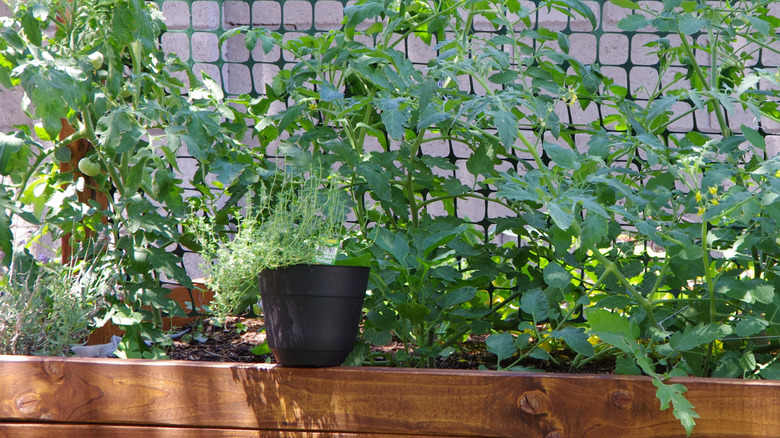
When you're growing any plant as a companion to tomatoes, the first step is to learn where their care requirements overlap and where they differ. Fortunately, tomatoes and thyme thrive in similar conditions. One mistake gardeners commonly make when growing thyme is assuming all Thymus species plants are the same. In fact, you can choose between common thyme, creeping thyme, wooly thyme, lemon thyme, the red-flowering mother of thyme, and so many more. Thankfully, most have analogous needs. Likewise, there are thousands of cultivars and hybrids across about 13 tomato species. As a result, ensure you're pairing your specific thyme and tomato plants wisely.
Broadly speaking, thyme is a sun-loving herb that does best with at least six hours of sunlight a day. It's hardy in Zones 5 through 9 and is resilient to drought, poor soil, and grazing from rabbits and deer. Thyme needs a site with good drainage, but otherwise, it isn't picky about soil texture or pH levels. You can even plant some varieties in pathways and lawns — it holds up fairly well to foot traffic.
Tomatoes aren't as hardy as thyme and need nutrient-rich soil to produce well. However, like thyme, they thrive in full sun — and matching sunlight exposure is a core factor in successful companion planting. Where they differ most is in their soil needs. Both plants require good drainage, but tomatoes do better in consistently moist soil. Because of this, make sure you plant thyme close enough to your vines so as to benefit from the pollinator attracting and pest repelling qualities, but not so near that their roots share the same patch of soil. Or grow your thyme in a pot and place it near your tomatoes.