

What The Blue Color Means On Electrical Wires In Your Home

If you're installing an energy-efficient ceiling fan or a new light switch, you may consider doing the work yourself to save on labor costs. As long as the new model has a size and design similar to what is currently installed and matches the wiring in the ceiling or wall, many homeowners can handle these tasks themselves.
As you look at the wiring coming out of the ceiling or wall, you'll see different colors of sheathing. If you've previously done this kind of work, you likely expect to see common colors like white, black, and green. However, you might also see an unfamiliar color, such as blue. (The possibility of encountering unfamiliar types and colors of wiring in the walls is one reason why electrical work is a DIY project that the Property Brothers recommend leaving to the professionals.)
If you want to continue to try to do the work yourself, though, understand that a blue wire is usually associated with a three- or four-way wall light switch. A blue wire can change from hot to inactive, depending on whether a light switch is active. Consequently, you should always assume that it's live, and you should never work on it without turning off the circuit breaker associated with the room and testing it with a voltage tester. It's more common to see blue wires in a commercial building than in residential construction. However, they sometimes are found in homes alongside the more common white, black, and green wires in your walls and ceilings.
What to do if you find blue wiring inside your walls
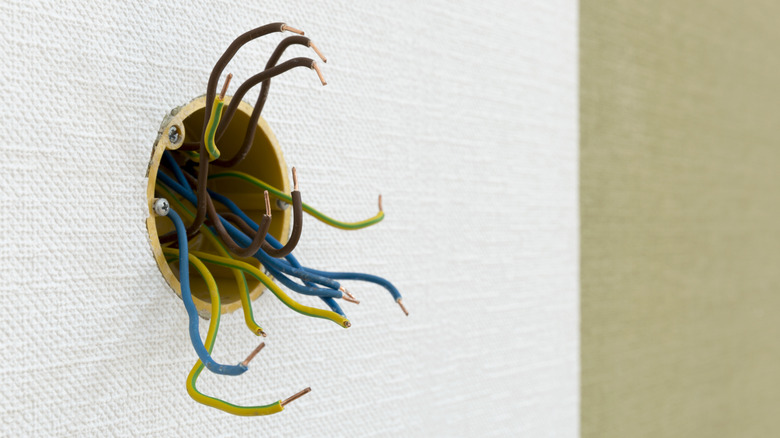
The most common use for a blue wire is as a traveler wire with three- or four-way light switches. Such switches allow you to turn a light fixture on or off from multiple locations. When you turn on a light from one switch, the traveler ensures this process works by completing the power connection between the switches and the light fixture, regardless of whether the switch is pointing upward or downward. When you turn off the light, the power moving through the blue wire is cut off, deactivating the light, regardless of which switch you used.
A multi-way switch will have extra terminals designed to accept the traveler wire connections between the switches. It must be connected to the right terminals to ensure the system will work properly. If you're not comfortable working with the blue wire or with the more complex wiring pattern required with a three-way switch, this is a good sign that it's time to call an electrician for help. You don't want to make an error when installing new electrical equipment, as it could lead to overheated wiring, electric shock, and a higher risk of fire.
Why electricians always use the same wire colors
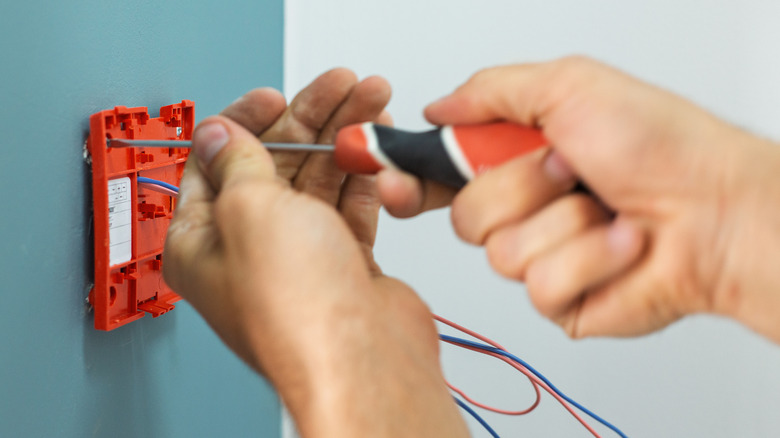
As long as licensed electricians did all the wiring work on your home, you can almost certainly trust that the blue wires you're seeing are travelers. The National Electrical Code (NEC) began using colors to identify the function of individual wires almost a century ago, and it became the standard for the industry's professionals. Wiring follows the same color-coding technique throughout the world in both residential and commercial work. With the meaning of each wire color universal in all types of construction, it's safer and easier for electricians to work with the wiring during later upgrades or repairs.
Even though the NEC requires using certain colors, DIYers might not follow the same requirements. If you see a blue wire in the walls that doesn't look like a traveler, and you know a previous owner did some of the electrical work in your house themselves, it's possible that the DIYer used whatever color of wire was handy or a favorite color. In a case like this, you can't be confident that blue was used only as a traveler. Working around wiring that did not follow the proper color code exposes you to a greater risk of shock. If you're unsure whether previous electrical work followed the color code, the best option is to call an electrician for help.