

Get A Better Vegetable Patch With This Sunny Annual Flower
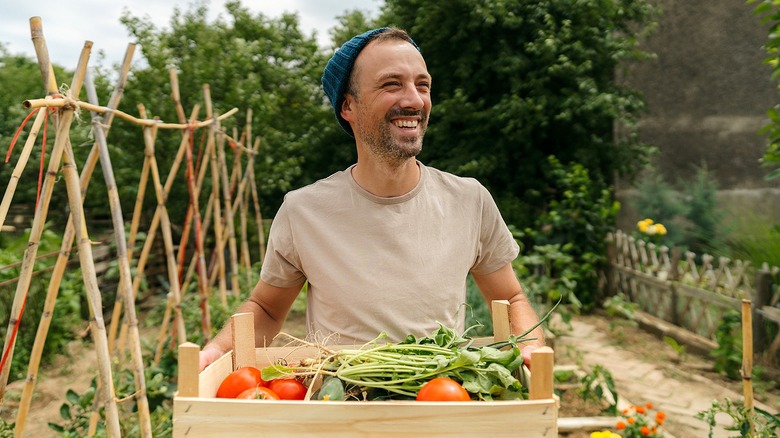
A veggie garden with splashes of beautiful flowers isn't just prettier — those blooms can help you increase your harvest. It may seem too good to be true, but certain flowers can help you achieve the bumper crops of your dreams. Among the brightly blooming annuals you can grow for a more robust vegetable patch are nasturtiums (Trapaeolum spp.). These sunny plants have multiple benefits in a garden, including attracting pollinators, specifically hummingbirds. What's more, nasturtiums can even help suppress weeds and deter pests in a one-two punch.
Those familiar with nasturtium will recognize its funnel-shaped blooms, which can reach up to 3 inches wide. Depending on the variety, nasturtium blooms can be shades of yellow, orange, cream, or red, even pinks and purples. Meanwhile, there are bushy types — such as the 'Whirlybird' – and types that trail. In many regions, these flowers are grown as annuals due to colder temps, but they'll survive as perennials in zones 9a and up, making nasturtium a helpful companion plant for gardeners in many zones.
Growing nasturtiums among your vegetable crops
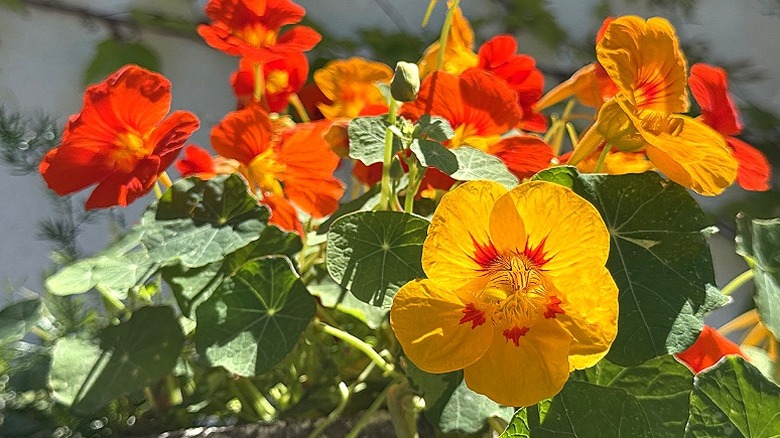
One of the ways that nasturtiums can keep pests away from your garden naturally, while improving your veggie patch, is by acting like a trap crop – meaning, it will draw away destructive insects from your growing vegetables. For example, it can save your crops from munching insects like the cabbage looper, or sucking pests like aphids. If you grow nasturtium near cucumbers, it can protect your cucurbit from cucumber beetles. At the same time, the plant can attract beneficial insects, like hoverflies.
You can also grow nasturtiums as a tomato plant companion that will block out weeds, since its foliage can serve as a ground cover. In addition to improving your backyard crops, another bonus of growing nasturtiums is that the leaves, blooms, and seeds are edible – with a flavor commonly described as peppery.
To grow this bright annual, sow the plants directly into your garden soil for the best results. Note that nasturtiums thrive in sunny conditions, but appreciate some afternoon shade. They have a long bloom season, with a floral display you can enjoy until the first frost. Also, if your soil is lean, all the better; gardeners will get more blooms from these plants in poor soils, rather than in rich ones. What vegetable crops grow in poor soil? Several, for which nasturtium would make a fine companion, too, including radishes and lettuce!