

Skip The Tea And Coffee Grounds: The Kitchen Scrap You Can Use As A Natural Wood Stain
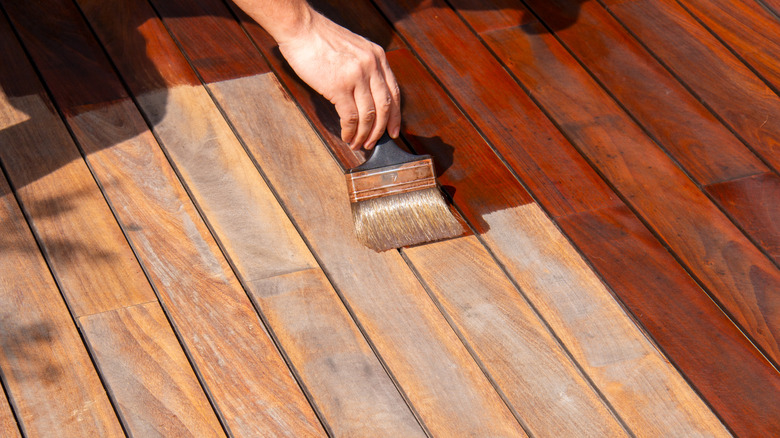
When it comes to natural wood stains, some ingredients get all the hype. Namely, coffee grounds and tea are well known for their dyeing properties, but there are other kitchen scraps you can use as a natural wood stain. If you've got a walnut tree at home or if you like to go foraging for some in the woods, you already know that walnut husks have an incredible dyeing power. If you pick them up with bare hands as they break down, you'll likely end up with brown stains all over your fingers for days on end. So, why not use them to create a wood stain?
The trick is to soak walnut husks in water to make the dye. The process isn't exactly quick, since it takes days to weeks to infuse, but it gives you a deep brown stain that you can use to give wood a darker tone while maintaining its natural texture and details. Staining antique furniture, wood DIY projects, and decks looks more natural than paint, which conceals the beautiful textures of wood. And if you'd like to adjust the exact tint of the dye for something lighter, you can do so by soaking the husks for a shorter amount of time (just a day or two), which should result in a lighter greenish stain instead.
And a great thing about this hack is that once the dye has infused, you can mix one part alcohol with one part water-based dye, pour it into glass bottles or jars, and keep it in storage for a while. So while walnut season doesn't last all year (it's in the fall), you can have walnut wood stains on hand all year long.
How to make a DIY wood stain with walnut husks
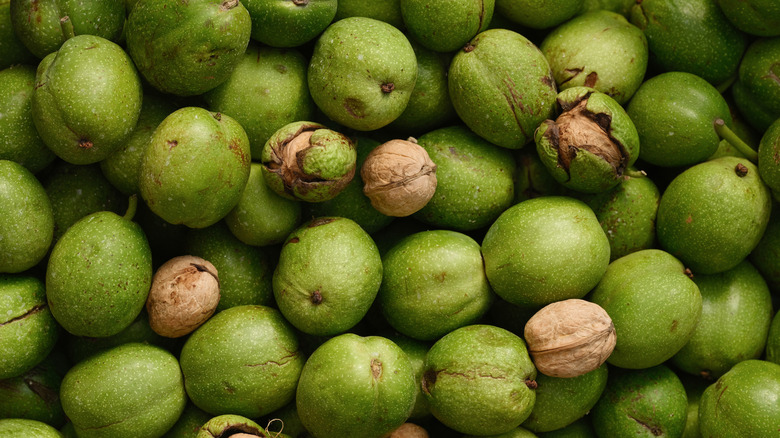
First things first, what's a walnut husk? We're not talking about the walnut shell. The husk is the green layer around it, which starts to look brown or black as it breaks down. When you buy walnuts at the store, that outer layer is removed, but if you find them under a walnut tree, they're typically still attached. With gloves, you can remove the walnuts from their husks and place them in a bucket. This should happen without any force (if that's not the case, wait it out). Plus, you can keep all the walnuts to eat.
When you've de-husked all of the nuts, cover the husks with water, and use a paint stick or wooden spoon that you don't mind staining to stir the concoction, making sure they're all submerged. Cover the bucket with a layer of fabric or a lid and set it aside to infuse for a few days (for a lighter color) up to a week or so (for a richer brown). Once done, pour the mixture through a thin strainer (or fabric) to extract the liquid stain. You can use the water-based stain as is, or pour it into bottles with half natural dye, half rubbing alcohol to keep it for a while. Another option that some people have tried with positive results is soaking the husks in vodka instead of water.
Before you use it, make sure that the wood you're staining is even and clean. If not, and especially if there's any old finish on it, sand it. To apply the stain, use a paint brush or a cloth and rub it into the wood until it penetrates fully. Work with thin coats and repeat several times if needed. Let it dry and apply a lacquer or varnish over top to seal it.