

In The 1940s Cape Cod Revival Was All The Rage. Here's What Happened
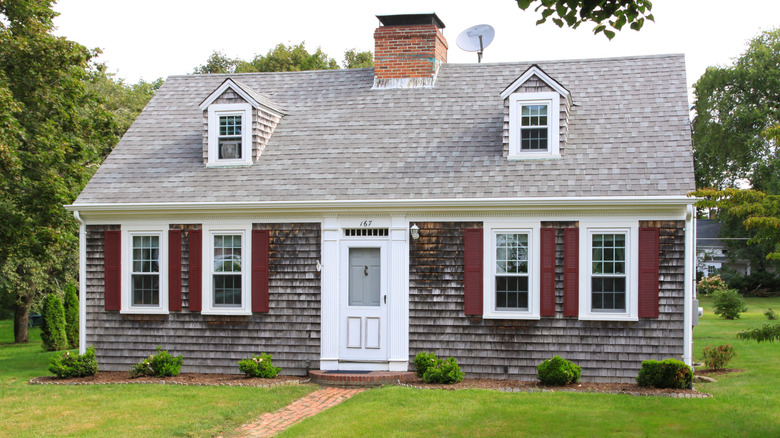
When driving through coastal towns of New England, you'll see mansions, small homes, and everything in between. One of the classic home styles you might find is the Cape Cod. The original Cape Cod-style house is a smaller structure that's all about simplicity and symmetry, with a door at the center of the home, a steep roof with a deep slant that allows snow to slide off, a central chimney, and a single floor of living space (although there are cases where a small staircase leads to an attic or bedroom).
Cape Cod homes were first built in the 1700s. By the 1920s, this simplistic architecture saw an interesting revival when it started popping up in home builder catalogs and magazines. This is, in part, thanks to the fact that around this time, a Boston-based architect, Royal Barry Wills, set out to revamp the original Cape style. By the end of WWII, modernized versions of Cape Cods were sold as affordable housing options for veterans who were returning home from the war, as well as people looking to buy their first home.
A Cape Cod Revival takes the blueprint of a classic Cape Cod and builds on the floor plan by adding more living area to the home. Instead of remaining a single floor dwelling, the revival adds usable space upstairs by adding dormers that give you more room. Bedrooms and bathrooms are able to be moved upstairs, giving homeowners more space downstairs. Instead of leaving the chimney in the center of the home, the new layout often moves it to the side of the home and allows for larger living space on the first floor, with the option of an open concept living room, dining room, and kitchen.
What else modern Cape Cod homes have to offer
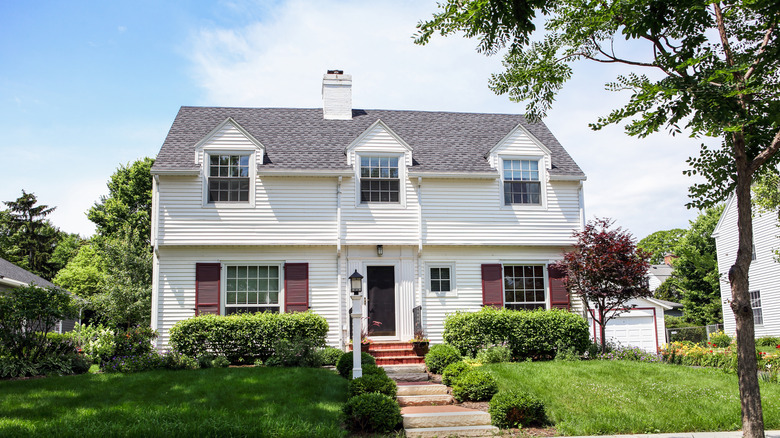
The modern Cape Cod is much larger than the original design of the early 1700s, and thanks to the revival era, often feels like a completely different home on the inside. Now, these homes are much larger with more of the modern amenities that home buyers are looking for. In Cape Cod Revival homes, the windows are larger to let in more natural light, and often also have porches as an exterior addition. To extend living and storage space, some homes feature an attached wing or even a garage. Many of the original homes were so simple that they would use unfinished shakes on the sides. While modern homes remain relatively simple on the exterior, they often feature more color. And to bring a coastal vibe to a modern Cape Cod home, there are any number of paint shades you can choose from that will work.
Even with modern upgrades, Cape Cods remain one of the more affordable housing options, and are therefore attractive to first-time homeowners. New home buyers are not the only ones drawn to these homes though, as they can also be a great option for retirees who are looking to downsize. With its simplicity and timeless aesthetic, the Cape Cod Revival remains a classic home style that's in demand with buyers and renters alike.