

Skip Hydrangeas: The Dainty White Flowers That Butterflies Love
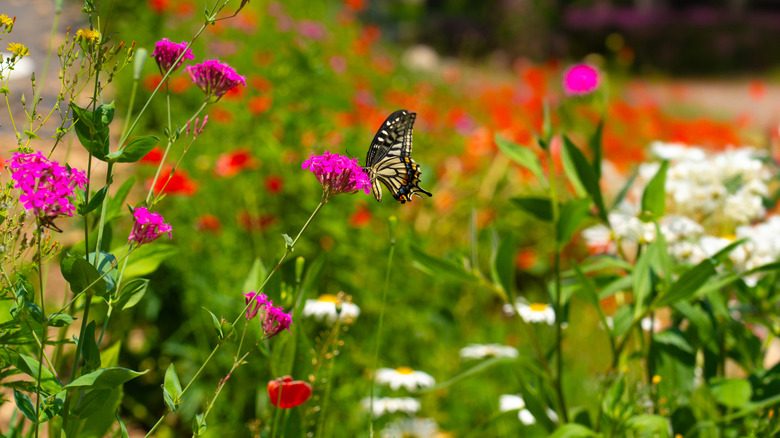
If you're looking to attract more butterflies to your garden, there's one simple solution: Plant more flowers. In fact, planting flowers that provide butterflies with a food source or a food source for their larvae is one of the best ways to create a welcoming environment for these insect pollinators. However, with so many different options available, you may not be sure where to start. Hydrangeas can be a good choice, but they also come with the burden of being much more fussy than some other options. Fortunately, there are several low-maintenance alternatives to hydrangeas that can give you the same fluffy look, including this North American native flower.
Also known as mountain snowbell, New Jersey tea (Ceanothus americanus) is a flowering shrub that butterflies, as well as moths, bees, and songbirds, absolutely adore. It blooms throughout the spring and summer with long-lasting, dainty flowers in a variety of colors including, white, cream, and pink. It's an overall well-mannered bush that tends to grow only up to 3 feet tall, with a maximum height of 5 feet. It has a deep root system that makes it a bit difficult to transplant but helps it serve double-duty in your yard by reducing erosion. It's even a nitrogen-fixing plant, which means adding it to your garden doesn't just help attract butterflies, it also bolsters your garden's soil health. As a result, if you're looking for a spring perennial plant to attract butterflies that serves more than one purpose, New Jersey tea can make a great addition.
How to grow New Jersey tea
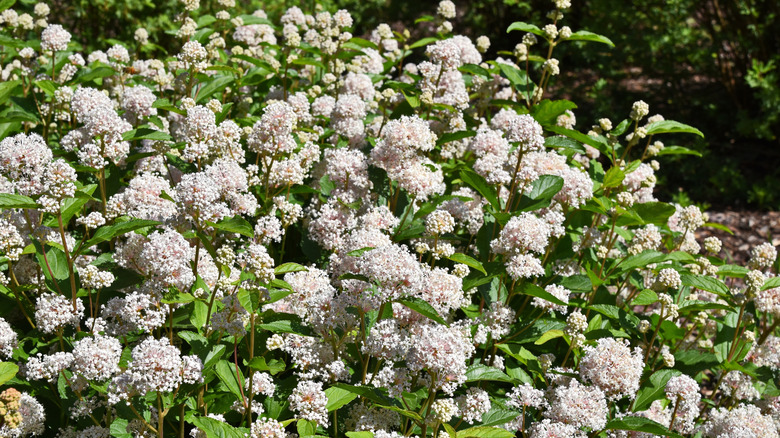
New Jersey tea isn't just a pretty alternative to hydrangeas in your butterfly garden; it's also easy to grow. It holds up well to drought and poor, dry soil, and it can even tolerate urban conditions, meaning it's perfect for the city gardener looking to transform their backyard into a butterfly haven. However, if you really want this shrub to thrive and have the best chance of attracting butterflies, choosing the right care is essential.
First, New Jersey tea is a perennial. This means that you can enjoy it in your garden year after year, so long as you live in the right climate. This plant is hardy in USDA Zones 4 through 8. While many butterfly-magnet plants require full sun, New Jersey tea is actually a shade-lover. Because of this, it can be a good way to add some visual and wildlife appeal to the areas of your yard where other plants fail to thrive. It handles everything from deep to partial shade with ease, and it also does well in dappled sunlight conditions, which makes it useful for planting around trees. Although New Jersey tea can survive drought and even grows well in occasionally dry soil, if you're looking for the optimal conditions, provide it a growing medium that offers both good drainage and consistent moisture. Fortunately, this can be easier to maintain in shaded conditions away from the heat of full sun exposure.