

Kitchen Flooring Trends Taking Over In 2026 (So Far)
We may receive a commission on purchases made from links.
If your kitchen floor is ready for a refresh, you'll want to consult the experts. There are several stunning flooring trends that have been emerging throughout designer homes. This year, trends aren't about fleeting, impractical styles. Instead, 2026 has seen a strong focus on floors that will look unique without appearing dated in 12 months' time. The key is to select flooring that has character, but won't overwhelm your space.
We were lucky enough to conduct exclusive interviews with design professionals like Barrett Oswald, Evelina Juzėnaitė, Levi Rodgers, Michelle Accetta, Rachel Simpson, Lauren Lerner, and Bilal Rehman. They've observed patterns with their current clients, giving them important insight into the biggest kitchen flooring trends of the year. Although 2026 isn't close to being over yet, these are the hottest flooring options to consider for your cooking space.
Hardwood flooring continues to take over kitchens
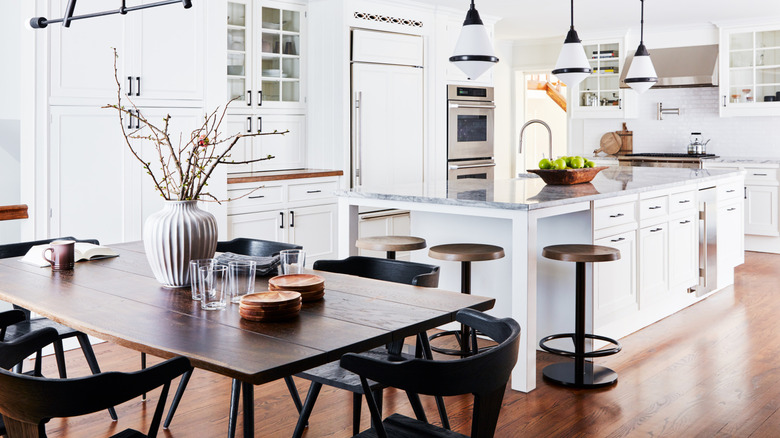
Tile isn't the only kitchen flooring option, and 2026 is seeing one natural material take over every room in the house. Barrett Oswald, principal designer at Barrett Oswald Designs, exclusively shares, "The increasing trend among my clients is to install wooden flooring in the kitchen rather than automatically going for tiles in the kitchen. This creates a sense of connection between the kitchen and other parts of the house." This is reflective of the current trend towards kitchens that don't look like kitchens — in the sterile sense.
Oswald also says, "Tiles look great, but sometimes they look out of place in the kitchen or they are forced or too 'kitchen-y.' In 2026, I see the greater trend being continuity." A wood floor opens a world of possibilities when it comes to designing your kitchen. Homeowners are starting to think beyond what we consider kitchen-appropriate design, and making their cooking spaces feel like collected, lived-in parts of the home. For example, people are gravitating more towards "unfitted" kitchens with elements like large wood tables instead of modern kitchen islands. To complement your wood floors, consider unpainted cabinetry, or even using antique furniture as dish storage instead. In 2026, the name of the game is authenticity.
Terracotta floors are starting to trend
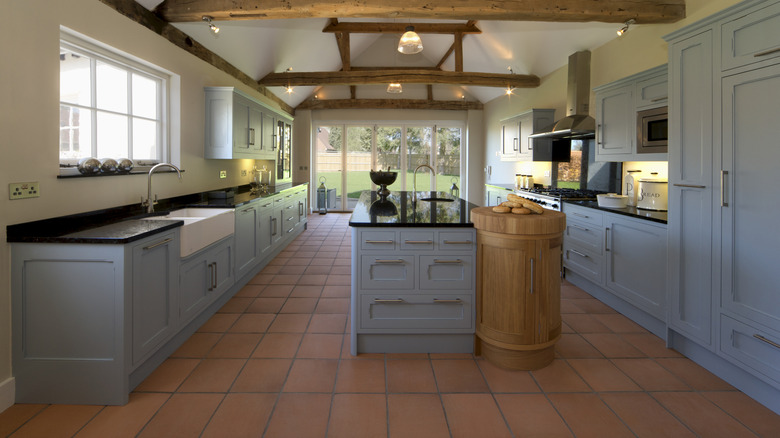
If you still want your kitchen to have a defined floor of its own, there's another natural material that's showing up throughout designer homes. Evelina Juzėnaitė, principal interior designer at Planner 5D, exclusively reveals this rustic flooring option: "Terracotta flooring is really popular right now. It seems that people have grown tired of beige interiors and are looking for a warm accent — and terracotta is the perfect choice for that. [...] It often gives some people the impression that the floor is the result of painstaking, time-consuming craftsmanship." Once again, this proof that people are craving raw, genuine materials. Terracotta floors are perfectly imperfect, making them ideal for a warm kitchen that feels less polished, and instead, more personal.
There are a few different kinds of terracotta floors to consider, depending on your desired aesthetic. If you want to mimic an Old World, European-inspired interior, hexagonal rust-colored tiles are a French-approved choice. Referred to as "tommettes," these tiles are a centuries-old French classic, prized for their rich, earthy tones and beautifully weathered appearance. For a truly rustic space, try rectangular brick-like terracotta tiles in faded red tones. If you want something even more exotic, try a Morrocan-style "stars and cross" pattern. Keep in mind that terracotta tiles are available in a wide range of warm shades from clay pink to deep red. For more inspiration, explore these beautiful styles for terracotta tile in your home.
Checkerboard floors are big, especially with low-contrast designs
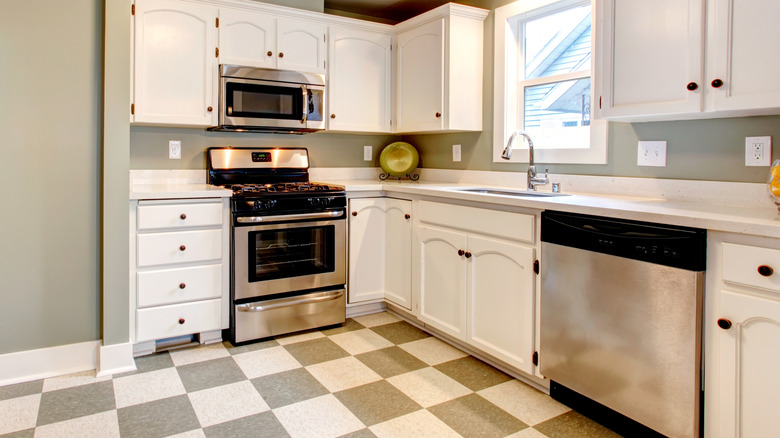
Checkerboard floors have been trending for a while, but 2026 has introduced a new, understated take on the retro style. Evelina Juzėnaitė explains, "I really love this trend — checkerboard-patterned floors. But instead of stark black and white, I prefer more subdued colors so there isn't such a strong contrast – warm white and warm gray, for example, or beige and ivory." She goes onto say that this is a great way to transform a boring space with a splash of personality and contrast. Plus, taking a slightly muted approach will ensure that you can easily blend your floors with a range of surrounding decor.
Juzėnaitė isn't the only fan of muted checkerboard tile patterns. Designer Jessica Koltun showcased a project with muted checkerboard floors, with a note that natural stone can keep the pattern timeless instead of trendy. Heidi Caillier actually combined two top-trending flooring trends by painting white squares on a hardwood kitchen floor to create a brown and white checkerboard pattern. You can also explore a range of low-contrast color schemes like blue and off-white or taupe and cream. If you're working on a budget, this is how to DIY the luxurious checkered floor tile trend for less.
Dark brown flooring is back
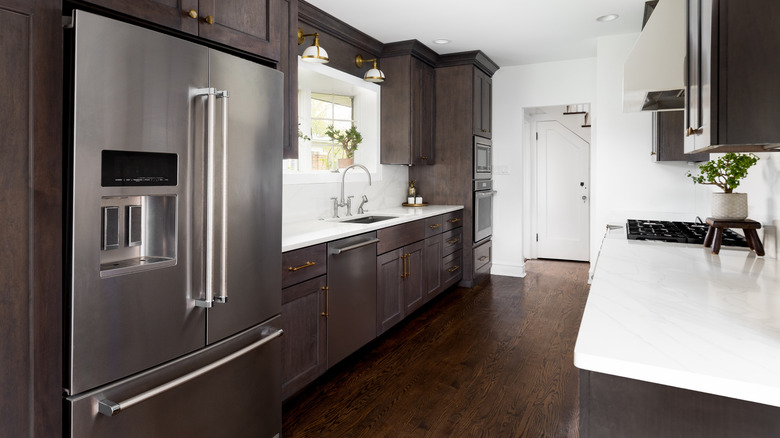
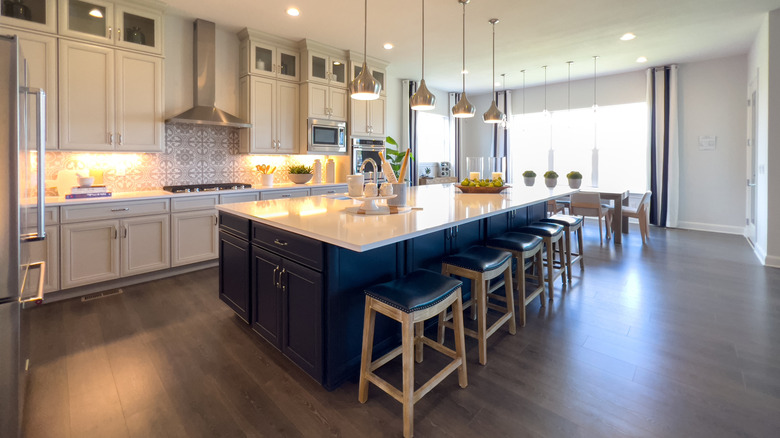
Light and bright reigned supreme for a long time, but people aren't afraid of the dark anymore. Evelina Juzėnaitė saysm, "For a long time, people steered clear of dark flooring and opted for light or gray shades, but now I've noticed that many customers are once again looking for dark brown flooring." Even if you're working with a small cooking space, you shouldn't shy away from darker floors. While this used to be a design no-no, homeowners are starting to lean into saturated, cozy spaces, rather than trying to keep everything bright and minimalistic.
This emerging moody design trend is called latte luxury, and you can nail it by starting with your kitchen floors. If you're after a more traditional look, consider a dark-stained wood like walnut or even mahogany. Staining your existing wood floors in a darker shade, like this black walnut Dwil Water Based Wood Stain, is also an easy way to instantly upgrade your kitchen. To achieve a more modern look, a dark brown, textured slate tile is a trendy choice with tons of visual variation. For inspiration, Houselift Design recently posted a kitchen with dark brown hexagonal tiles, complementing the dark brown cabinetry and providing beautiful contrast to the ivory marble countertops.
Microcement continues to gain steam
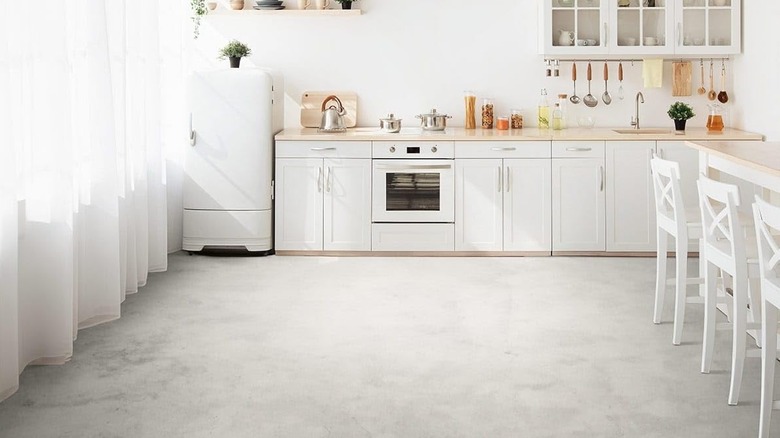
If you love an unapologetically modern look, this trend is right up your alley. Evelina Juzėnaitė highlights the most popular flooring trend she has seen this year: "The biggest growing trend I've noticed is microcement. It's very minimalist and has no seams. In the past, the floor was a very important part of the overall design, but now I've noticed that people want to keep it neutral and let the furniture or decor take center stage." Microcement is, as its name suggests, a cement-based mixture that is spread across an existing surface in a series of thin coats. It's a versatile way to make your kitchen look instantly more contemporary.
One of the most notable benefits of microcement is that you can often apply it directly to an existing surface – and you can even DIY microcement over existing tile for a budget-friendly upgrade. No demolition of your current floors is needed. This keeps installation costs low, and gives your floor an entirely new look. A huge benefit to microcement is that there is no grout. If you currently have a tiled kitchen floor and you're sick of the grout maintenance, microcement could be the solution. Always make sure to use a high-grade sealer and promptly wipe up any spills.
Large format imitation stone tile is taking off
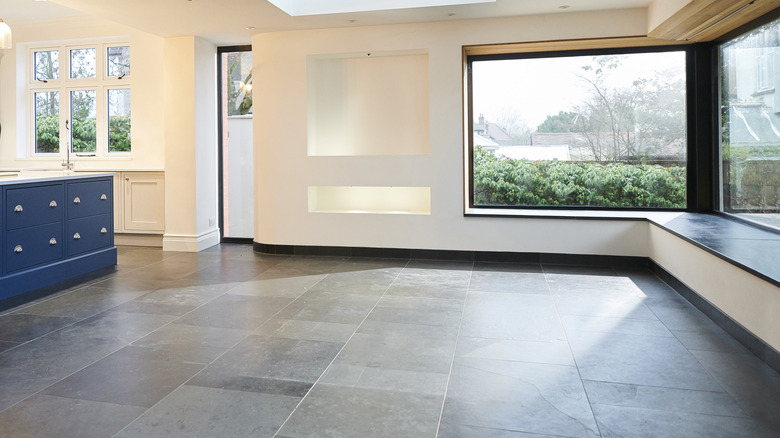
Although aesthetics are important, durability is also key when you're spending a pretty penny to update your kitchen floors. If you want them to last, there are specific materials you should consider. Levi Rodgers, co-founder at VA Loan Network, exclusively tells House Digest about the benefits of large format porcelain tile that resembles natural stone. He says, "The 24 by 48 panels are running $4-8/SF installed, and look way more high-end than they are. [They] hold up much better than natural stone/wood for a Texas family that has kids and a dog." He explains that over the last 18 months, around one out of three listings under $500,000 chose to replace their flooring. Stone-style porcelain slabs have been an increasingly popular option.
There are several practical benefits of large format porcelain tiles. The large format layout requires less grout lines, therefore providing a low-maintenance solution. It can also make the space look bigger because the stone appears uninterrupted. The porcelain material is stronger than organic stone, and it is non-porous, which is ideal for a kitchen environment. As Rodgers mentioned, this kind of flooring is ideal for high-traffic areas with children or pets. If you're not planning on selling your home immediately after installing the floors, you'll want to choose an option that will still look pristine after years of wear and tear.
Large scale mosaic stone flooring is creeping into kitchens
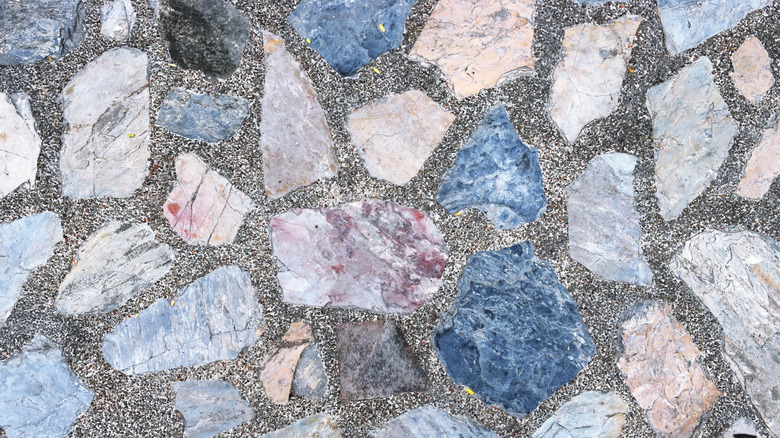
If you're craving something more creative, there's one trend that offers a major visual impact. Michelle Accetta, founder & principal designer at Michelle Accetta Home, exclusively tells our readers, "One kitchen flooring trend I think we are on the early stages of seeing come into more and more homes is large scale stone mosaic flooring. It resembles Palladiana terrazzo, which is a traditional Italian technique." Large-scale stone mosaics are similar to terrazzo with larger slabs of integrated stone. They also look similar to flagstone floors, but with irregular shapes, rather than squares and rectangles.
There are several aesthetic benefits to large-scale mosaic flooring. Acetta expands, "It beautifully balances the masculine of stone with the feminine of the organic pattern. It feels lived in and inviting while being extremely forgiving." She also notes that it plays well with the biophilic design trends. You can either choose neutral-colored stone pieces or different shades for visible variation.
Tile patterns are highly popular
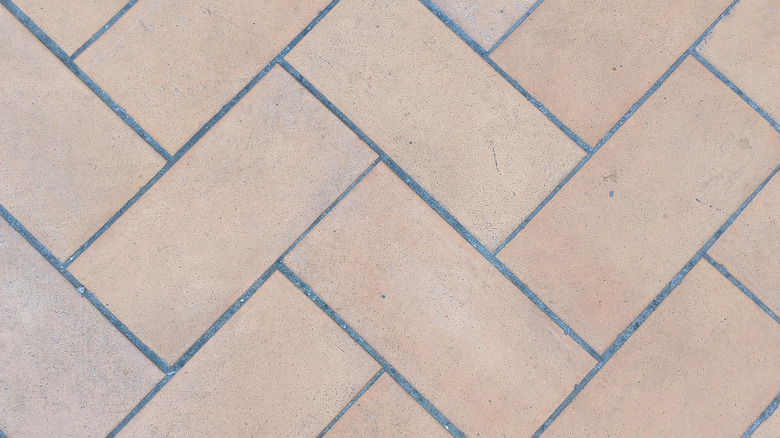
Although there are tons of tile alternatives taking over 2026 interiors, there are still quite a few tile trends holding their own. Rachel Simpson, senior interior designer at Revive Design and Renovation, shares this exclusive quote with House Digest: "One of the biggest kitchen flooring trends I'm seeing in 2026 is patterned flooring." She specifically highlights tile patterns like herringbone and diagonal diamond installations for a textured look. In fact, your kitchen is actually one of the best places to use trendy herringbone floors in your home. By choosing to lay tiles in a creative way, you can add personality to your space while keeping it timeless.
This trend is proof that you can opt for patterned flooring and still maintain a sophisticated interior. Simpson explains, "We're pairing these classic patterns with matte finishes and muted, neutral color palettes, which allow the pattern itself to become the focal point. It's a great way to make a statement while maintaining a clean, elevated design aesthetic." For example, try sourcing matte beige or nude subway tiles and arranging them in a herringbone pattern, rather than stacked. You can apply this technique by laying any organic tile in an unexpected arrangement.
Zellige-inspired floor tile gives an artisanal touch
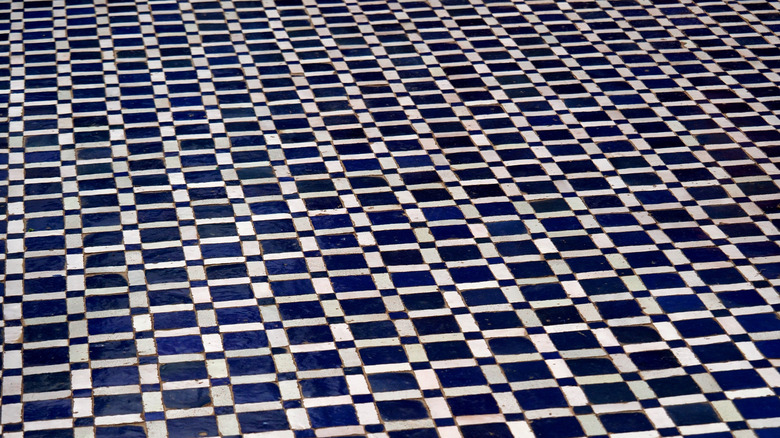
There's one trendy tile that is only growing in popularity. Lauren Lerner, founder and principal designer of Living with Lolo, exclusively shares this piece of advice: "Zellige has dominated backsplashes for a few years, and it is now moving to the floor. The handmade variation in glaze and surface gives each tile a slightly different finish, which means the floor has genuine visual depth rather than the flat repetition of standard porcelain." If you're unfamiliar with the material, zellige is the artisanal art of handcrafting Moroccan clay tiles crafted using 800-year-old traditional techniques. This is another example of how perfectly imperfect, organic decor is taking over in 2026.
Although zellige is a beautiful way to give your kitchen a textured, one-of-a-kind look, there are some drawbacks to a floor installation. Lerner says, "It is a higher-maintenance choice than people expect because the uneven surface traps debris more than a flat tile. In a kitchen with a lot of cooking traffic, that is worth discussing upfront." You also have to be aware that the floor will feel uneven rather than smooth, which can be difficult to get used to on a sensory level. If you're on the fence about whether zellige tiles are right for your kitchen floor, consider installing just a decorative border around more traditional, large-format tiles. Explore these unique and trendy zellige tile layouts to transform your space.
Slim format brick-lay tile offers a refined take on rusticity
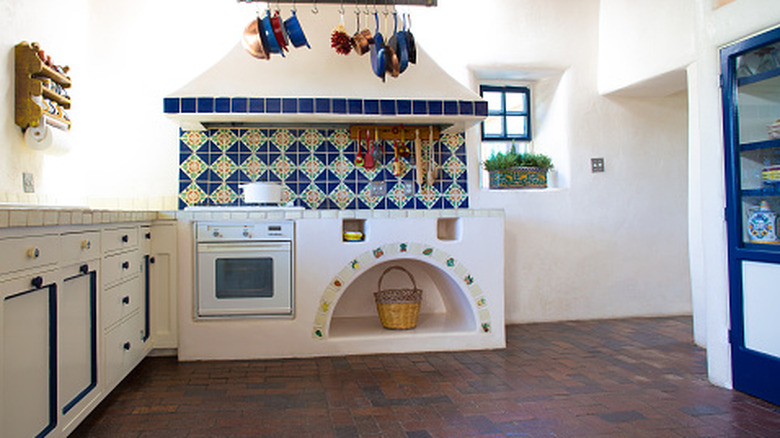
Brick is back, but with a 2026 twist. Lauren Lerner lets readers into one of the biggest flooring trends of the year: "Thin brick-format tile laid in a running bond or offset pattern on the floor is something I have been specifying more this year. It brings the warmth of a brick aesthetic without the weight or unevenness of actual brick pavers. The scale is what makes it feel current rather than rustic." She explains that the slimmer the format of the brick tile, the more refined your cooking space will appear.
Brick-inspired tiles can solve several common flooring issues. Because traditional brick pavers are much thicker, they can add excessive height, create installation complications with doors and transitions, and place unnecessary loads on floors. That being said, certain tile manufacturers specify that while thin brick tiles are appropriate for residential installations, they shouldn't be used in commercial spaces with very high traffic. This is mostly due to the porous nature of the brick material itself, which can be circumvented if you select porcelain tiles in a brick-inspired cut and tone.
Natural limestone flooring brings a sense of understated luxury
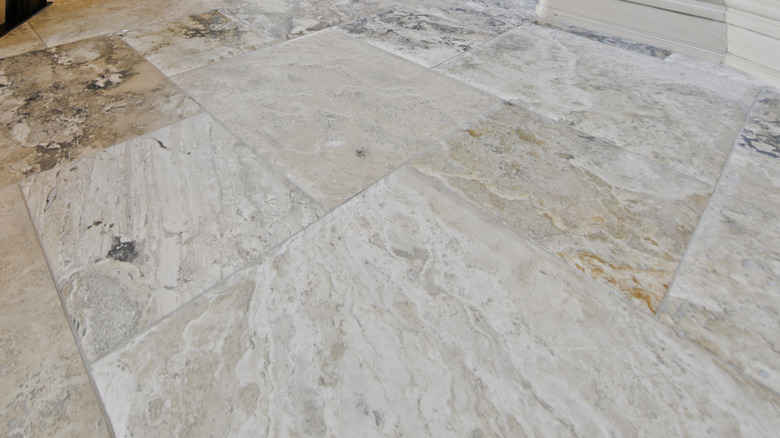
Another organic beauty, limestone flooring is having a major moment. Bilal Rehman, the CEO and principal designer of Bilal Rehman Studio and founder of Bilal Rehman Gallery, gave us exclusive insight into the trend: "One material I'm seeing become increasingly popular is natural limestone. Clients are moving away from overly polished finishes and gravitating toward stone with subtle movement, texture, and an aged quality." He also says that this is the perfect material to consider if your goal is to achieve a quiet luxury aesthetic. Limestone can make your space look timeless without feeling totally traditional.
Its naturally textured surface provides good slip resistance, which can make it a safer option for areas like kitchens, hallways, and bathrooms. Compared to other natural stones such as marble, limestone is generally more affordable while still delivering a high-end, appearance. Large-format limestone tiles can also be used to create an almost seamless look. In terms of design flexibility, limestone comes in a range of warm and cool tones. However, there are a few drawbacks to consider before installation. Because limestone is a porous natural stone, it must be properly sealed to protect it from stains and moisture damage, and it also requires the use of special non-acidic cleaners to avoid surface erosion and long-term wear.
Tonal-on-tonal flooring creates a seamless look
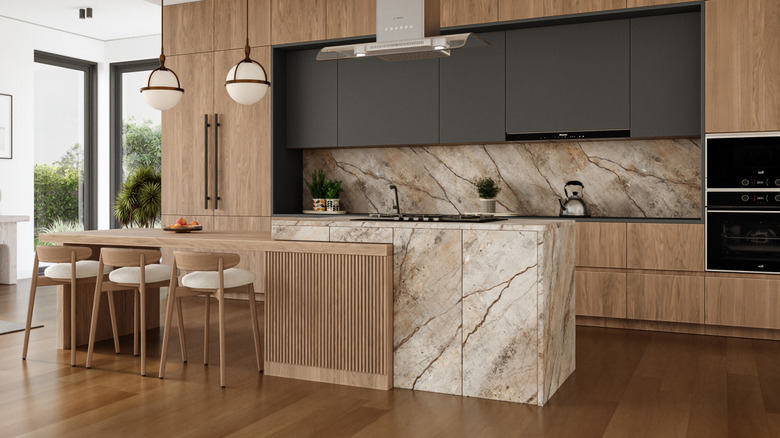
Sometimes monochromatic looks more dramatic than contrast. Bilal Rehman shares another designer-approved tip: "Instead of using flooring as a bold design statement, we're seeing kitchens where the floor closely matches the cabinetry and surrounding finishes. This tonal approach creates a seamless, architectural look that makes the space feel larger, calmer, and far more elevated." When you match your cabinets, finishes, and flooring, the result is atmospheric and immersive, creating a sense of cohesion that feels truly intentional.
Color drenching has been trending over the last year, and this low-contrast design method is a sophisticated version of this technique. You can implement a monochromatic color palette through neutrals or more saturated colors, depending on your personal style. Flooring can act as the anchor for the entire scheme, setting the tonal temperature that everything else builds on. For example, you can use the same wood stain across your floors and cabinets, or go bold with a saturated emerald, deep cobalt, or terracotta tile floor, complemented by cabinetry in a softened version of the same shade.
Vein-cut travertine introduces soft movement
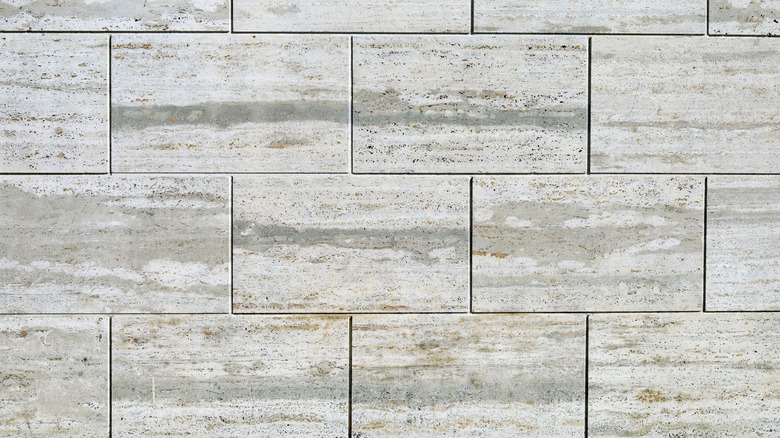
Last but not least, another earthy texture is appearing throughout 2026 interiors. Bilal Rehman explains: "Travertine is making a major comeback, particularly vein-cut varieties. It offers the warmth people are craving, while introducing subtle movement that feels organic, rather than busy." He suggests using them in an open concept home, as this natural material looks beautiful in the kitchen and surrounding living spaces. It's extremely versatile, which makes it ideal if you think you might change design elements in the future.
Vein-cut travertine is distinct because of its linear veins that run horizontally across the stone slab. The stone is cut parallel to reveal these striations, and it can visually elongate your space. If you want a more uniform look, you can also explore the possibility of cross-cut travertine, which is cut against the vein to produce a more cloud-like and consistent pattern. When it comes to maintenance, make sure to review the difference between cleaning and polishing travertine floor tiles.