

The Potent Herb You Should Plant If You Like Cilantro
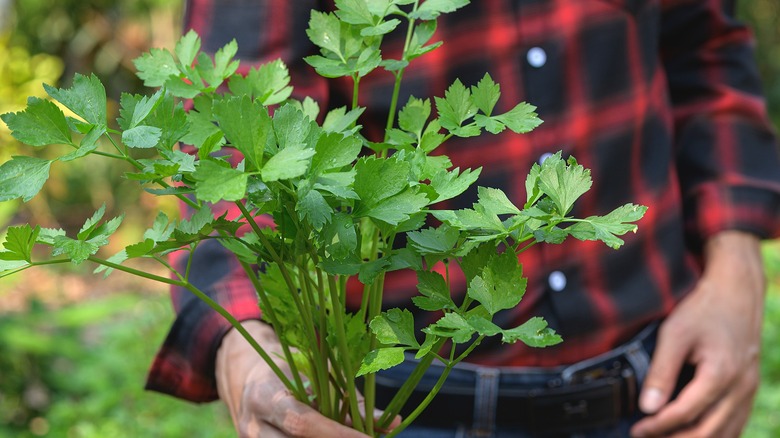
When it comes to the flavorsome, winter-hardy kitchen herb cilantro (Coriandrum sativum), there are two types of people: those who love it and those who can't stand the taste. If you're in the first group and can't understand why some people say cilantro tastes like soap, you might be interested in another potent herb, which is similar but has a stronger flavor that holds up well in cooked dishes. Its name is culantro (Eryngium foetidum), and it's very popular around the Caribbean and Puerto Rico, where it's called recao.
Despite their almost identical names, cilantro and culantro aren't related. And while they do smell and taste similar, culantro is more intense in both flavor and aroma — and is known to have a peppery sharpness. This means that if you can't grow cilantro where you live, or it's already bolted (i.e., it's started to flower) in your garden, you should be fine tending culantro as it's more heat-tolerant.
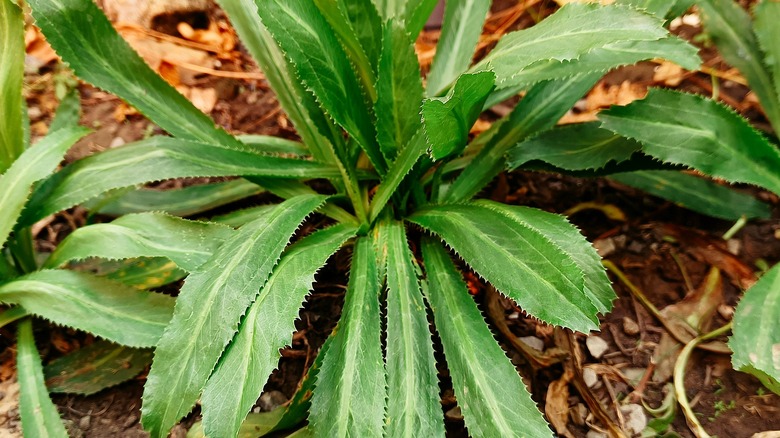
Cilantro and culantro also grow as largely very different plants. Unlike cilantro, culantro has long slender leaves with serrated edges, and it grows as a biennial instead of an annual like cilantro; this means you can enjoy the herb in your garden for longer if you live in a warm, tropical climate.
This aromatic herb does well in containers. What's more, you can even grow culantro indoors, provided it's warm enough and there's plenty of light. (Learn more helpful tips for growing a thriving herb garden.)
How to grow culantro in your garden
Culantro can grow in USDA hardiness zones 7 through 11, and as said, it's a biennial, which means two growing seasons. Though, in cooler regions, culantro may only last as an annual (like cilantro). It thrives in shade, although it'll also grow in the sun. Morning sun with afternoon shade would be ideal for culantro.
As for this potent herb's soil requirements, makes sure the soil is well-drained to prevent root rot. Speaking of which, you should water your culantro plant when its soil becomes dry. How dry? Check the top layer, and if it's dry an inch down into the soil; it's time to water.
Mature culantro plants resemble a rosette, and sit close to the ground (like lettuce). When you harvest, you should start from the outside; culantro leaves will be ready to cut once they reach 6 to 10 inches. Also, know that harvested leaves won't last beyond a week or so. If you wish to store culantro, your best strategy is to cut the entire plant away at the base.
If you grow culantro, know that it may attract both beneficial insects (namely, ladybugs and lacewing), as well as slugs and snails. (Check out some easy ways to bring good insects into your garden.)