

Why July May Be The Best Time To Harvest Garlic In Your Garden
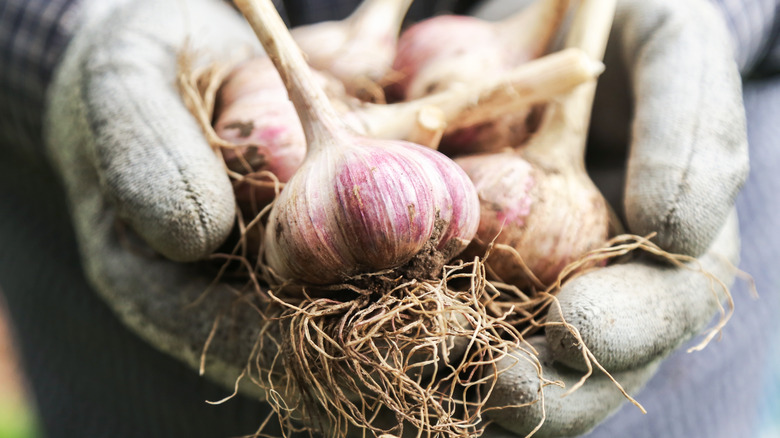
Arguably one of the most prolific ingredients in any kitchen is garlic (Allium sativum). Growing this pungent cooking staple is time intensive but quite easy. If you want to grow your own garlic, it's vital to know when to harvest them. July is an excellent time to do so. Since most gardeners plant garlic between October and November and garlic needs to be in the ground for about eight months, the end of its growing cycle falls in July. But your plants will give you visual signs when they're ready to be dug up.
You'll know your garlic is ready to harvest when you see the foliage start to yellow. Wait for the stocks to flop over but don't put off harvesting so long they dry out. Carefully dig around the plant and use a garden fork to unearth the bulbs so you don't damage the roots. Dust off as much dirt as possible but leave the foliage intact. Each plant produces a single head of garlic and the skin around the bulb should be dense and papery.
Give your garlic heads about two weeks to cure before they're ready to use. Group four to six bulbs together and hang them upside down to dry or dry them on a rack. Once the garlic heads and roots are completely dry, they're ready to store. Trim the roots and foliage and dust off excess soil. Now you can store your garlic in a dry, cool place for up to a year. Save your biggest bulbs to plant in the coming fall.
The complete timeline of growing garlic
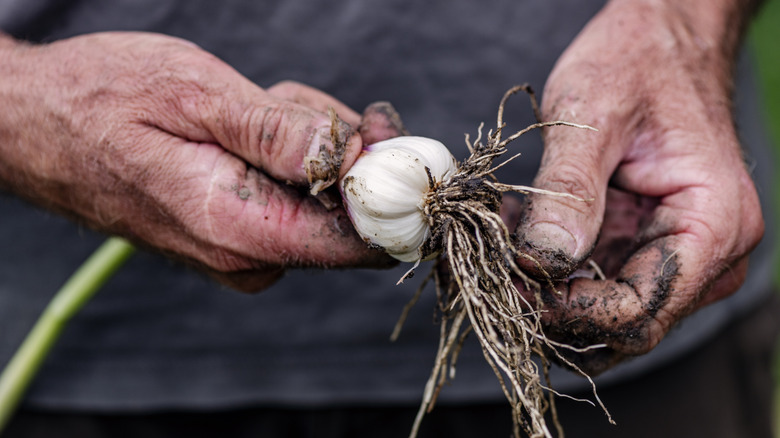
If you want to start planting your own garlic, do so in late fall so it can overwinter in the ground. Alternatively, plant garlic in the spring if you live in a mild climate, but put the garlic in the refrigerator for about 10 weeks before planting to mimic outdoor conditions. When you're ready to plant, find a location with full sun and well-drained, neutral soil. Dig 2- to 3-inch-deep holes for each clove about 6 to 12 inches apart. Add in a soil amendment, such as compost or bonemeal. You could also use a 5-10-10 complete fertilizer. Garlic is a heavy feeder so they can use all the nutrients they can get!
Be sure to favor large, disease-free cloves. You can leave the husk on or take it off — different gardeners have varying opinions on which they prefer. Place the cloves in their holes in an upright position and cover with soil. If you live in a climate with harsh winters, cover the area above your garlic with a layer of mulch. Once spring rolls around, remove the mulch if you applied it.
As your plants grow, trim away any flowering shoots. In early spring and again in mid-spring, side-dress with a pelleted fertilizer, broadcast blood meal, or an equivalent to give your plants a boost. Keep your garlic moist in the beginning of the growing season: Water them every two to three days. As mid-June approaches, taper off watering. Harvest in July and enjoy your own homegrown garlic!