

Not Lavender Or Sage: The Tall Deep Purple Flower Butterflies Love
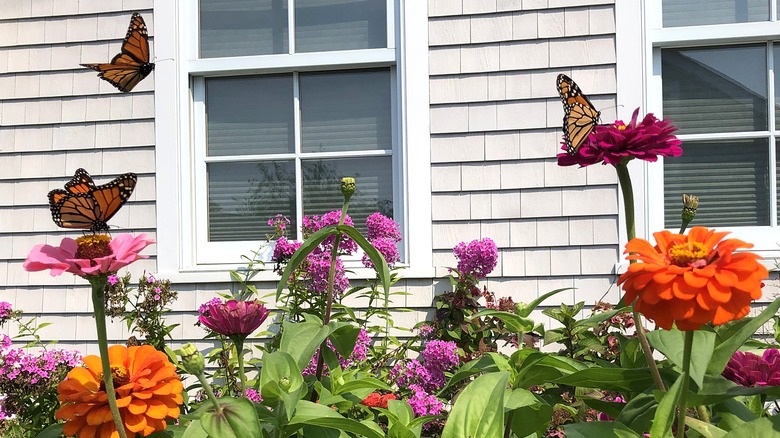
When gardeners want purple flowers that also attract butterflies, they often opt for the tried-and-true classics like lavender and sage. These plants are easy to grow, and tough enough to handle a range of conditions. That said, you wouldn't exactly describe them as tall. While English lavender can reach up to 3 feet, common sage's height tops out at around 2 feet. The same, however, can't be said of another garden flower: purple porterweed (Stachytarpheta frantzii), which can grow up to ~5 feet tall.
Purple porterweed is an evergreen perennial prized for its nectar-filled flowers, which feature small, contrasting white centers. These flowers help make this woody shrub a plant that can keep your garden full of pollinators – and not only fluttering butterflies, but also buzzing bees and hovering hummingbirds.
The only problem, though, is that this particular porterweed is only hardy in two zones: 10 and 11; so if you live outside these zones, you'll have to grow it as an annual. Note that you can grow purple porterweed in containers, so an option is to grow them in containers and bring them inside during winter.
Growing purple porterweed to attract pollinators
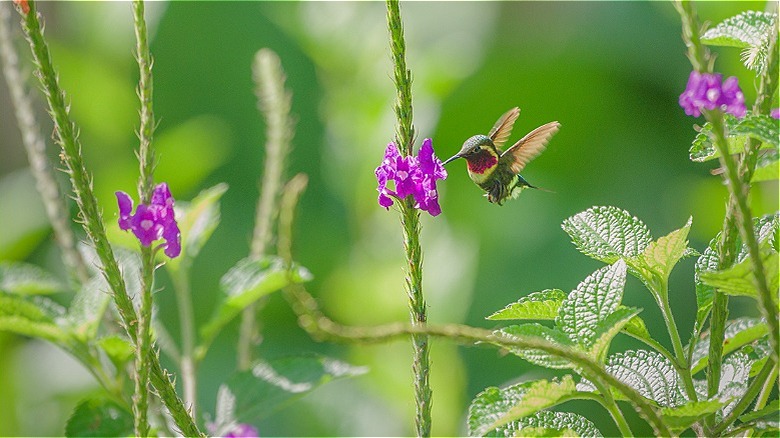
If your aim is to attract butterflies and other pollinators to your garden using purple porterweed, take time to plan out your garden strategy. While planting in clusters helps make it easier for these beneficial visitors to find your garden, it also has to be the right plant. Purple porterweed already grows up to 3 feet wide, so unless you're creating a border of some kind, one shrub is plenty.
However, you could plant other plants in clusters, and a pollinator garden benefits from a lot of color, along with diversity in flower shape and the amount of blooms, among other qualities. If you grow purple porterweed, you already have purple covered (which butterflies and bees are both drawn to), as well as a tall plant that'll stand out among other greenery. So considering this, you can then think about what other flowers you could add, and what different colors and shapes they can bring. (Check out the garden flowers that will have summer beds bursting with color.)
When it comes to growing purple porterweed, space it 3 to 5 feet apart from your other plants. Also, make sure its soil is well-drained and has a slightly acidic to neutral pH. This shrub prefers full sun and partial shade, which is perfect for butterflies, as they also prefer to visit sunny spots. For watering, porterweed is categorized as drought-tolerant (once it's established); so avoid overwatering, and feed it every month.
Lastly, once your plant's blooms are spent, clip them away to encourage more blooms, and to stop new seed formation. (Learn about other perennial plants that bring beautiful butterflies to your yard and garden.)