

Not A Scrub Brush: Use This Bathroom Staple To Make Your Bathtub Sparkle
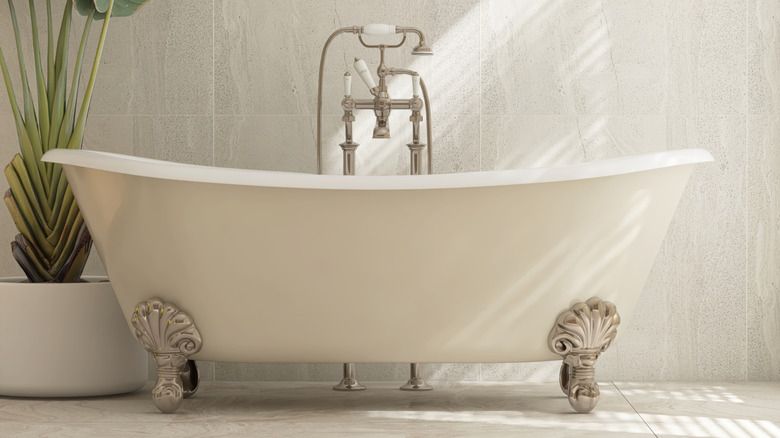
Few things ruin a relaxing bathroom aesthetic faster than a dingy, stained bathtub, but hard water deposits and rust can feel practically permanent against standard nylon bristles. When traditional elbow grease fails, most of us assume it's time to buy harsher chemicals or give up entirely, however, cleaning a stained bathtub does not have to be an impossible chore. The most effective tool to restore your tub's original shine isn't a premium cleaner — it's a pumice stone. This common bathroom staple, usually reserved for a DIY pedicure, is a powerhouse at shaving away stubborn mineral rings without the fumes, provided you know the crucial rules for using it safely.
You can certainly use a pumice stone to clean your cast-iron porcelain bathtub, since the hardened glass coating can withstand the stone's abrasiveness. It's important to never use this hack to clean your acrylic or fiberglass bathtub — it will permanently scratch and ruin the soft plastic surface. If you are struggling to identify your setup, it helps to learn about the right bathtub style for your bathroom to understand the limits of vintage cast iron versus modern acrylic. Modern budget-friendly drop-in tubs and seamless shower surrounds, however, are almost exclusively manufactured from molded thermoformed acrylic or vacuum-formed fiberglass sheet molding compounds (SMC). Because these modern plastics lack a vitrified mineral barrier, they are highly susceptible to abrasive scratching and chemical degradation. In basic terms, if your tub feels like heavy, ice-cold metal when you tap it, it's safe to use a pumice stone, but if it feels like lightweight, room-temperature plastic, put the stone down.
How to use a pumice stone to clean your bathtub
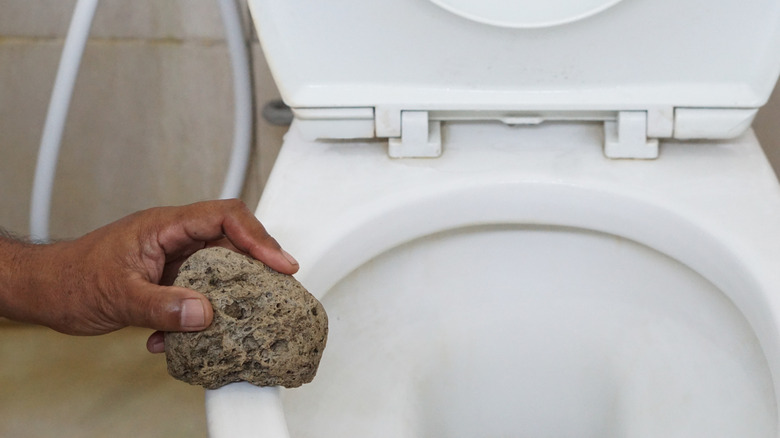
Smart homeowners are always on the hunt for clever tips to make cleaning your bathroom easier. A pumice stone can remove stubborn hard water rings and deeply embedded rust stains from your porcelain bathtub, provided you prepare the tools correctly. First, soak the pumice stone in warm water for at least five minutes before starting. A dry stone will scratch porcelain, whereas a wet stone creates a smooth paste as it wears down. You'll also need to ensure the area of the tub you are cleaning is completely wet. Keep a bucket of water or a spray bottle nearby to re-wet the surface constantly as you work for the same reason — friction on a dry surface is what causes permanent scratches.
Rub the wet pumice stone using the lightest pressure necessary. You will see a gray or white paste form — the paste actually helps polish away the residue. Continue to rub the paste in circular motions on the stain until all of the buildup is gone. Finally, rinse the area with clean water to wash away the pumice residue and loosened grime. You'll want to wipe dry with a microfiber cloth to verify the stain is entirely gone.
You can use this method to clean your bathtub every few months when deep-seated stains begin to reappear. In between, stick to non-abrasive liquid cleansers and a soft microfiber cloth to protect the porcelain's glaze. By saving this volcanic rock for the toughest mineral buildups and keeping up with regular maintenance, you'll ensure your vintage tub maintains its brilliant, glossy sparkle for years to come without ever needing to reach for harsh chemical fumes again.