

Not Stakes, Not Lanterns: The Creative Way To Light Up A Simple Concrete Driveway
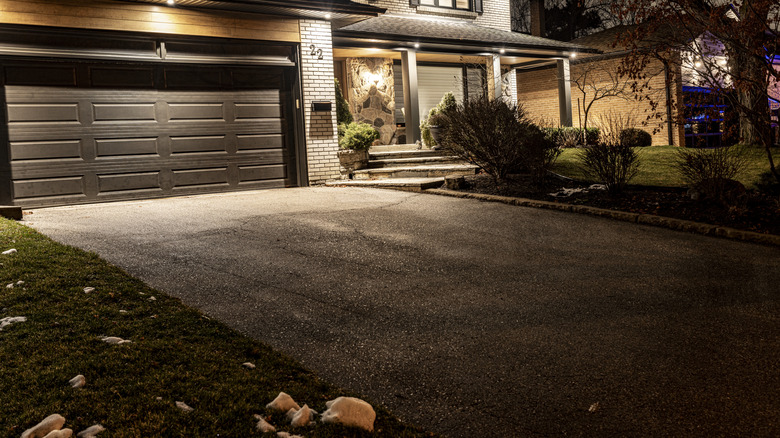
For quite some time now, solar stakes and in-ground LED disk lights have been the go-to options for lighting driveways. They're affordable, easy to install (you can avoid that expensive electrician call-out), and generally look aesthetically pleasing. Budget sets lit by built-in solar panels go for as little as $4, while a single installed luxury light may set you back $1,450. However, these kinds of low-profile driveway lights aren't without their issues — think bulb burnout (following, say, a big lightning storm), dead batteries, and faulty wiring. In most cases, you have to conduct seasonal maintenance and replace them every five years at minimum.
However, for homeowners who want a simple driveway upgrade you can get done in just one weekend, they aren't the only lighting option. Glow-in-the-dark aggregate is a unique alternative — and it's well worth considering for an assortment of reasons. For one, it's not powered by electricity, so once it's installed, it requires little upkeep, unlike most other driveway lighting options. Instead, it provides an off-grid version of nighttime illumination.
So, what exactly is glow-in-the-dark aggregate? While it may sound — and, let's be honest, look — magical, it's essentially a specially treated aggregate that you can add into freshly laid concrete, like your driveway slabs, to give it a soft, star-like glow. Glow-in-the-dark aggregate is typically made from glass, resin, ceramic, and other synthetic materials mixed with strontium aluminate. They're photo-luminescent, which, in simple terms, means that they soak up sunlight during the day and release it once it gets dark.
Cost and lifespan expectations for glow-in-the-dark aggregate
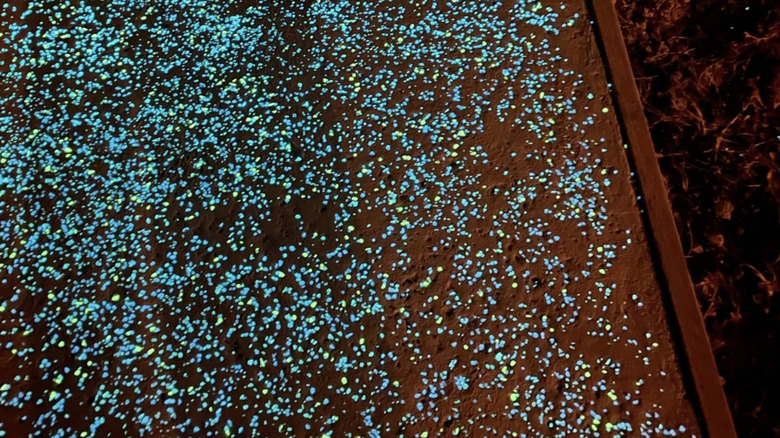
While by no means in every driveway in the U.S. yet, these glow-in-the-dark aggregates have been on the market for a few years now and don't seem to be going anywhere anytime soon. The light show they create for you, your neighbors, and passing pedestrians is just too cool to ignore. But how do they stack up, price-wise, against traditional lighting options? Of course, the cost to install glow-in-the-dark aggregate in a concrete driveway varies widely depending on the size of your driveway, the installation method, and the materials.
A glow-in-the-dark concrete driveway will set you back around $15 to $25 per square foot installed. By comparison, a concrete-only driveway costs about $5 to $8 per square foot to install. The price, as you can see, is a jump, but it's not too dramatic, especially considering you may not need to install other lighting. Plus, the cost is comparable to other decorative aggregates. If that feels out of your budget, consider glow-in-the-dark sand, which you mix into the concrete sealer. That will add around $1 to $2 per square foot to your driveway installation costs.
Now that we've discussed the numbers for this fancy driveway idea, what about longevity? The average glow-in-the-dark aggregate needs about 15 to 20 minutes of sunlight — or artificial light — a day to create an all-night glow. Of course, this option won't work in shady backyards. As far as longevity goes, the stones' glow degrades by a few percentage points each year. After 20 years, they'll be glowing 40% less than when freshly installed.
How to install glow-in-the-dark aggregate to illuminate your driveway
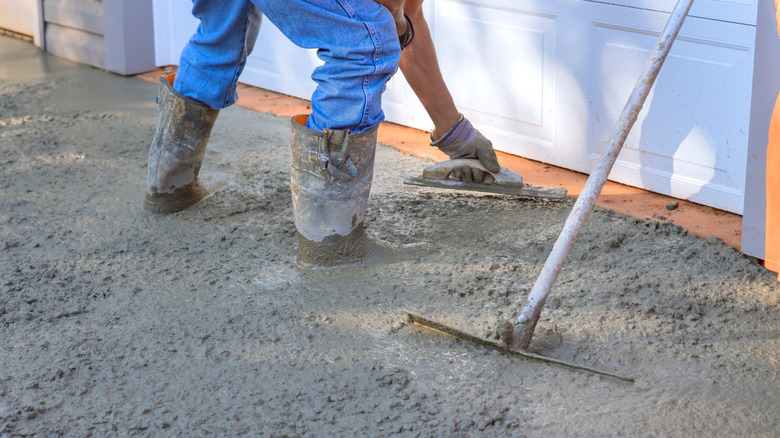
While glow-in-the-dark landscaping will look ordinary during the day, this clever driveway layout is sure to boost curb appeal once night falls. If you're interested in installing this unique aggregate, it's probably best done by a professional landscaper. Just like regular decorative aggregate driveway installation, it's a time-sensitive process. For new and renovated driveways, glow-in-the-dark aggregate is most commonly applied using hand-broadcasting. This involves tossing the glow aggregate over curing concrete, then lightly patting it into the surface with a trowel. Once the stones are embedded into the concrete, they need to be exposed so that they can absorb solar energy. This is usually done in one of two ways.
The chemical method, where a retarding agent is sprayed over the curing concrete to slow the curing process, keeps the top layer of concrete soft enough to wash off the next day, revealing the stones underneath. For the mechanical method, the installer uses diamond polishing pads to grind away and expose the top layer of aggregate. If your driveway is already finished and not in need of a structural repair, you (or, better yet, a pro) may be able to resurface it, seeding it with glow-in-the-dark aggregate at the same time. In other words, you don't need to have a brand new driveway installed to take advantage of this nifty landscaping material. Once you've said farewell to solid concrete driveways, boost curb appeal with a fun design: plant the borders and gaps with hardy ground covers.