

Not Concrete: This Brick Lookalike Is A Great Eco-Friendly Patio Alternative
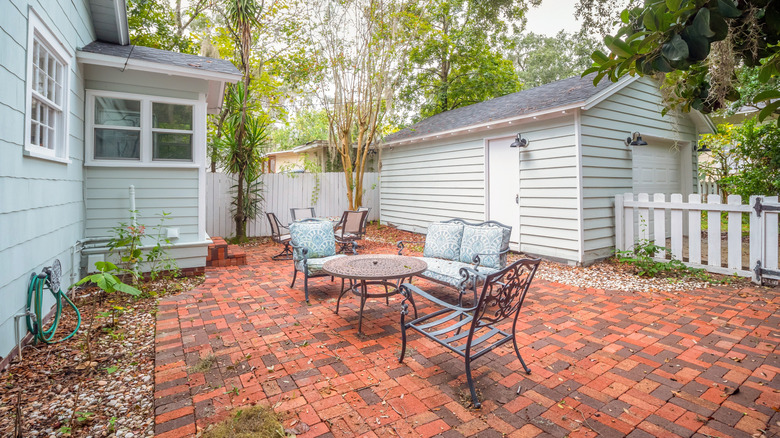
Designing your perfect patio isn't just about furniture and plants; it starts with the materials you use for the surface. Concrete is a cheap option, but it doesn't look high end. Brick is much more charming, but it's not very durable as a surface material. Instead, there's a brick lookalike that's a great, eco-friendly patio alternative: clay pavers.
Clay pavers are exactly what they sound like: pavers made of clay. They look much like traditional bricks, and their composition can also include materials like lime, iron oxide, calcium silicate, and sand. Unlike concrete, which is made of cement and aggregates and is far from being eco-friendly, clay pavers are significantly more sustainable due to their natural composition and manufacturing process. Plus, they're extremely long lasting and resistant to extreme weather, loads, and routine daily use. They won't crack due to freeze-and-thaw cycles, or as you step over them repeatedly, and so you can count on the patio staying in good shape through the years.
And the best part is that clay pavers afford a timeless, classic brick look. Traditionally, they're known for their deep red color, but nowadays, there are tons of different hues you can choose from, ranging from dark brown to beige, gray, and nearly black. Those vibrant colors won't fade over time, which is great for a patio makeover that lasts. That's why, when choosing the right type of pavers to create the patio of your dreams, clay pavers are a smart choice for people who want colors that withstand the test of time.
Factors to consider before installing a clay paver patio
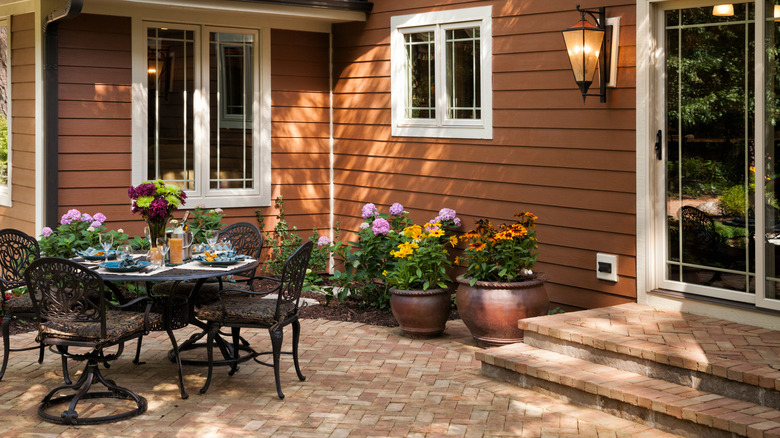
Clay pavers are a suitable mid-range option for a patio makeover. They're cheaper than high-end alternatives like cobblestone or natural stones, but they're more expensive than concrete pavers, mostly because they cost more to manufacture. In addition to buying the materials, laying pavers in an outdoor space also comes with some labor costs. Depending on where you live, you can expect installation to cost between $10 and $20 per square foot. The exact price also hinges on factors like the complexity of the layout and the specificities of the terrain; elevation, uneven ground, and soil quality can all have a financial impact on the project. And if you're interested in unique layouts, whether it's special patterns and custom edges, expect to pay extra.
If you're handy and love a home improvement project, you may be able to install clay pavers yourself and save on labor costs. Clay pavers have been used for millennia in many parts of the world, and there isn't one way to lay them. One common pattern is herringbone, where rectangular pavers are laid both horizontally and vertically, with small square pavers filling the gaps in between. Running bond, basket weave, and chevron patterns offer some fun alternatives. But before you order a bunch of clay pavers hoping to DIY the project, keep in mind that it will entail some fairly advanced tasks, including excavation, laying the base layer, and cutting pavers.