

Everyone Had One In The '70s — Now It's The Colorful Blanket You'd Be Happy To Find At The Thrift Store
We may receive a commission on purchases made from links.
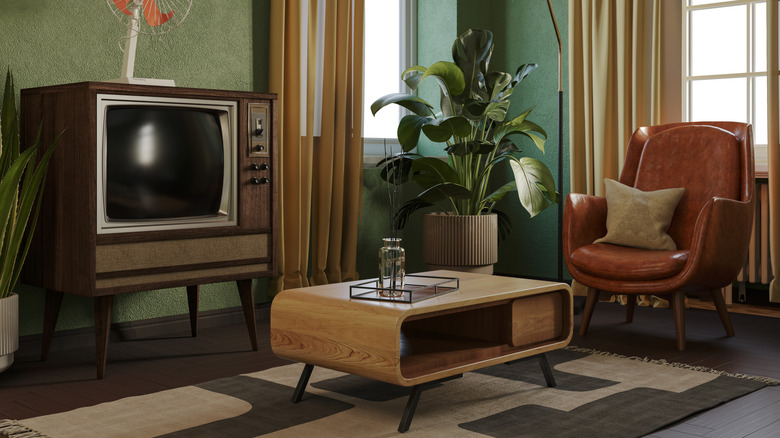
The 1970s were a kaleidoscope of earthy colors, natural materials, and groovy prints. The rooms had a definitive vibe, leaning towards low-slung furniture and tactile fabrics that made you want to curl up and cocoon at home for a while. Everything about design was enveloping — the walls were covered in heavy wood paneling and velvet was everywhere. But the decade also had another enveloping icon: the crochet Afghan blanket. It's one of the home decor essentials from the '70s now considered bold. And if you want to give your room a pop of colorful personality, it's a great and affordable piece to look for while thrifting.
It perfectly fit into the handmade-boom of the decade. Afghan blankets took off in popularity the U.S. during the 1970s as knitting and crocheting became highly popular. To some, these activities were a nod to hippie culture and anti-consumerism — ideas that tie in perfectly to the spirit of thrifting and buying second-hand, in general. Because of this, the afghan embodies the hippie-chic spirit for many.
For others, it was just a beautiful way to express creativity. The patterns of these blankets gave makers an infinite amount of options when it came to color and design. It was also a great way to find community. After all, crochet and knitting circles were (and still are) very popular, giving people a reason to meet and spend time together while working on their projects. Because of this, there was an explosion of handmade afghans, many of which have now ended up at thrift stores and are waiting to find a new life. If you're dreaming of this handmade '70s aesthetic, here is what to look for when thrift shopping for an afghan blanket.
What to look for when thrifting an afghan blanket
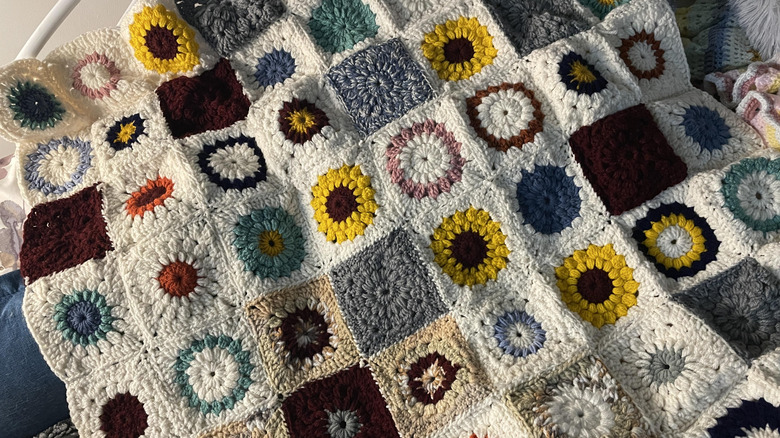
Handmade blankets usually cost hundreds of dollars when you buy them from Etsy or artisans, but you can get them for even less than $5 at thrift stores. Either way, they're an exciting find. But not all blankets are technically afghans, so here is how to tell the difference.
Afghan blankets come in all sorts of different crocheted patterns, but one of the most popular in the 1970s was the granny square. This pattern has been around since the late 19th century, promoted as a clever way to use up one's short yarn scraps that would otherwise be wasted. Since these use such a medley of different colors, they quickly became synonymous with the hippie/counterculture look that was so popular at the time. Plus, this pattern is perfect for beginner crocheters since it's super simple to learn and very easy to put down and come back to.
Also popular during this time was the chevron pattern, which features zigzag stripes running across the blanket. This can be made using many alternating colors, or even a simple, cohesive color scheme for a more minimalist look. Big, geometric patterns featuring diamond and rhombus shapes — or other similar, tile-like designs — are also super common. While these are some of the most popular designs in the '70s, any handmade crocheted blanket will give you similar vibes. The important thing is that it was made by human hands, links you to the arts and crafts movement of the past, and throws you back to a slower, more intentional way of living. It's an easy way to incorporate 1970s style into your 2026 home, all while giving you a cozy staple to curl up under.