

The Fragrant & Flavorful Herb You Should Grow If You Like Basil
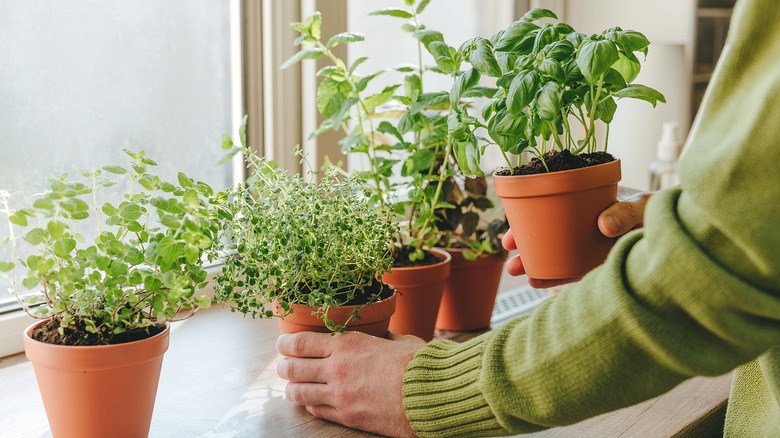
On your herb checklist, we'd like to introduce you to a fragrant, flavorful variety you might have missed: shiso (Perilla frutescens), also commonly known as beefsteak plant. If you cook often with basil or mint, this underrated herb may be one you should try planting as well. Its flavor has been compared to anise and cinnamon, and you'll most commonly find it used in Japanese, Korean, and Southeast Asian dishes.
Depending on if it's green or red shiso, this annual sprouts green or reddish-purple serrated leaves, with bluish-purple or white blooms appearing between August and October. The plant can grow in partial shade, but it has a preference for full sun and loose, fertile soil that's rich in organic matter. Note that in zones 10 and 11, shiso can actually grow as a perennial. You can also grow shiso indoors, so long as you place it in a spot that will meet its sun requirements.
Shiso is a low-maintenance, drought-tolerant herb, and it spreads easily on its own. To prevent this self-seeding, you'll want to deadhead flowers once their blooms fade. Speaking of which, there are some states where shiso shouldn't be grown. In the Midwest, it's considered a noxious weed, and in several states, including Maryland, Virginia, and North Carolina, it's classified as invasive.
How to use shiso in your cooking
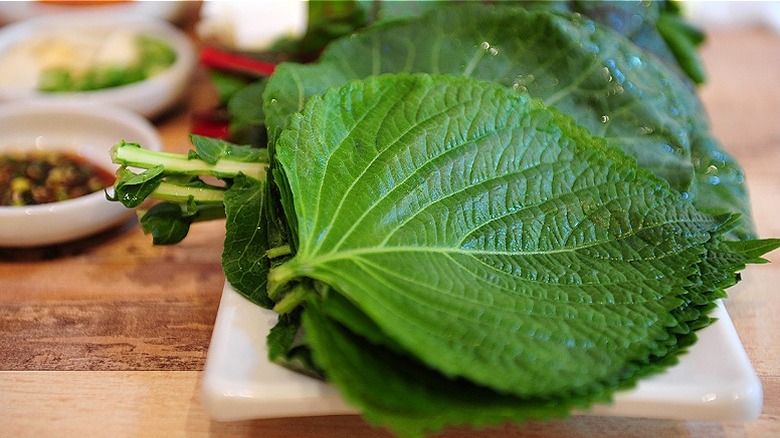
While red and green shiso have similar flavors, there is a slight difference between the two, with green shiso being more mild. In cooking, you're more likely to find green shiso leaves being used, either as a featured ingredient, a garnish for a main dish (like sashimi), or eaten on its own.
If you're just getting acquainted with shiso, try using it in familiar dishes in place of basil or mint. Think of dishes you'd normally add basil to — for example, pho or spring rolls — and sub in shiso. Layer slices of tomato and mozzarella with shiso for a twist on the traditional Caprese salad, or chop up shiso leaves and add them to a medley of plums and tomatoes.
Less conventional uses include using shiso in place of lettuce for a meal that calls for a leaf wrap, mixing it into a wok of stir-fried vegetables, adding color and flavor to scrambled eggs, or featuring it in a sauce. Pastry chef Dominique Gros spoke of shiso's possibilities, telling Le Cordon Bleu: "I found it very different — at least, different from what I was used to. But somehow, I was fascinated by its aroma," adding, "... At first, you feel surprise and then, by the time when you get used to it, you find it more and more attractive."
And not only for food, shiso can also transform your bevvies: Spice up a pot of green tea, use it in a simmer pot recipe, or liven up happy hour with a shiso sour or "shisojito" (by replacing mint with shiso). You can even try making a glass of homemade green or red perilla juice. (Read about more of the best indoor herbs for your kitchen garden.)